
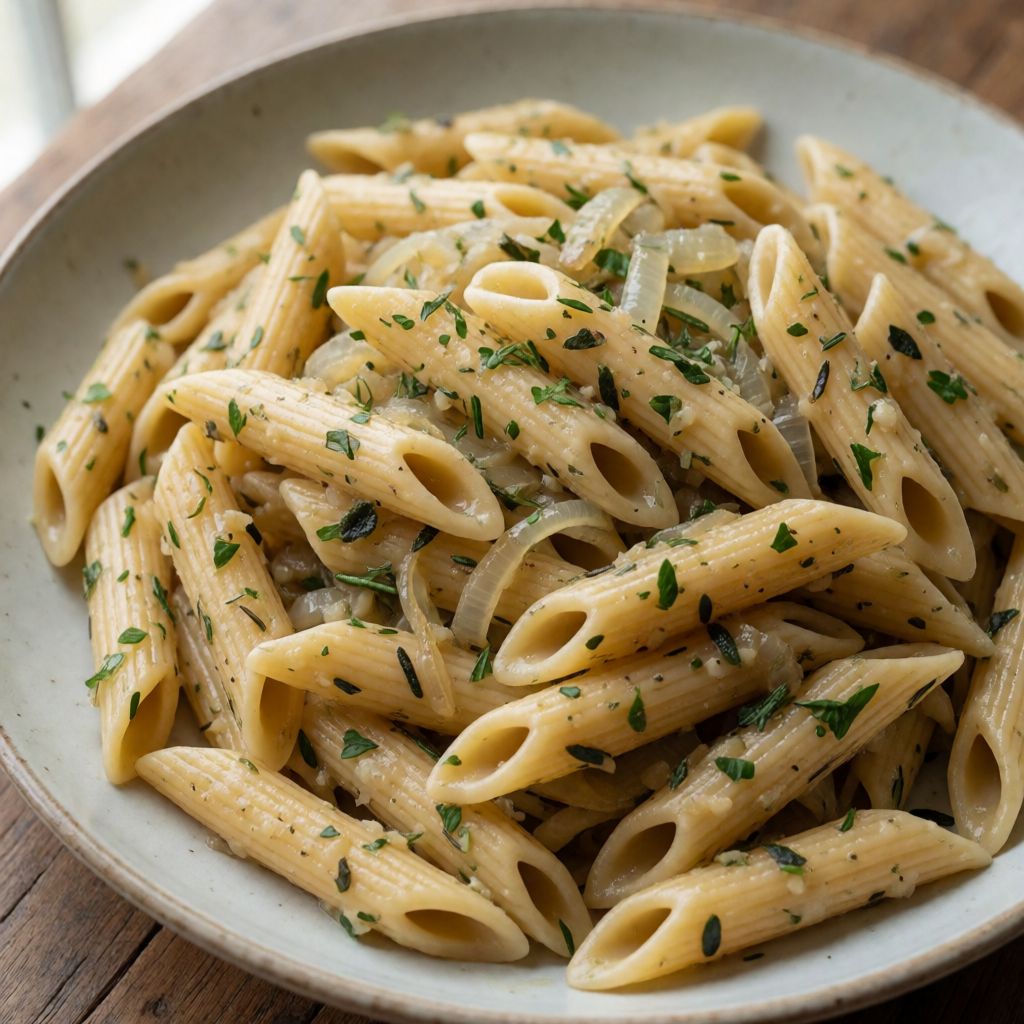
 AI photo
Pasta with Mediterranean Herbs
A fragrant pasta tossed with fresh Mediterranean herbs, tomatoes and cream.
Labels are worked out automatically from the ingredients and can be wrong. Check the packaging if it matters to you.
Ingredients











Steps
Put water on to boil for the pasta.
Wash and dry the herbs. Blend the peeled tomatoes to a smooth purée.
Finely chop all the herbs and fry gently in olive oil for a few minutes over a low heat.
Add the blended tomatoes and cook for 5 minutes.
5 minMeanwhile, cook the pasta.
Add the cream, stir, then drain the pasta and tip it into the sauce.
Stir over the heat for a few minutes.
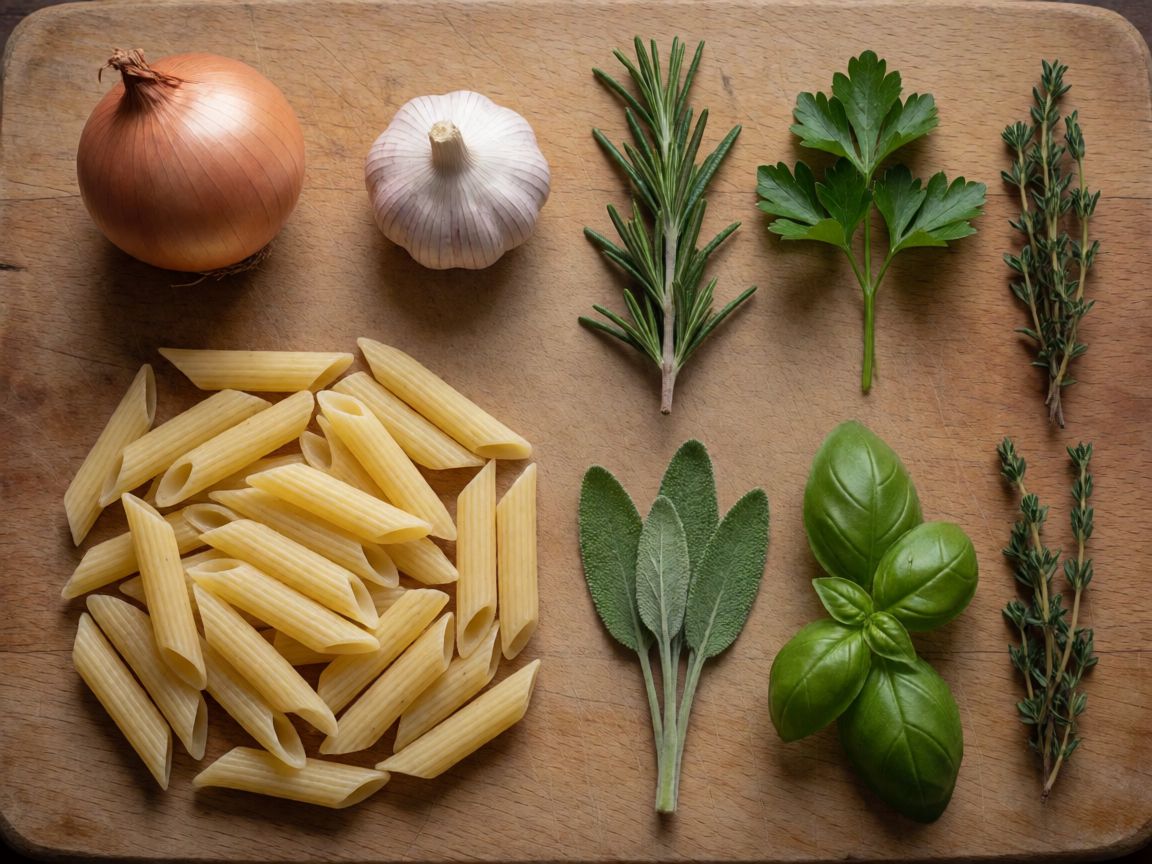
This is a tomato-cream pasta that leans on five herbs at once instead of one star, which is exactly the point and exactly the risk. Rosemary, sage, thyme, basil and parsley are not interchangeable with each other — they're different families of smell entirely, resinous, musky, green, sweet, grassy — and the whole dish is really an argument about whether they can share a pan without one of them shouting down the rest.
What decides whether it works is the frying step, the "few minutes over low heat" with the herbs in olive oil before any tomato goes in. That's not seasoning, that's extraction. Oil dissolves the aromatic compounds in rosemary and thyme that water never will, which is why dried herbs added straight to a watery tomato sauce taste flat and the same herbs fried first taste like themselves. Low heat matters here for a specific reason: rosemary and sage carry resins that turn bitter and acrid if they scorch, so you're not browning anything, you're just warming the oil until it smells like the herb bunch rather than like a herb bunch sitting next to oil.
Take the herbs one at a time, because they're not doing the same job. Rosemary and sage are the loud ones — strip the rosemary needles off the woody stem (that stem never softens, it'll just sit in your mouth like a twig) and the sage leaves need no stripping, there's nothing to strip. Use them with a light hand relative to the others; ten sage leaves sounds like a lot until you remember sage fried in oil turns almost meaty, and it will dominate a bowl if you let it. Thyme, same business as rosemary — the leaves, not the stem — and it's the one herb here that forgives being cooked a while, its oils are stubborn and don't fade the way basil's do.
Basil and parsley are the fragile pair, and this is where the "fry gently for a few minutes" instruction is actually protecting basil from itself. Basil's aroma sits in volatile oils that break down fast under heat — that's why a jar of dried basil smells of nothing in particular, it's already lost the fight. If you're worried about basil going bitter and flat in the pan, you're right to worry, but the fix isn't skipping the frying step, it's keeping the heat low and the time short, and if you want insurance, hold back half the basil and stir it in raw with the cream at the end so some of it survives uncooked.
Garlic and onion are doing the quieter structural work — the base most tomato sauces assume exists even when a recipe doesn't dwell on it. Chop the onion small enough that it has time to go from sharp and raw to sweet before the tomato lands on top of it; this is "the onion turning translucent, soft, no longer biting back when you taste a bit," not a number of minutes. Garlic goes in after, briefly, because garlic burns if it's first into hot oil and stays there as long as a whole onion needs — burnt garlic is bitter in a way nothing afterward can rescue, which is the actual reason recipes tell you to add it later, not superstition.
On double cream: this is what gives the sauce its cling and its gloss, cutting the raw acidity a tin of tomatoes always carries. Any dairy with enough fat to not split under gentle heat will do the same job — single cream is thinner and more prone to curdling near acid, crème fraîche has its own tang that'll fight the herbs, and if you have neither, a splash of whole milk with a knob of butter stirred in gets you close enough. What you're choosing for is fat content and nothing else; it's not flavour, it's a stabiliser.
On the olive oil: pick one with no smell of its own if you want the herbs to be the thing you taste — an aggressive, peppery extra-virgin will compete with five fresh herbs rather than carry them. If all you've got is a strong one, that's fine, just know you're adding a sixth herb to the mix whether you meant to or not.
Patience here is small but real — it's the patience to let the onion actually soften before the garlic goes in, and the patience to keep that initial herb-fry gentle rather than cranking the heat because you're hungry and the water's already boiling. Five fresh herbs and a rushed pan just get you a sauce that tastes of rosemary and regret. Give the slow steps their minute, and the fast ones — the pasta, the final toss with cream — can be exactly as fast as the recipe says.