
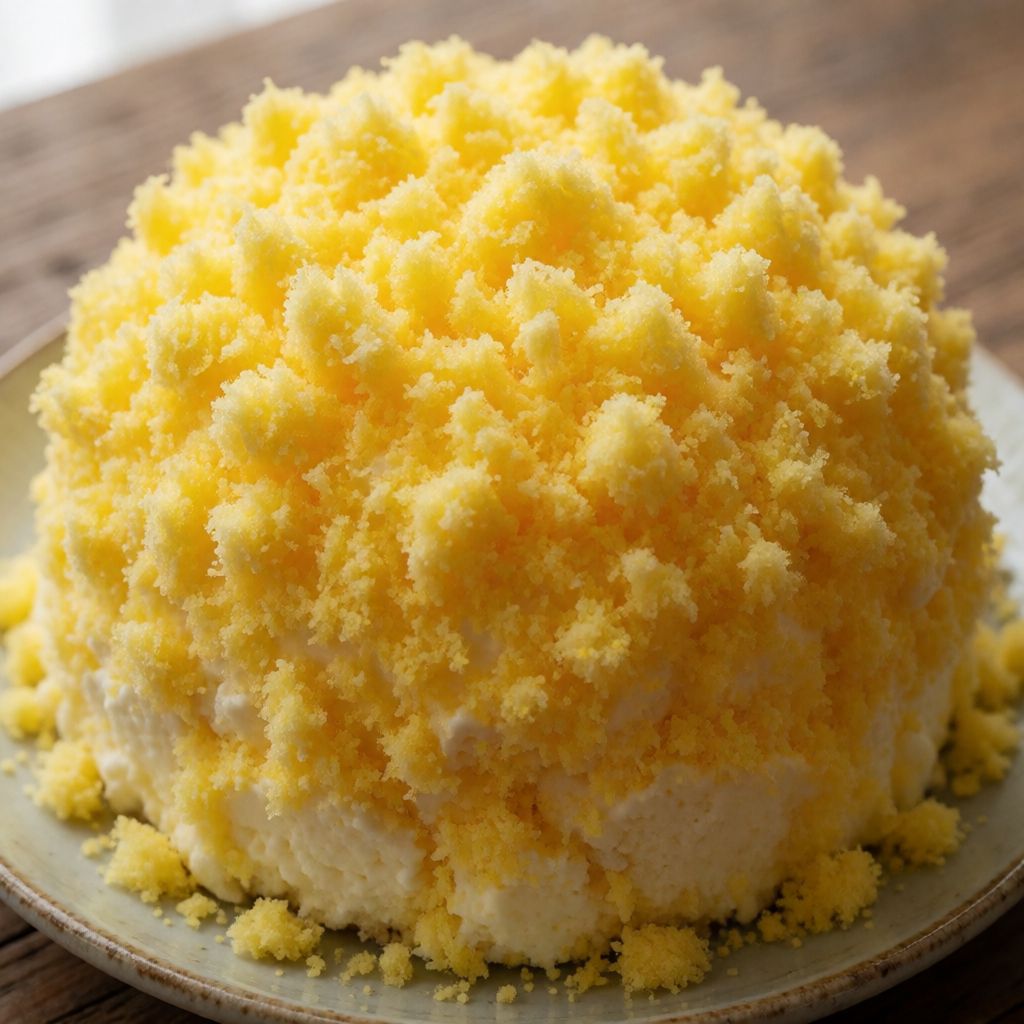
 AI photo
Mimosa Cake
A classic layered sponge cake filled with custard and cream, soaked in milk and covered in soft sponge crumbs.
Labels are worked out automatically from the ingredients and can be wrong. Check the packaging if it matters to you.
Ingredients
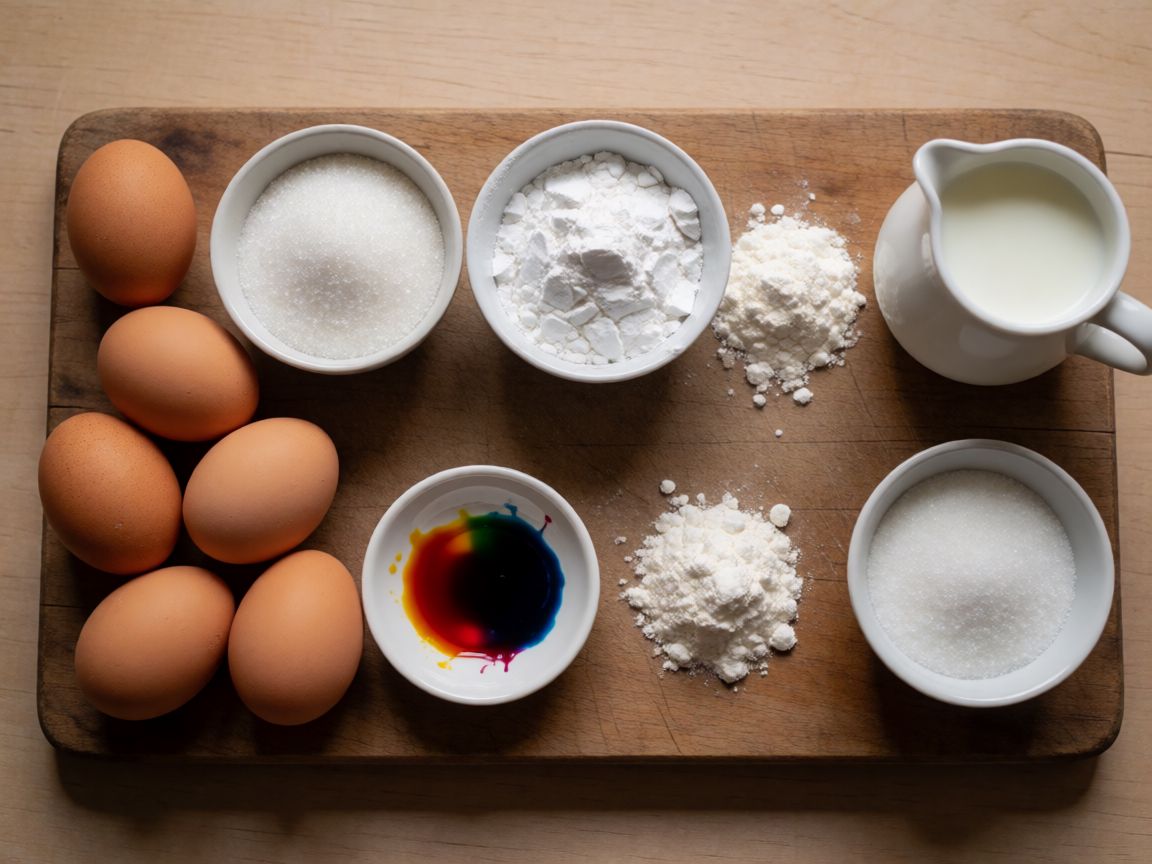
- 7 pcs Eggs
- 200 g Caster sugar
- 130 g Potato starch
- 130 g Plain flour
- Yellow gel food colouring to taste
- 1 l Milk
- 150 g Plain flour
- 300 g Caster sugar
- 8 pcs Egg yolk
- 1 pcs Lemon zest
- Milk to taste, for soaking
- 400 g Double cream for whipping
- 50 g Caster sugar







Steps
Whisk the eggs with the caster sugar (200 g) for 10–15 minutes until pale, fluffy and tripled in volume.
15 minGradually add yellow gel food colouring until the desired shade is reached.
Mix the plain flour (130 g) with the potato starch, sift, and gently fold into the egg mixture.
Grease and flour two baking tins, and divide the batter evenly between them.
Bake at 180°C in a preheated oven on top-and-bottom heat.
20 minPour the milk (1 l) into a saucepan, add the lemon zest and bring to the boil.
Whisk the egg yolks with the caster sugar (300 g) until a thick, pale, creamy mixture forms, then add the sifted plain flour (150 g).
Add the yolk mixture to the hot milk and whisk together.
Let the custard thicken over the heat, then leave to cool.
Whip the double cream with the caster sugar (50 g) until thick and holding stiff peaks.
Let the sponges cool completely.
Cut the first sponge into 3 layers, and trim the edge of the base layer.
From the second layer cut out a smaller circle, and from the third an even smaller circle.
Cut the second sponge into strips, trim the edges and dice into small cubes.
Place the base layer on a plate lined with baking paper.
Soak the layer with milk.
Spread the first layer of custard and place the second layer on top.
Cover with whipped cream and place the last, smallest layer on top.
Fill with a new layer of custard and cover the whole surface of the cake with cream.
Scatter with the sponge cubes and chill in the fridge for at least 1 hour.
60 minBefore serving, dust with a thin layer of icing sugar.
Mimosa isn't really a cake, it's an illusion. You build a dome out of three shrinking rounds of sponge, and the second you cut it, you've got sloping walls of custard and cream that beg to be covered — and the trick the whole thing is named for is covering them with crumb instead of icing. Cut the sponge into cubes, scatter them over the dome, and from two feet away it looks like a sprig of mimosa flowers, that fuzzy yellow spring bloom. Dust it with icing sugar and the illusion is complete: it reads as pollen, not flour.
What decides whether it works isn't the custard or the cream, it's the shape underneath. Three discs, each one smaller than the last, stacked like a wedding cake with no columns. If your circles aren't a real size-down — say, a 20cm, an 18cm, a 15cm, something with a visible step between them — you don't get a dome, you get a cylinder with a flat hat, and no amount of crumb will round that off convincingly. The dome is cut with a knife before anything else happens; the decorating only works if the geometry underneath already slopes.
The other decision point is restraint with the yellow. Gel colouring, a few drops, built up slowly — not because food-safety demands it, but because sponge batter is porous and unevenly coloured and an overdose turns from "sunny" to "traffic cone" fast, and once it's in you can't take it back out. You're colouring egg foam, which is already pale and fragile; a little goes a very long way.
The sponge here is a classic genoise-type whisked sponge — eggs and sugar carry all the lift, there's no raising agent in that list, and that's deliberate. You whisk whole eggs with sugar until the mixture triples and holds a ribbon; that's air trapped in egg protein, nothing more exotic. Fold in flour too roughly and you knock that air straight back out, which is why the flour and potato starch go in gently, in two additions mixed and sifted together first — sifting isn't fussiness, it's breaking up clumps so you don't have to stir hard to disperse them. The potato starch is there to lighten the crumb: pure flour sponge can turn rubbery, starch cuts the gluten content and gives you a crumb soft enough to compress into cubes later without turning to paste in your fingers. No starch in the house — cornflour does the same job, same ratio.
Myth worth naming: people think yellow cake needs saffron or turmeric for "proper" flavour and colour together. No — this sponge is coloured purely for the look, it's meant to taste like a light vanilla-less sponge, clean enough that custard and cream carry the flavour. Saffron would fight the custard's egg-and-lemon flavour, not support it. Gel colouring exists exactly for jobs like this: it's concentrated and carries almost no liquid, so it won't thin your batter the way a liquid colouring would, which matters because thin batter spreads and bakes flat, exactly what you don't want when you need enough height to cut three clean layers from one tin.
The custard is a crème pâtissière, thickened with flour rather than cornflour, which gives it more body and a slightly less glassy set — useful here, because this custard has to hold its shape between layers of sponge under the weight of more sponge and cream, not sit in a bowl. Whisking the yolks and sugar until pale and thick before the flour goes in isn't about appearance, it's about dissolving the sugar fully into the yolk so it doesn't scrape or seize once it hits hot milk; sugar crystals meeting hot liquid too early is how you get a grainy custard. The lemon zest in the milk is infused, not stirred through at the end — heat pulls the oil out of the zest into the milk itself, so you get citrus without actual zest bits turning up in a cream cake. Tempering — adding the yolk mixture to the milk rather than the reverse, and off a hard boil — exists to stop you scrambling the eggs; custard that's grainy has usually met liquid that was too hot, too fast.
Double cream whipped with a little sugar is the plain, cool contrast to a custard that's rich but one-note; you need both for the inside to read as "cake" rather than "trifle in a dress." Whip until it holds a peak and stops there — overwhipped cream turns grainy and starts weeping liquid, which will seep straight into your sponge and turn the base soggy from the inside rather than from deliberate soaking.
On soaking the base layer with milk: this isn't about flavour, it's rescue work. Sponge, even a good one, dries slightly on the cut surface and at the edges from the oven; milk brought back in restores some give so the first bite doesn't feel like stale cake under rich filling. Plain milk, not syrup — syrup would compete with the custard's sugar level and make the whole cake cloying.
For a UK kitchen: your tins are probably two of a kind, not a dedicated graduated set, so improvise the third circle with a smaller cake tin, a bowl, or a plate as your cutting guide — the size step matters more than where it came from. No proper offset spatula, no bother — a palette knife or even the back of a tablespoon smooths cream fine at this scale. And if your oven runs hot on top-and-bottom heat the way many domestic ovens do, watch the sponge rather than the clock near the end — it's done when it springs back from a light press and pulls slightly from the tin edge, and the given 20 minutes is where to start checking, not where to stop.