
 AI photo
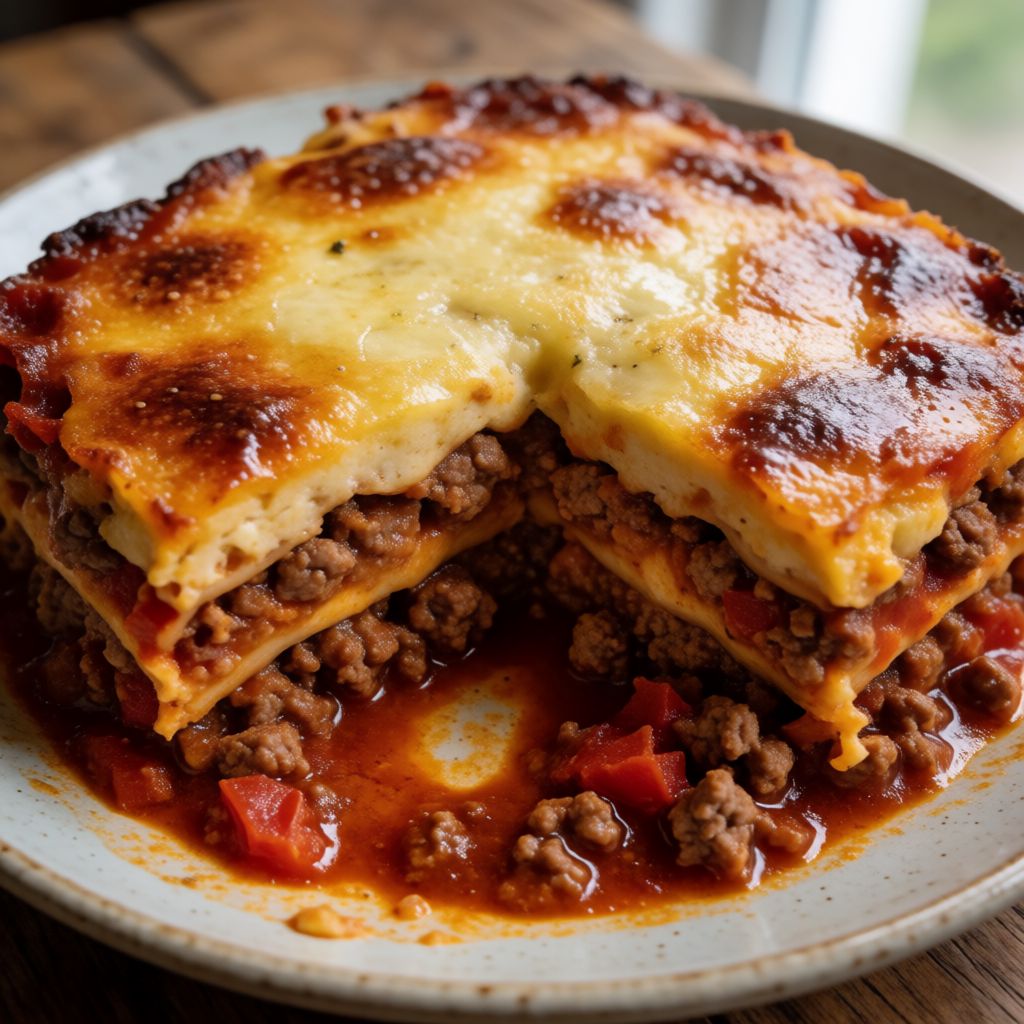
Moussaka
A hearty baked dish of spiced beef, potato and aubergine layers, finished with a creamy cheese sauce.
Labels are worked out automatically from the ingredients and can be wrong. Check the packaging if it matters to you.
Ingredients
- 2 pcs Onion finely chopped
- 4 clove Garlic finely chopped
- 400 g Beef mince
- 800 g Tinned chopped tomatoes
- 2 tbsp Sun-dried tomatoes finely chopped
- 3 tbsp Tomato purée
- ½ tsp Cinnamon
- 2 tbsp Rosemary finely chopped
- 3 tsp Oregano
- 2 tsp Dried thyme
- 1 tsp Paprika
- 1 tsp Smoked paprika
- ½ tsp Cumin
- 200 ml Wine
- Salt
- Black pepper freshly ground
- 1 tbsp Butter
- 2 tbsp Plain flour
- 400 ml Milk
- 125 g Mozzarella
- 1 pinch Nutmeg freshly grated
- 1 tbsp Butter for greasing the baking dish
- 300 g Potato lightly boiled and thinly sliced
- 1 pcs Aubergine thinly sliced
- 2 tbsp Breadcrumbs
- 125 g Mozzarella freshly grated



















Steps
Fry the onion and garlic in a saucepan with olive oil over medium heat until the onion softens.
Add the mince and fry over high heat, stirring.
Lower the heat and add the chopped tomatoes, tomato purée, sun-dried tomatoes, spices, wine, salt and pepper.
Let the sauce simmer uncovered.
Melt the butter in a saucepan and whisk in the flour to form a roux.
Add the milk gradually, stirring constantly, until the sauce is smooth.
Bring the sauce to a boil, stirring, and add the cheese.
Stir until the cheese has melted, then season with nutmeg, salt and pepper.
Grease the baking dish with butter.
Spread the meat sauce over the bottom of the dish.
Add a thin layer of potato slices.
Add a layer of aubergine slices.
Add the meat sauce.
Add another layer of potato slices.
Add the cheese sauce.
Sprinkle with freshly grated cheese and breadcrumbs.
Bake the moussaka in a preheated fan oven at 175°C for about 1 hour, or until the potato is tender.
60 min
Moussaka is a layering problem disguised as a dish. You've got raw-ish potato, raw aubergine, a wet meat ragù and a bechamel all going into the same dish at the same time, and they need to come out together — potato cooked through, aubergine collapsed and silky, sauce set, not a puddle. That's the whole game: get the water content and the layer order right, and the oven does the rest.
What actually decides whether it works is moisture management. Tinned tomatoes, wine, the natural water in aubergine and potato — that's a lot of liquid going into a dish with no lid, in a domestic oven that isn't as fierce as a Greek taverna's. If the ragù goes in too wet, the bottom layer of potato steams instead of roasting, and you get a soggy base under a nice top. So the simmer on the meat sauce before it ever touches the dish isn't optional faffing — it's reducing the sauce down to something that clings rather than floods, so the oven's job is finishing, not evaporating.
Some say moussaka needs a kazan or a Greek clay dish to be "proper" — no, because what it actually needs is even heat and a wide surface so the layers cook through rather than staying wet in the middle. A wide, straightish-sided baking dish on your own worktop does exactly that job; a deep, narrow one just builds a cold, steamy core. The dish shape is physics, not patriotism.
Start with the mince. Beef, not lamb, in this version — fine, it's a cheaper, more available substitute in a lot of kitchens, and the spicing here (cinnamon, cumin, smoked paprika) is doing the work that lamb fat would otherwise do: giving the ragù some depth so it doesn't taste like bolognese in a trench coat. Frying it hard and fast, over high heat, straight after the softened onion — that's not drama for its own sake. It's so the meat browns rather than stews. Thrown into a crowded pan on gentle heat, mince just weeps grey liquid and boils in it; the surface never gets hot enough to brown, so you lose the fond, the savoury crust-flavour, before you've even started the sauce. High heat, stirring, a bit of space in the pan — that's what prevents the "why does my mince taste flat" problem.
The tomato trio — tinned, sun-dried, purée — are three strengths of the same flavour. Tinned chopped tomato gives you bulk and acidity; purée is concentrated, cooked-down tomato for backbone; sun-dried adds a chewy, almost savoury sweetness that plain tinned tomato doesn't have. If you've only got tinned, use more of it and a squeeze more purée — you'll lose a bit of complexity but not the dish. The wine isn't there to get anyone tipsy; its acid cuts the richness of the meat and its alcohol needs to cook off during that simmer, which is another reason the sauce wants real time on the heat, uncovered, not a quick five minutes.
The bechamel is the one bit of actual chemistry in this dish, so get the roux right: butter and flour cooked together briefly before the milk goes in, because flour added straight to cold milk just clumps — it needs fat around each grain first to disperse properly. Add the milk gradually and keep stirring; that's not fussiness, it's preventing lumps from forming faster than you can beat them out. Any full-fat milk works; what matters is fat content, not brand — too lean and the sauce splits rather than silkens. The nutmeg is traditional in a béchamel not because of mysticism but because its sweetness cuts the flour's rawness and the richness of melted cheese; a pinch is doing a real job, it's not decoration.
Potato and aubergine are the structural layers, and they fail for different reasons if you get them wrong. The potato needs to be already partly cooked before it goes in — "lightly boiled" — because an hour in the oven, insulated by sauce above and below, isn't hot or wet enough to take a fully raw potato slice from hard to tender. Skip that pre-boil and you'll cut into a finished moussaka with a bendy top and a bullet of raw potato in the middle. Aubergine, on the other hand, goes in raw-ish because it's mostly water and collapses readily under heat — it doesn't need the head start potato does, it needs thin, even slices so it cooks through rather than staying spongy in the centre of a thick one.
Mozzarella twice — once melted into the bechamel, once grated on top — is doing two different jobs. Inside the sauce it's there for body and a mild milkiness that doesn't fight the ragù's spicing; on top it's there to brown and crust with the breadcrumbs, giving you something to break through with a spoon. If mozzarella isn't to hand, any melting cheese with "not much flavour of its own" will do for the sauce — a mild cheddar, a Gruyère if you want more character — but keep something with good browning, like a hard cheese or extra breadcrumb, for the top, or you'll get a pale, floppy finish instead of a crust.