
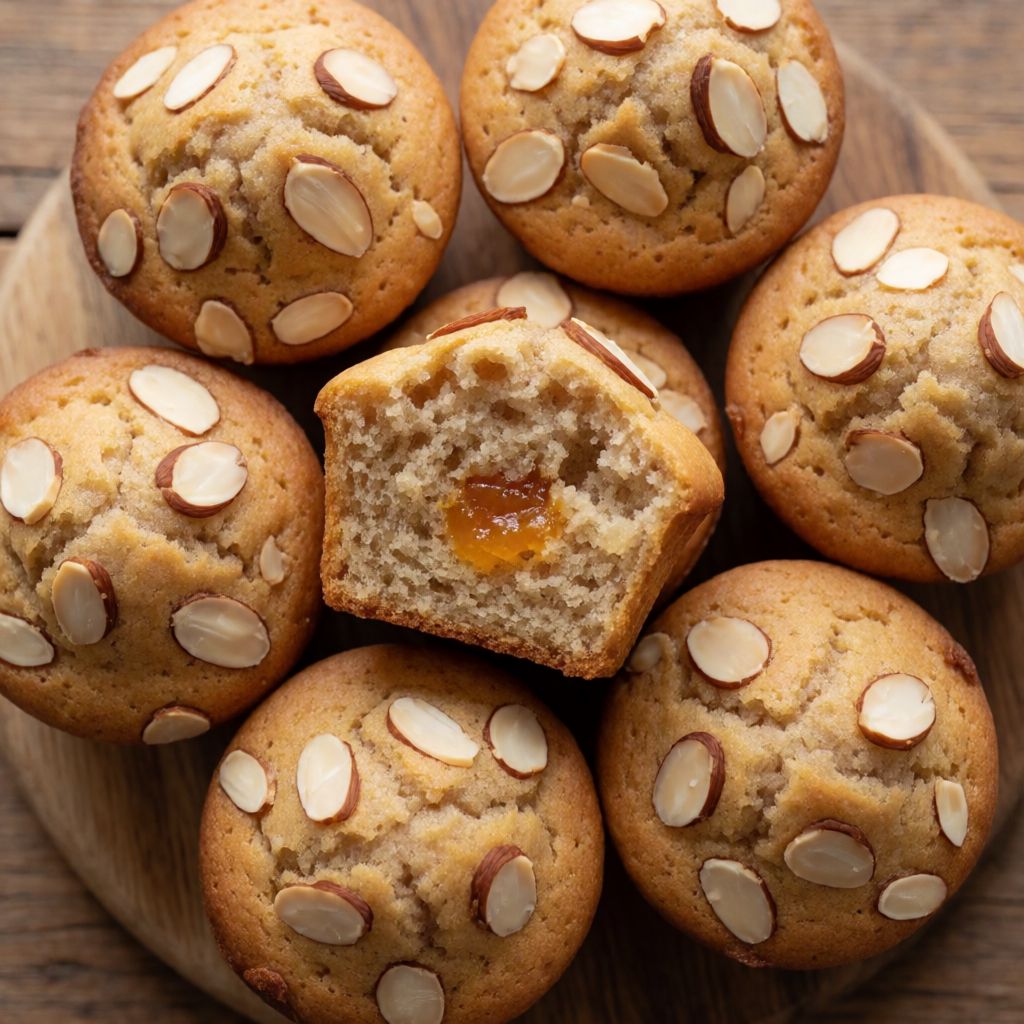
 AI photo
Muffins with Apricot Jam Filling
Soft almond muffins hiding a spoonful of apricot jam in the middle.
Labels are worked out automatically from the ingredients and can be wrong. Check the packaging if it matters to you.
Ingredients
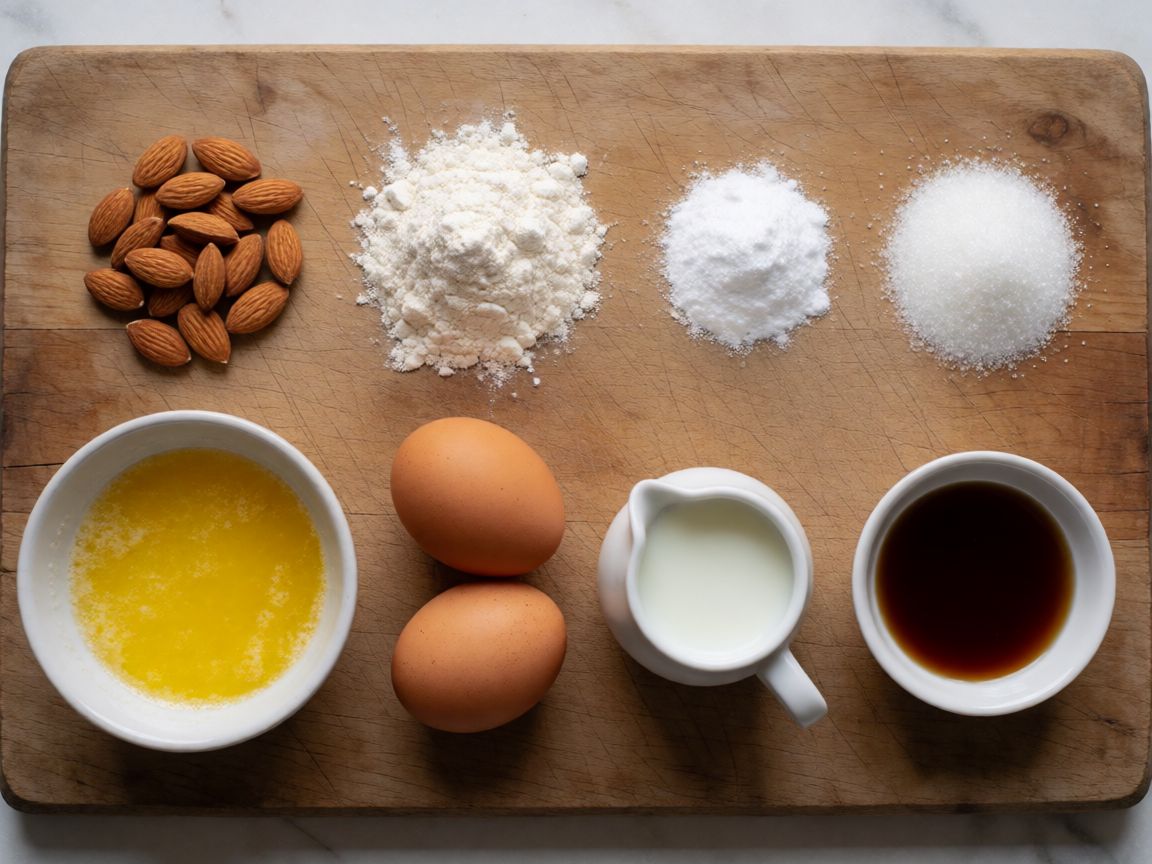
- 120 g Almonds finely chopped
- 165 g Plain flour
- 10 g Baking powder
- 120 g Caster sugar
- 90 g Butter melted
- 2 pcs Eggs
- 220 ml Milk
- 1 tsp Vanilla extract
- 4 tbsp Apricot jam heaped
- 1 pinch Flaked almonds to taste










Steps
Finely chop the almonds and tip them into a large bowl. Add the dry ingredients: flour, baking powder and sugar, and stir with a spoon.
In another bowl, combine the wet ingredients: melted butter, eggs, milk and vanilla extract. Whisk well with a fork.
Pour the wet mixture into the dry ingredients and mix quickly with a spoon.
Line a muffin tin with paper cases and fill each about halfway with the batter.
Place a heaped teaspoon of apricot jam into each case.
Cover with the remaining batter.
Sprinkle with flaked almonds and bake the muffins in a preheated fan oven at 180°C.
20 minRemove from the oven, let cool and serve.
A muffin is a quick bread, not a cake, and that's the whole secret here. Cake wants you to cream butter and sugar for ten minutes, coaxing air into the fat. A muffin wants the opposite: wet bowl, dry bowl, marry them fast, stop. That's why the recipe tells you to mix "quickly with a spoon" — not because speed is a virtue in itself, but because flour develops gluten the moment it meets liquid, and gluten is what makes bread chewy and muffins tough and tunnelled with holes. The fewer strokes, the more tender the crumb. A few lumps left in the batter are not a failure, they're the point.
Some say you should fold batter gently like you're handling a soufflé. No — you fold a soufflé gently because you're protecting whipped air that took real effort to build. Here there's no whipped air to protect. The baking powder does the lifting, chemically, in the oven. Your job isn't finesse, it's restraint: mix until the flour just disappears, then put the spoon down.
The jam in the middle is the engineering problem. Sandwiched between two layers of batter, it needs enough structure around it to set before the jam gets hot enough to bubble through. That's what the half-fill, dollop, cover sequence is doing — burying the jam deep enough that it stays a pocket, not a leak. If your jam is runny rather than set, it will find the thin spots and seep out over the rim. A stiffer jam, or a scant teaspoon rather than a generous one, keeps it contained.
180°C in a fan oven is hot enough to set the baking powder's gas bubbles into a fixed structure before they can escape, and hot enough to start browning the surface for flavour, but not so hot that the outside hardens before the inside cooks through. Twenty minutes is your lower bound, not a deadline — judge it by the dome: it should spring back when you press it lightly, not sink under your finger, and a skewer pushed into the batter part (not the jam pocket, that will always look wet) should come out clean. Ovens lie about their own temperature by 10-15°C routinely, so the skewer test overrides the clock every time.
Flour is the frame of the thing — any plain flour works, no need for strong bread flour, since you don't want gluten development here anyway. Baking powder, not bicarbonate of soda, because baking powder carries its own acid and needs no buttermilk or lemon juice to react; it's a self-contained lift, which is why muffins became the lazy, fast answer to cake across British and American home baking in the first place. No special equipment, no proving time, no patience required at the mixing stage — though patience does show up later, waiting for them to cool enough that the jam doesn't scald your tongue.
Almonds, ground: these bring fat and moisture as much as flavour, so if you're out, swap for ground hazelnuts or, failing any nut at all, a touch more flour plus a splash more milk to replace the moisture they'd have added. Butter should be melted but not hot — hot butter will start cooking the eggs when you whisk them together, giving you little scrambled flecks in your batter. Let it cool to roughly body temperature before you combine.
Milk: whole milk gives you the fat content the recipe is built around; if you only have skimmed, add a small knob more butter to compensate, or the muffins will taste faintly dry on day two. Eggs bind and add lift of their own through steam, so bring them to room temperature if you can — a cold egg dropped into melted butter can make the butter seize into little solid flecks, same problem as above, different cause.
Apricot jam is doing a flavour job, not just a filling job: its acidity balances the sweetness of the batter and the almonds, so a jam that's too sweet (cheap jams often are, bulked with sugar syrup rather than fruit) will just make the whole muffin cloying rather than contrasting. Any stone-fruit jam with a bit of tartness — plum, peach — does the same work. Flaked almonds on top are optional in the sense that the muffin still rises and tastes fine without them, but they're not decorative — they're the one crunchy texture against an otherwise soft bake, and skipping them changes the eating experience more than skipping most "optional" garnishes do.
Eight muffins from this batch is a reasonable guess for a standard tin size, but check your tin: deep muffin cases will give you fewer, taller muffins; shallow fairy-cake cases will give you more, smaller ones, and either way the bake time shifts with them — smaller cases cook faster, so start checking at 15 minutes if yours run shallow.