
 AI photo
Fluffy Pumpkin Cake
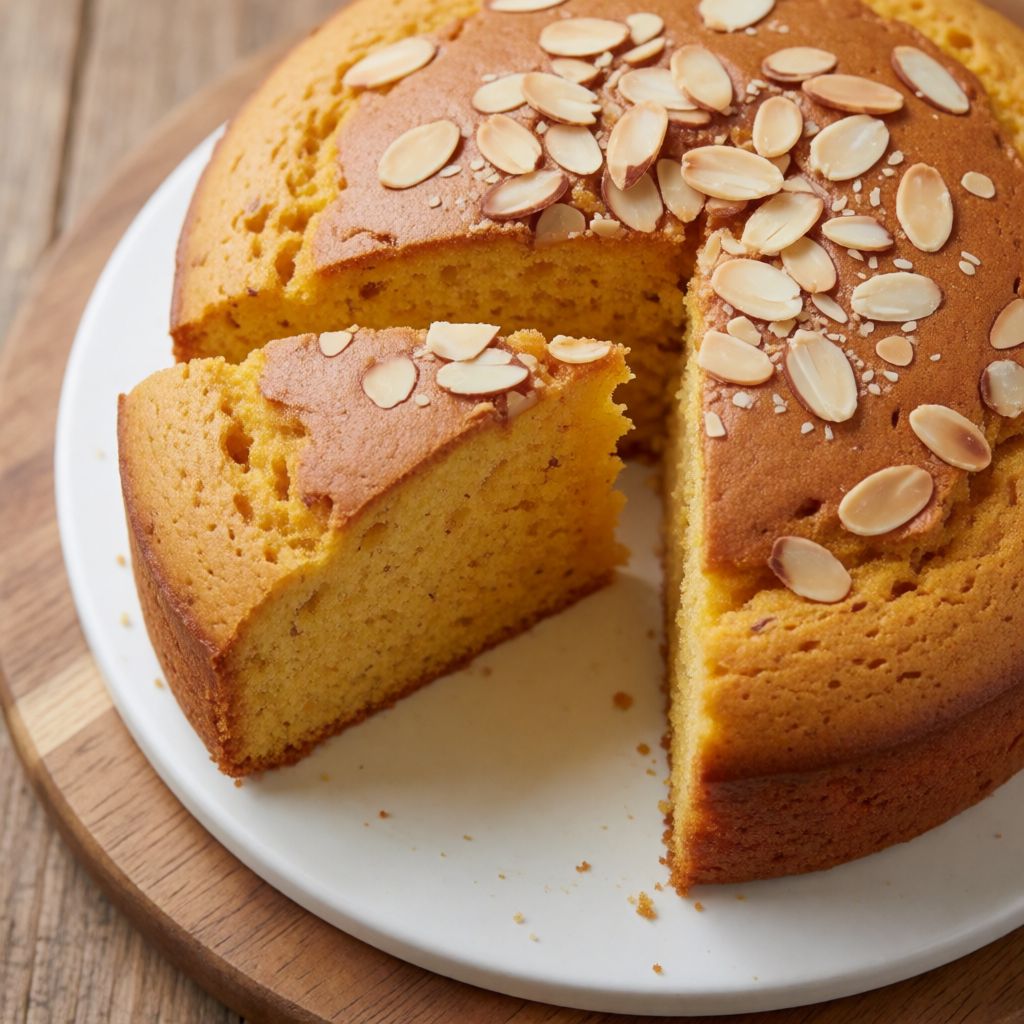
A fluffy pumpkin cake with almonds and orange zest, baked until golden and light.
Labels are worked out automatically from the ingredients and can be wrong. Check the packaging if it matters to you.
Ingredients
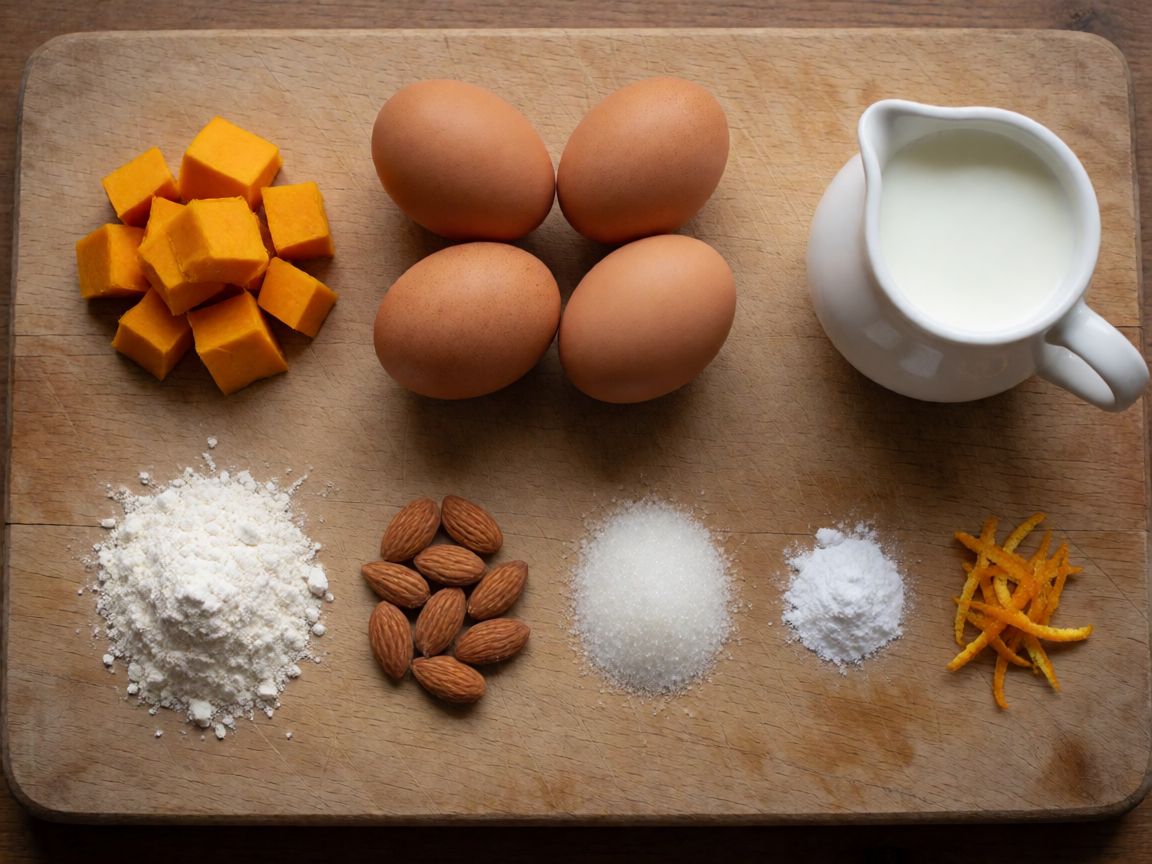
- 250 g Pumpkin
- 100 ml Vegetable oil
- 4 pcs Eggs separated
- 280 g Plain flour sifted
- 120 g Almonds chopped
- 230 g Caster sugar
- 80 ml Milk
- 16 g Baking powder sifted
- 1 pinch Salt
- 1 pcs Orange zest from 1 orange
- 1 tsp Vanilla extract










Steps
Cut the raw pumpkin into small cubes and blend with the milk and vegetable oil until smooth.
Whisk the egg whites until stiff peaks form.
In a separate bowl, whisk the egg yolks with the sugar until pale and fluffy.
Add the pumpkin purée, orange zest, vanilla extract and salt to the yolk mixture, then fold in the sifted flour and baking powder.
Add the chopped almonds and gently fold in the whisked egg whites.
Mix the batter thoroughly with a spatula and pour it into a 24 cm cake tin, greased with butter and dusted with flour.
Bake in a preheated oven at 170°C (top and bottom heat, no fan) for about 50–60 minutes.
55 min
This is a sponge built on a trick: you don't cook the pumpkin separately, you blend it raw with milk and oil, cubes and all, into an orange paste. That paste becomes both the moisture and half the fat of the cake. No lid, no simmering pot — the oven does the cooking for you, all at once, over fifty-odd minutes.
What decides whether it rises is the egg separation. Yolks go in for richness, whisked into the sugar until pale, and that foam is what starts holding the batter together. Whites go in last, whipped to stiff peaks, and they are the real lift besides the baking powder. Fold them in with a light hand and the crumb stays open; stir them in like you're making a sauce and you knock the air straight back out — then the cake sits flat and heavy no matter how hot the oven was.
Some say pumpkin must be roasted first, to "bring out the flavour" — no, because it's going into an oven for the best part of an hour regardless. Raw cubes blended with milk release their water slowly as the cake bakes, and that slow release is exactly what keeps the crumb moist instead of dry. Roast it first and you just add a tray to wash.
The oven runs at 170°C, top and bottom, no fan. A fan would crust the outside before the wet pumpkin centre has set, and you'd pull out a cake with a sunken middle under a hard shell. Use the two bars of heat, patiently, and check doneness the honest way: a skewer through the centre comes out clean, the top springs back when you press it, no wobble underneath.
A few words on what's in the bowl, and why.
Pumpkin — 250g, raw, cut small enough for the blender to actually take it to a paste in one go. You want dense, dry flesh, not the watery kind sold as a carving pumpkin for Halloween, which is grown for show and not for eating. Butternut squash is the easier find in a British greengrocer and works just as well — same starch, same sweetness, less water to fight. If the flesh feels wet and stringy under the knife, your batter will be wetter too, and the bake will run long under that same 170°C. The vegetable oil sitting next to it in the blender should be anything with no smell of its own — sunflower is what's in most cupboards here — because you're after fat that carries the pumpkin moisture through the batter without arguing with the orange zest for attention.
Eggs, separated — this is the one step you can't skip or fake your way through. The yolks whisked into the sugar until pale isn't decoration; that whisking traps air in the sugar-fat mixture and starts the structure the cake relies on. The whites, whipped separately to stiff peaks, are the lift. Some bakers whip them longer "to be safe" — no, because overwhipped whites go dry and clump, and when you try to fold them in they tear instead of blending, so you lose exactly the air you spent five minutes building.
Flour and baking powder — plain flour, sifted so it doesn't clump when it meets a wet, oily batter. 16g of baking powder across 280g flour is on the generous side, because this batter carries real weight — oil, pumpkin paste, almonds — and needs chemical lift to back up what whipped whites alone can't hold. Don't quietly halve it thinking you're being careful; a flat, dense cake is what that caution buys you.
Almonds, chopped, are there for texture, not flavour — something to bite against in a crumb that would otherwise be uniformly soft. Ground almonds would vanish into the batter and you'd lose that contrast, so keep them chopped. The orange zest goes in without the juice, because juice adds water you don't need on top of what the pumpkin is already giving you; grate it fine, straight off the orange, just before you use it, since the oils in the peel fade fast once grated and you want them working in the batter, not wasted on the chopping board.
One last thing, and it isn't on the ingredients list: patience. Whisking whites to real stiff peaks, folding them in slowly instead of stirring because the kettle's just boiled and you want your tea — that's where this cake usually goes wrong, not in the oven. The oven is honest; it does what 170°C does, evenly, for about an hour, and the tin — roughly a dinner plate across — gives you eight wedges for it. The folding is where the cake is actually decided.