
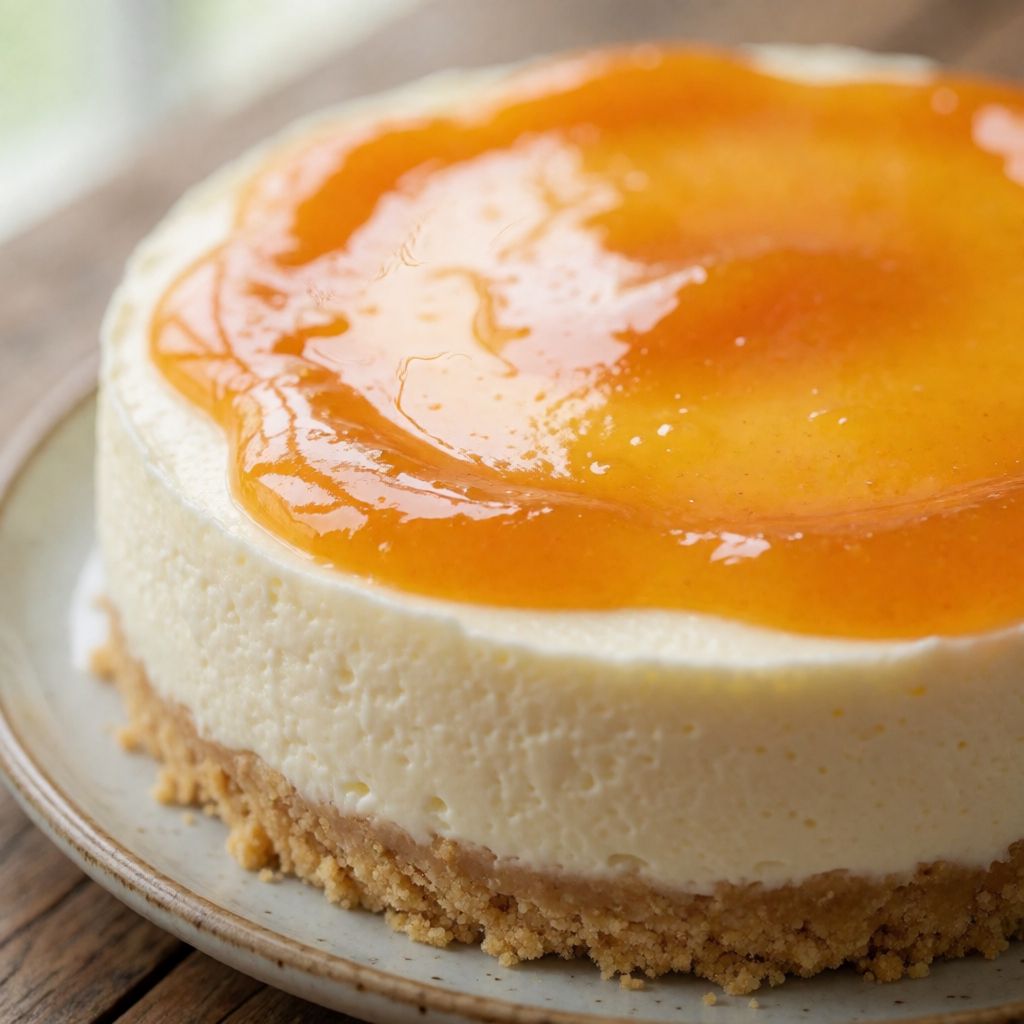
 AI photo
No-Bake Apricot Cheesecake
A creamy no-bake cheesecake on a biscuit base, topped with a sweet apricot layer.
Labels are worked out automatically from the ingredients and can be wrong. Check the packaging if it matters to you.
Ingredients
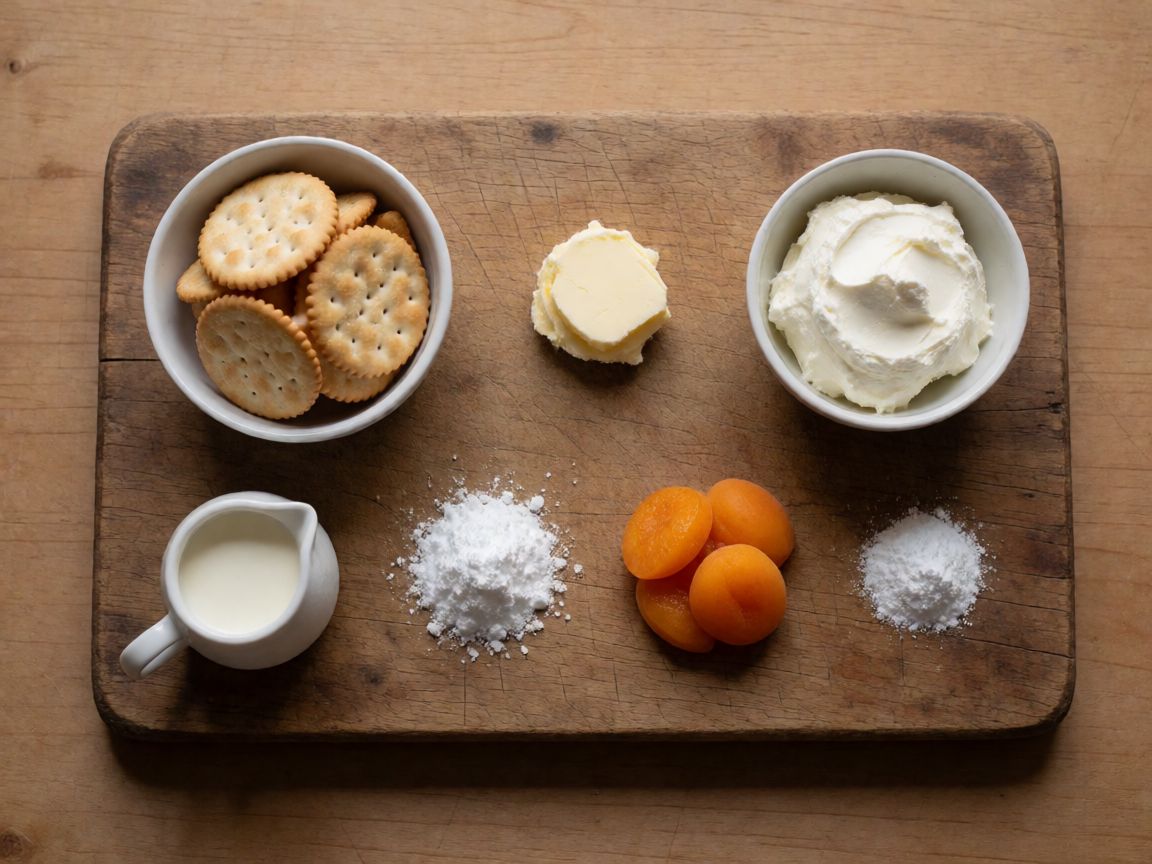
- 280 g digestive biscuits
- 130 g butter melted
- 500 g cream cheese
- 200 ml double cream
- 100 g icing sugar
- 10 g gelatine
- 500 g apricots
- 150 g caster sugar
- 200 ml water
- 50 g cornflour
- 90 g icing sugar










Steps
Crush the dry biscuits in a blender into fine crumbs, add the melted butter and mix well.
Press the mixture into a 22 cm springform tin, flatten with the back of a spoon and chill in the fridge.
30 minCut the apricots into pieces, put them in a saucepan with the sugar and cook.
10 minRemove from the heat and blend the apricots with a stick blender until smooth.
Place over low heat, add the cornflour mixed with water and the 90 g icing sugar, and stir until thickened.
Soak the gelatine in cold water, squeeze out and dissolve in 50 ml of warmed double cream.
Stir the cream cheese, add the gelatine dissolved in cream and mix well.
Whip the remaining double cream with 100 g icing sugar using an electric mixer until thick and fluffy.
Gently fold the whipped cream into the cream cheese with a spatula, spread over the biscuit base and smooth evenly.
Chill the cake in the fridge.
60 minPour the apricot topping over the cream layer, spread evenly and chill in the fridge.
240 min
This is three separate structures stacked in a tin and talked into behaving as one cake: a crumb base held by butter, a cream layer held by gelatine, and a fruit layer held by cornflour. None of it sees an oven. What makes or breaks it is not flavour — it's whether each layer actually sets before you ask it to carry the next one.
Some say a cheesecake without baking is "lazy" or somehow lesser. No — it's a different engineering problem. A baked cheesecake sets because egg proteins coagulate under heat; this one sets because fat (butter in the base, cream in the filling) goes rigid in the cold, and gelatine knits the cream cheese and whipped cream into something that holds a cut edge. Skip the chilling stages and you haven't made a worse cheesecake — you've made soup with a biscuit floor.
The base is just shortbread logic with a shortcut: fine crumbs plus melted butter equals a sand that compacts into a solid when cold, because the butter re-solidifies and glues the crumbs. Press it thin and even — a tall uneven base cracks when you cut through it, because the thick part sets slower and stays softer than the thin part around it.
The filling is the part people rush, and it's the part that most often fails. Gelatine dissolved into warm cream, then mixed into cold cream cheese too fast, can seize into little threads instead of blending in — that's not a flaw in your gelatine, that's a temperature mismatch. The cream cheese and the gelatine-cream need to be close enough in warmth that they marry rather than shock each other.
Biscuits: digestives are the default in a British kitchen because they're already slightly sweet, slightly salted, and break into crumb without turning to dust — too fine a biscuit (like a wafer) gives you a base with no bite, and a very sweet biscuit fights with the fruit later. Any plain, dry biscuit that isn't full of its own strong flavour will do the same job — ginger nuts if you want a spiced edge, but then you're choosing it, not substituting blind.
Butter: melted, not just softened, because it needs to coat every crumb and then re-set hard in the fridge — that's the whole mechanism of the base. Use an unsalted or lightly salted butter; a strongly flavoured one (salted Breton-style, say) will push through the biscuit taste and you'll notice it in a cold, uncooked context far more than you would in a bake.
Cream cheese: this carries the body of the filling, so it needs to be full-fat and firm — the lighter "diet" tubs carry too much water and will thin your filling, asking the gelatine to do a job it wasn't dosed for. Double cream, not single, for the same reason: it has enough fat to whip and hold air, which is what gives the filling its lightness rather than density.
Gelatine: 10 g for this volume of filling is a light set — enough to hold a slice together, not enough to make it rubbery. Soak it in cold water first so it swells gently and dissolves clean rather than clumping; dissolve it in warmed cream (not hot, not boiling) because gelatine loses its setting power above a certain heat — you're melting it, not cooking it. If you only have leaf gelatine or a vegetarian setting agent, the quantity and method change, so don't swap one-for-one by weight and expect the same wobble.
Apricots: in season they need little sugar and cook down fast into their own juice; out of season, or if they're underripe and a bit sour, taste as you go rather than trusting the 150 g blind — this is a case where the recipe gives you a starting point, not a rule. Cornflour here isn't flavour, it's structure: mixed with cold water first (never straight into the hot pan, or it clumps and you get flour lumps in your fruit layer) it thickens the purée into something that will sit on top of the cream without sinking in or running off the edge.
Icing sugar appears three times for three different jobs — in the whipped cream for sweetness that dissolves instantly without graininess, in the fruit layer to round out any sourness after cooking, and you'll notice granulated sugar would leave a slight crunch in a cold dish where everything else is smooth, which is exactly the kind of thing that announces itself at room temperature in a way it wouldn't in a hot one.
On an ordinary hob, "low heat" for the fruit means the surface barely moving, not bubbling — cornflour thickens through gentle, even heat; a hard simmer can make it thicken unevenly and catch on the bottom of the pan before the rest has set. And the long chill at the end — four hours — isn't the recipe being cautious for no reason: that topping needs real time to firm against the cream layer, and cutting in early gets you a cake that bleeds apricot across the plate instead of holding a clean slice. Patience here isn't an extra step. It's the only thing standing between you and a nice-looking puddle.