
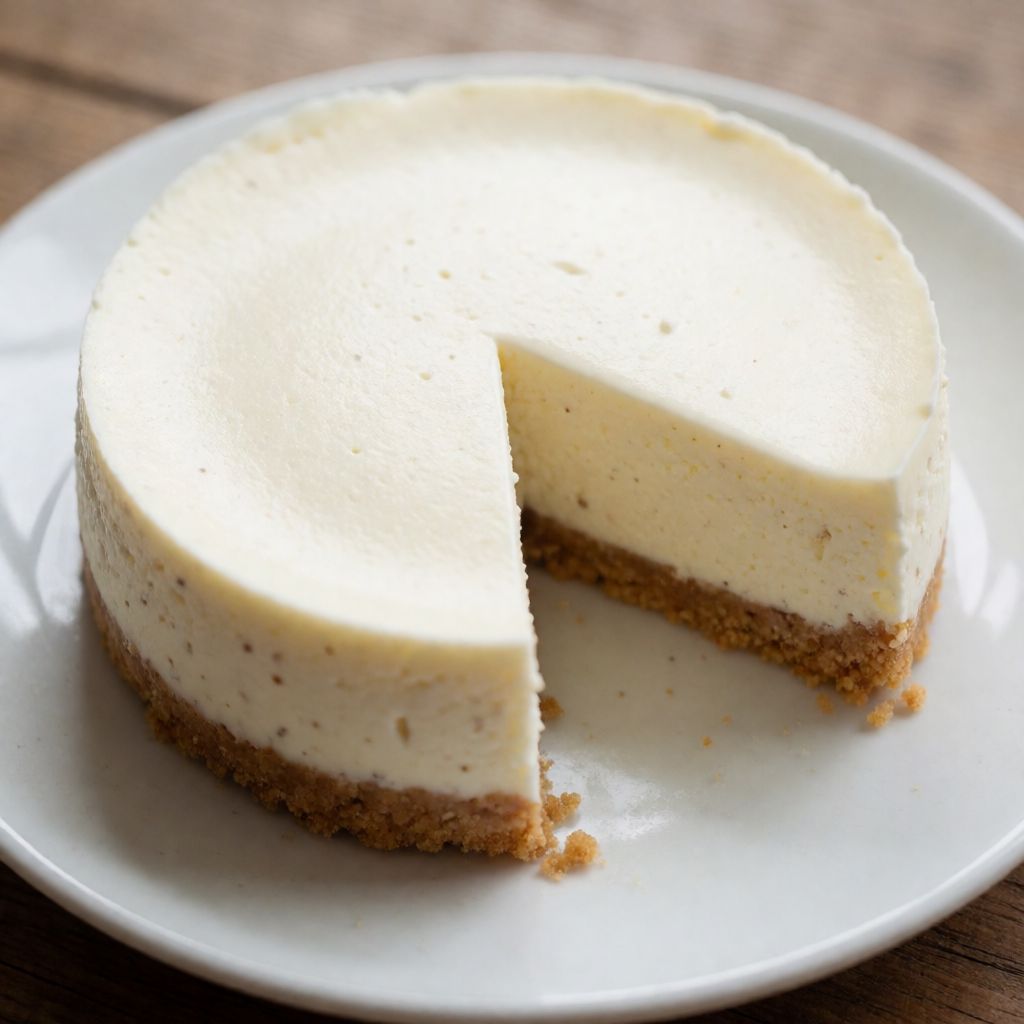
 AI photo
No-Bake Agar-Agar Cheesecake
A chilled no-bake cheesecake set with agar-agar, topped with a raspberry layer.
Labels are worked out automatically from the ingredients and can be wrong. Check the packaging if it matters to you.
Ingredients
- 280 g digestive biscuits
- 150 g butter melted
- 500 g mascarpone
- 350 g cream cheese
- 200 ml double cream
- 200 g icing sugar
- 1 pcs lemon zest
- 7 g agar-agar
- 400 g raspberries
- 80 g caster sugar
- 4 g agar-agar
- 1 pcs raspberries for decoration
- 1 bunch mint leaves for decoration









Steps
Blitz the digestive biscuits in a blender, add the melted butter and process until smooth.
Line a tin with baking paper, press in the biscuit mixture evenly and firmly. Chill in the fridge.
In a bowl, beat the mascarpone, cream cheese, icing sugar and lemon zest until smooth.
In a saucepan, bring the double cream to the boil, add the agar-agar and heat until fully dissolved.
Let it cool, then pour into the cheese mixture, beating with a mixer until smooth.
Spread the filling over the biscuit base, level it out and chill in the fridge.
120 minRinse the raspberries, simmer in a small saucepan with the sugar and agar-agar until boiling, then blend smooth.
Remove any seeds, let the jelly cool and set.
Pour the jelly over the cheesecake, spread evenly and chill in the fridge.
240 minBefore serving, decorate with mint leaves and raspberries.
This is not a cheesecake in the baked sense at all — it's two set creams stacked on a crumb base, and the thing holding it together isn't gelatine, it's agar-agar, a seaweed extract that sets at room temperature and stays set even on a warm plate. That's the whole engineering of the recipe: no oven, no eggs, no water bath, just heat to dissolve, cold to firm up.
What decides whether it works is dissolving the agar properly. Agar needs to actually boil — not simmer, boil — for the powder to let go of its structure and spread through the liquid. Some say you can just stir it into warm cream like gelatine and leave it. No — agar is a different molecule to gelatine, it needs that burst of heat to activate, and if you skip it you get a cream with grit at the bottom and a top layer that never firms.
The second thing that decides it is patience with the base. Press the biscuit crumb in properly — knuckles, the back of a spoon, whatever gets weight into the corners — because a loose base is the one defect you can't fix later: cut a slice and it just falls apart under the cream, however good the filling is.
The raspberry top is a jelly in miniature, same agar logic, just with less of it because you want it soft enough to cut with a spoon, not bounce like a jelly cube from a children's party.
Biscuits and butter: this is simply a cold pastry case. Digestives work because they're dry and a bit sandy, so they soak up melted butter and press into a crust rather than a paste. Any plain, not-too-sweet biscuit with the same crumble does the job — shortbread, ginger nuts if you want a bit of heat underneath, even plain Rich Tea in a pinch, though that one needs a touch more butter since it's leaner.
Mascarpone and cream cheese together: mascarpone alone is too soft and slightly sweet-bland, cream cheese alone is a bit sharp and dense. Together you get body and a mild tang — cream cheese is doing the work that lemon juice does in other recipes, it's what stops the filling tasting like sweetened butter. If you can only get one, use cream cheese and add a spoon of soured cream or crème fraîche to loosen it.
Icing sugar rather than caster, here, is about texture, not sweetness — it dissolves into a cold, unheated mixture without leaving grains, which caster sugar can do in a whipped cream base. Lemon zest is there to wake the whole thing up; without it the filling tastes flat, a bit like plain yoghurt with sugar in. No lemon — orange zest works, just use less, it's sweeter and stronger.
Agar-agar itself: this is a vegetarian setting agent made from seaweed, and it behaves nothing like gelatine leaves or powder, so don't substitute by weight between the two. Agar sets firmer, sets at a much higher temperature (it won't melt again on a warm windowsill the way a gelatine dessert will), and critically it needs that full boil to activate — gelatine would curdle or lose power if you boiled it, agar needs exactly that. If agar-agar isn't on your shelf, gelatine leaves can replace it, but expect a softer set that won't hold up as well out of the fridge, and you'll need roughly double the amount by the usual gelatine conversion — test a spoonful in a saucer first rather than guess on the whole batch.
Raspberries: fresh is nicer for flavour but frozen raspberries work just as well for the jelly top since they're going to be cooked and blitzed anyway — in fact frozen can be better value most of the year in the UK, when fresh raspberries are small, pale and expensive. Removing the seeds is not fussiness for its own sake — a jelly full of pips looks unfinished and catches in your teeth, and a fine sieve or a bit of muslin sorts it in a couple of minutes.
The two long chills — two hours for the filling, four for the jelly top — are not optional waiting around, they're the actual cooking. Agar needs that cold, undisturbed time to finish linking up into a gel; cut it early and you'll get a filling that oozes rather than slices. A UK fridge, which tends to sit colder than people think, will usually get there inside the stated time, but if your fridge is a crowded one from a Sunday roast's worth of leftovers, give it the extra half hour rather than risk a slice that slumps on the plate.