
 AI photo
Japanese-Style Pancakes with Pointed Cabbage
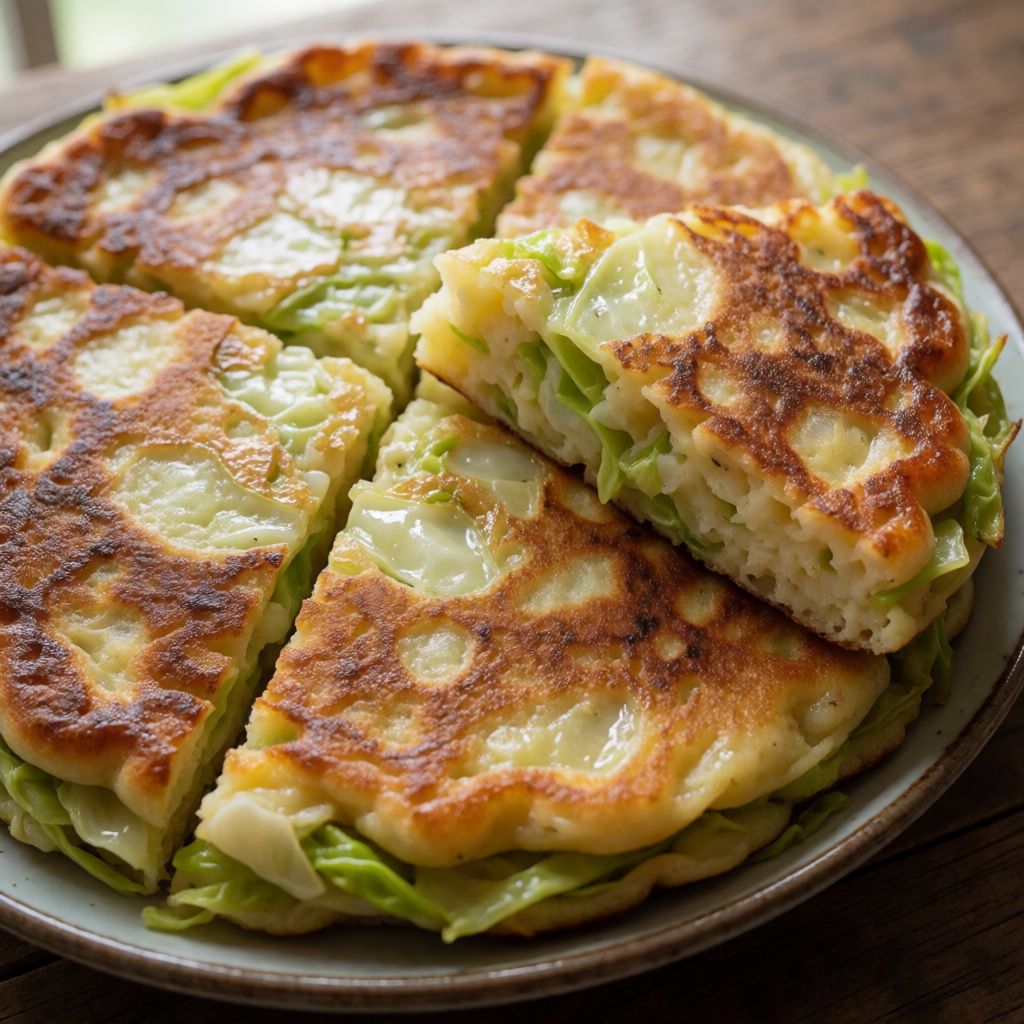
A savoury okonomiyaki-style pancake packed with pointed cabbage, spring onion and a drizzle of sweet chilli sauce and mayonnaise.
Labels are worked out automatically from the ingredients and can be wrong. Check the packaging if it matters to you.
Ingredients
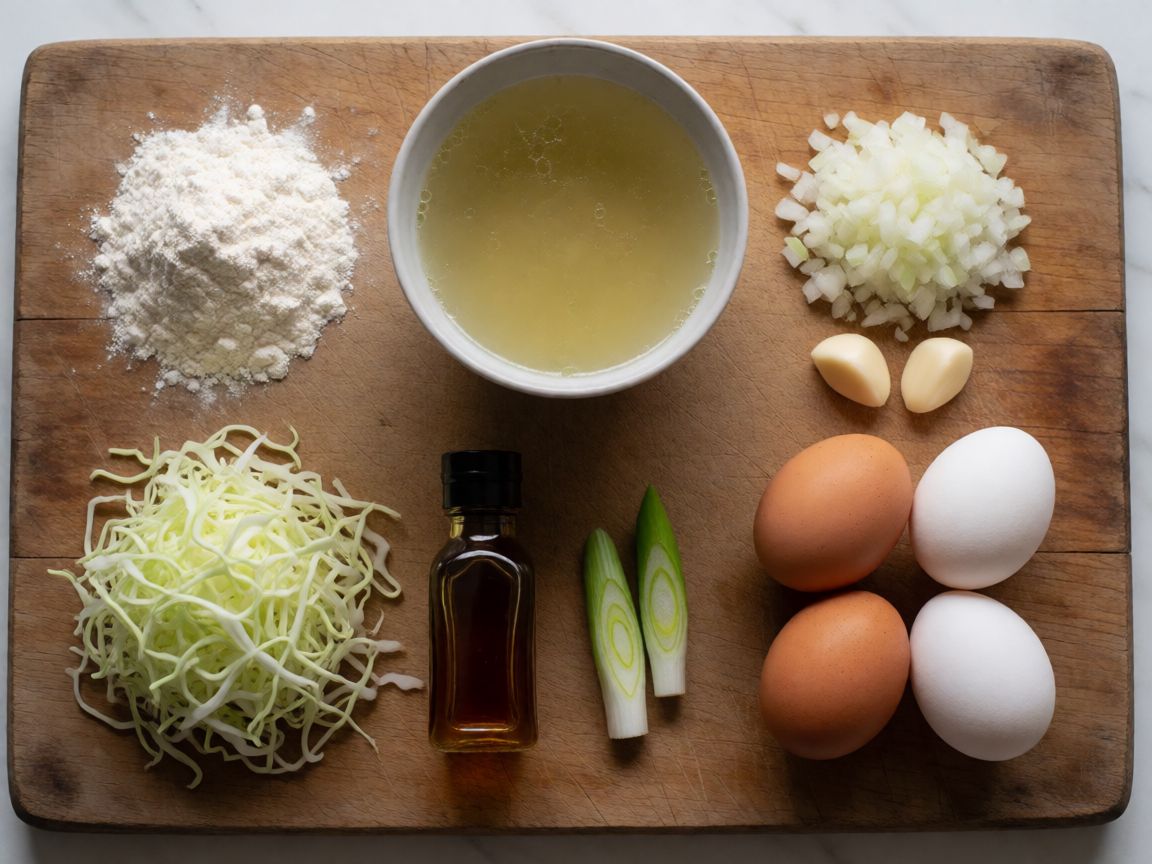
- 200 g Plain flour
- 400 ml Stock
- 1 pcs Onion finely chopped
- 2 clove Garlic finely chopped
- 4 pcs Eggs
- 400 g Pointed cabbage very finely shredded
- Salt
- Black pepper freshly ground
- 1 tbsp Sesame oil or another oil for frying
- 2 pcs Spring onion sliced
- 2 tbsp Sweet chilli sauce
- 2 tbsp Mayonnaise
- 1 bunch Watercress
- 1 tsp Chilli flakes














Steps
Mix the flour with the stock to a thick batter and leave to rest in a bowl for 10 minutes.
10 minMeanwhile, fry the onion and garlic in a little sesame oil in a pan until golden and soft.
Season with salt and black pepper.
Add the onion, eggs and pointed cabbage to the batter and mix well.
Heat a pan well with a little sesame oil.
Spoon small amounts of batter into the pan as pancakes and fry until golden and crisp on both sides.
Place the okonomiyaki on plates, drizzle with lines of sweet chilli sauce and mayonnaise, and sprinkle with chopped watercress.
This is okonomiyaki by way of a UK kitchen — a savoury pancake built around cabbage, held together with a loose flour-and-stock batter and egg, fried flat in a pan and finished with the sauces that actually make it okonomiyaki: sweet chilli standing in for the usual okonomiyaki sauce, mayonnaise in stripes, watercress instead of the traditional bonito flakes and seaweed. It's not trying to be authentic Osaka street food — it's using what's in a British shop, and that's the honest way to do this, not a compromise to apologise for.
What decides whether it works is the batter-to-cabbage ratio and how hot your pan actually gets. The batter here is thin — 200g flour to 400ml stock is almost a crepe consistency before the cabbage and egg go in — which means the cabbage isn't suspended in a thick pancake mix like you'd expect from a British pancake. It's more cabbage held together by a little batter than batter with cabbage folded in. That's the point: the vegetable is the main event, not padding.
The other thing that decides it is patience with the pan heat. Okonomiyaki wants a surface hot enough to set the egg and crisp the outside before the middle turns to cabbage soup in its own steam. Too cool a pan and you get a sad, soggy disc that never develops a crust — cabbage releases water as it cooks, and if the outside isn't sealing fast enough, that water just sits there stewing everything. Get the pan properly hot first, oil shimmering, and only then add the batter.
Some say this needs a teppan, a flat griddle, to be the "real thing" — no, because a teppan is just a flat hot metal surface, and a wide, heavy-based frying pan on a domestic hob does the same job once you accept the obvious limit: your pan is smaller, so you're making four or five modest pancakes, not one big one, and you're doing it in batches. That's not a downgrade. It's just the shape your kitchen is.
Pointed cabbage — the sweetheart or hispi cabbage you'll see in a British greengrocer — matters because it's softer and sweeter than a round white cabbage, with less of that raw sulphurous bite. Shred it very finely not for looks but because thick ribs of cabbage stay crunchy-raw in the middle of a quick-fried pancake while the surface burns; fine shredding means every strand cooks through in the same couple of minutes. If pointed cabbage isn't in season, Chinese leaf or even a finely shredded white cabbage with a longer sweat-down of the onion to compensate for lost sweetness will do — the criterion is a cabbage that softens fast and doesn't fight you with fibre.
The stock in the batter is doing a flavour job that water can't — it's the difference between a pancake that tastes of flour and one that tastes of something underneath the flour. Any stock with body works: chicken, vegetable, even a weak dashi if you have it, which would nudge this back toward its Japanese roots. The 10-minute rest isn't decoration — it gives the flour time to properly hydrate and the gluten to relax, so the batter coats the cabbage instead of sitting lumpy and uneven in patches.
Frying the onion and garlic separately first, until they go from raw-white to soft and gold, is the step people skip when they're in a hurry, and it's the step that prevents the pancake tasting of raw onion with a cooked crust around it — because once the batter goes into the pan, the cooking time is short, five minutes a side at most, nowhere near long enough to cook out harsh onion from scratch. Sesame oil gives a toasted, nutty background that plain vegetable oil won't, but the rule for frying oil is simpler than the ingredient list suggests: use any oil with no strong smell of its own for the actual frying — sesame oil burns if the pan runs too hot, so a neutral oil like sunflower or groundnut for the cooking, with a few drops of sesame oil stirred through at the end or into the batter for flavour, is the safer split.
The eggs bind everything — without them you'd have a sauce, not a pancake, because flour-and-stock batter alone has nothing to hold the air and set firm. Watercress at the end is standing in for the traditional dried seaweed and bonito flakes, giving a peppery green bite rather than a smoky-savoury one — close your eyes and it reads differently, but it still gives you something fresh cutting through the sweet chilli and mayonnaise, which is the job that matters. If you can't get watercress, rocket or even finely sliced spring onion tops do the same cutting-through work.