
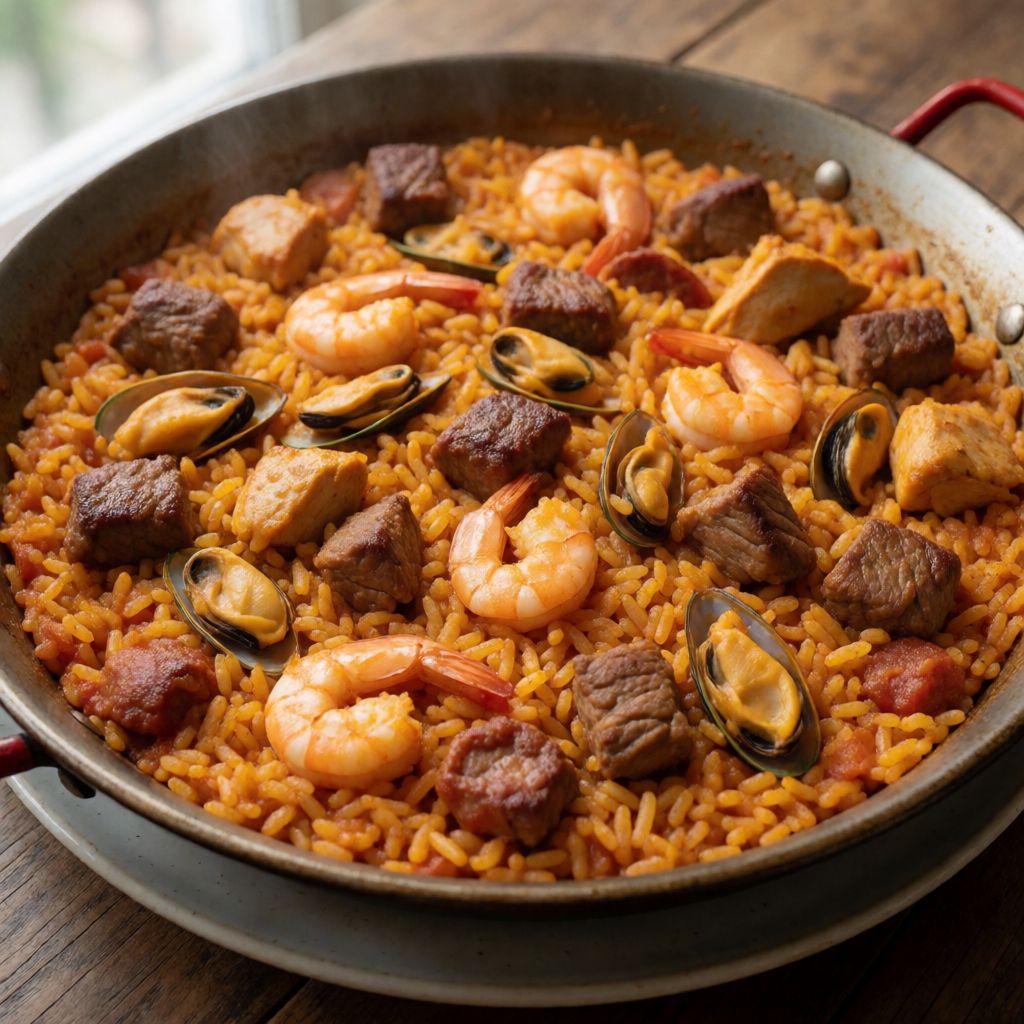
 AI photo
Paella with Meat and Seafood
A paella bringing together meat and seafood in one pan, rich with saffron and a splash of the sea.
Labels are worked out automatically from the ingredients and can be wrong. Check the packaging if it matters to you.
Ingredients
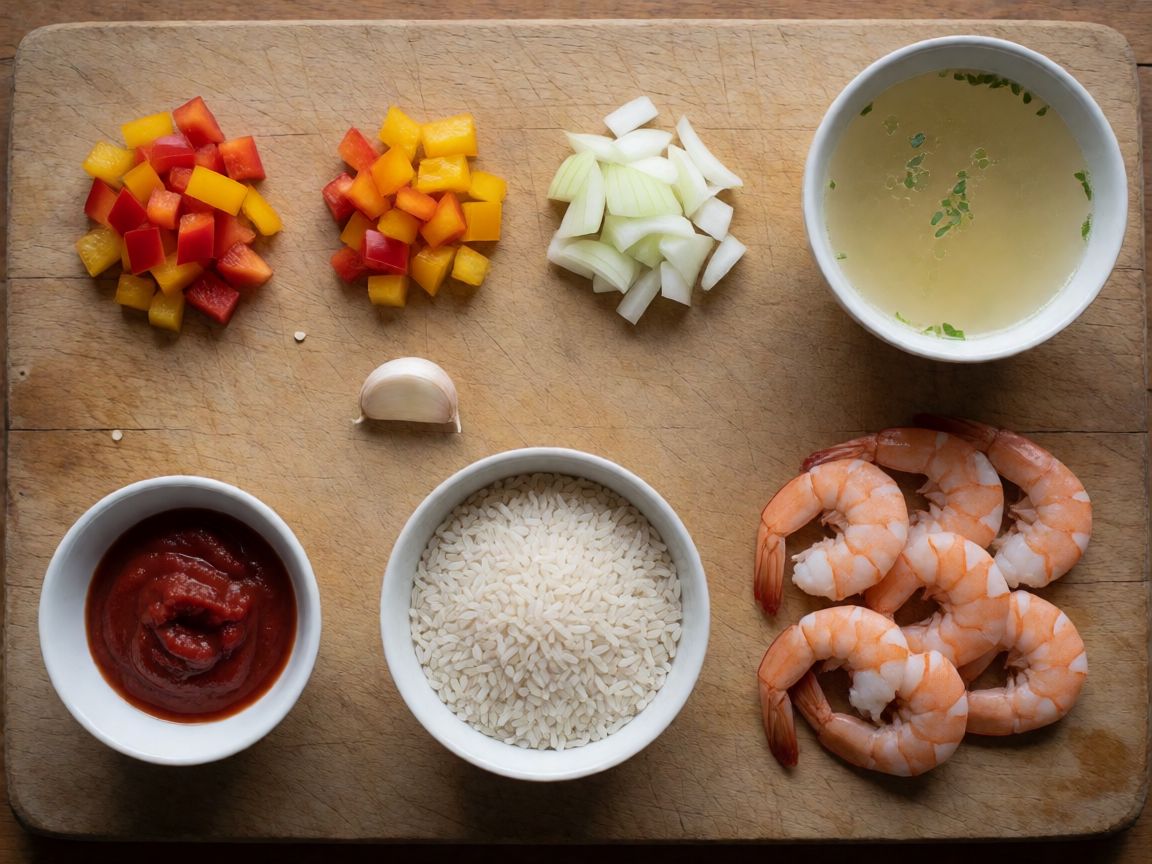
- 80 g Red pepper
- 80 g Green pepper
- 50 g Onion
- 1 clove Garlic
- 220 g Tomato paste
- 180 g Bomba rice
- 280 ml Meat stock
- 6 pcs King prawns
- 350 g Mussels
- 1 pcs Cuttlefish about 140 g
- 90 g Chicken breast
- 90 g Rabbit
- 60 g Peas
- 2 g Paella colouring or 0.5 sachet of saffron and 1 tsp paprika
- Salt to taste
- Black pepper to taste
- Olive oil to taste















Steps
Cut the rabbit and chicken breast into small pieces.
Place the paella pan over high heat, add olive oil and sear the meat over high heat, season with salt and pepper, then transfer to a plate.
5 minBlend the red pepper, green pepper, onion and garlic. Put the vegetables in the paella pan, add olive oil and salt: cook, stirring occasionally.
15 minAdd the tomato paste, stir and cook: the base is now ready.
10 minRinse the prawns and cut the cuttlefish. Open the mussels by cooking them in a pan with water over high heat. Discard any mussels that do not open.
6 minRemove the mussels from their shells (keep 6 in their shells) and strain the cooking water through paper or muslin.
Place the paella pan over heat, add the peas and cuttlefish to the base, stir and cook.
5 minAdd the meat, shelled mussels, mussel cooking water, meat stock and paella colouring: stir together.
Add the rice and arrange the prawns on top. Reduce the heat to the lowest setting and cook the paella without stirring. It is ready when the inside reaches 74°C.
When cooking is finished, arrange the reserved mussels in their shells between the prawns.
Cover the paella pan tightly with foil and let it rest.
10 minServe the paella with meat and seafood.
Paella is not a rice dish with things thrown on top — it's a method for building flavour in layers, where the rice is the last thing that happens, not the point of it. What decides whether this works is the sofrito: that blitzed pepper-onion-garlic-tomato base you cook down slowly until it stops tasting raw and starts tasting like itself concentrated. Skip that, rush that, and no amount of saffron or prawns will save the pan — you'll have rice cooked in flavoured water, not paella.
The second thing that decides it is restraint once the rice goes in. From that point you do not stir. This is where people fresh off a Sunday roast instinct get it wrong — stirring is what you do to a stew, not to paella. Stirring breaks the starch, releases it into the liquid, and you end up with something closer to a risotto than the dish you're after. The rice needs to sit still and absorb from below, and the only thing that should move is the heat under it, down to barely-there.
On a UK hob you haven't got a kazan, and you're not meant to. A wide pan — the widest flat-bottomed one you own — is the real paella pan here; shallow surface area, not depth, is what matters, because it lets the liquid reduce and the rice cook in a thin layer rather than steaming in a heap. If your biggest frying pan is still not that wide, split the rice and liquid between two pans rather than piling it deep in one — deep paella is just wet rice with good intentions.
Bomba rice earns its name — it's the variety bred to absorb three times its volume in liquid without blowing apart into mush, which ordinary long-grain or basmita simply can't do; they'll turn to porridge before they've taken on any flavour. If you can't find Bomba, Arborio is the honest substitute — it's bred for the same job in risotto — but understand you're borrowing a tool from another dish, not using the real one.
Mussels get cooked in plain water first, not wine, not stock — because what you actually want out of that step is the liquid, not the mussel. That cooking water is concentrated mussel essence, and straining it through paper or muslin removes the grit and broken shell without losing that. Discarding any mussel that hasn't opened isn't fussiness — a closed mussel after cooking was dead before it went in the pot, and you don't want to find that out at the table.
Paella colouring is saffron and paprika doing two different jobs, not one. Saffron gives aroma and that particular gold; paprika gives colour depth and a background warmth. Some say you can skip straight to turmeric for the colour — no, because turmeric brings its own flavour that fights the sofrito rather than sitting under it. If you're using half a sachet of saffron and a teaspoon of paprika instead of the pre-mixed colouring, that's the real recipe anyway — the sachet is just someone else doing the measuring for you.
Searing the rabbit and chicken hard, in hot oil, before anything else, isn't about cooking them through — it's about the base of the pan picking up browned bits (fond, if you want the word) that then get worked into the sofrito when the vegetables go in. Skip the sear and the whole dish tastes flatter, because that caramelised layer never formed. Rabbit can be swapped for more chicken thigh if you can't get it easily in a UK supermarket — the texture's different but the mechanism, meat browned first, holds.
The 74°C mark isn't paranoia, it's the actual point at which prawn and chicken are both safely cooked through without the prawn going past the point of no return into chewy. A probe thermometer earns its keep here — guessing by colour alone with raw king prawns sitting on top of simmering rice is how you either undercook or turn them to pencil erasers.
Letting the pan rest under foil for ten minutes at the end is not an optional nicety — it's the step where the rice finishes absorbing whatever liquid's left and the socarrat, that thin catch of toasted rice at the very bottom, sets without burning. If you pull the foil off and dig in straight away, you waste the one bit of structural patience this dish actually demands of you after an hour and forty minutes of everything else.