
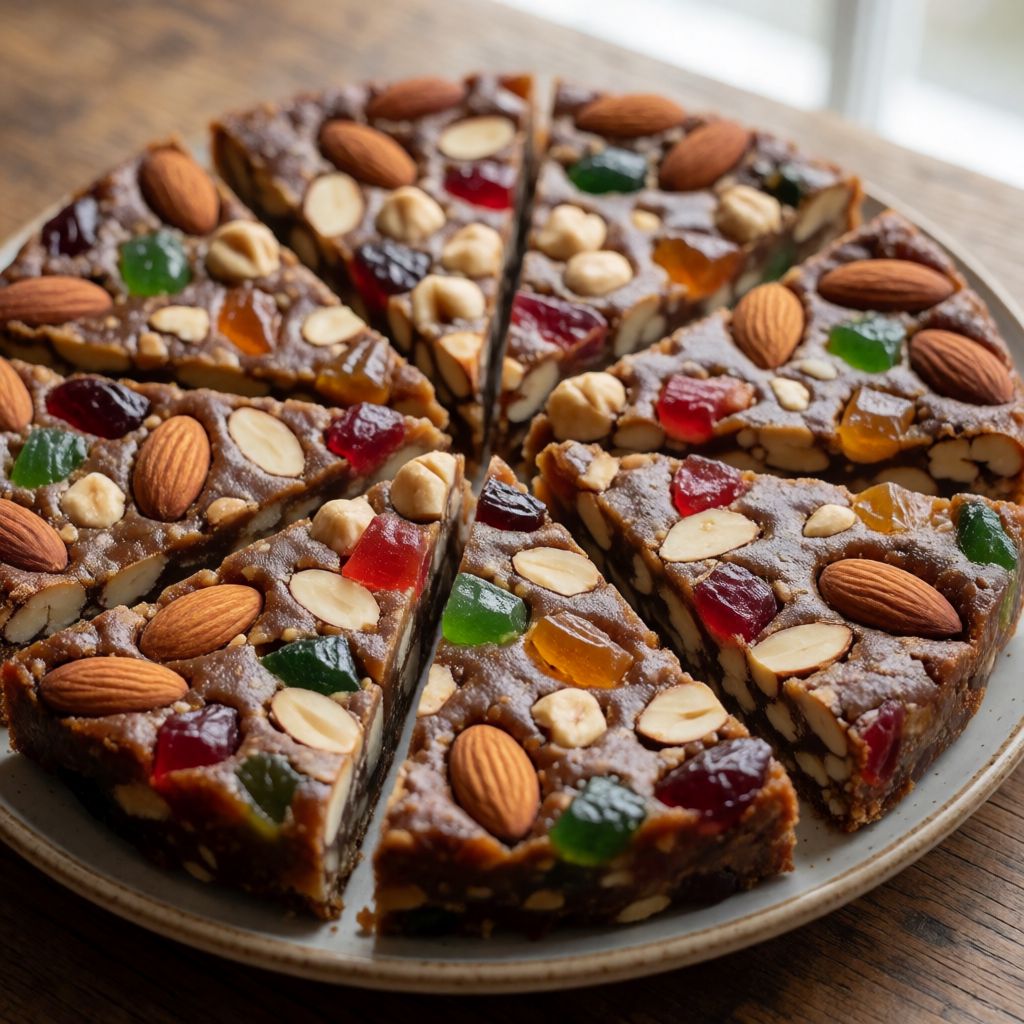
 AI photo
Panforte – traditional Sienese dessert
A traditional Sienese dessert made with almonds, hazelnuts and candied fruit, bound in a honey-sugar syrup and lightly spiced.
Labels are worked out automatically from the ingredients and can be wrong. Check the packaging if it matters to you.
Ingredients
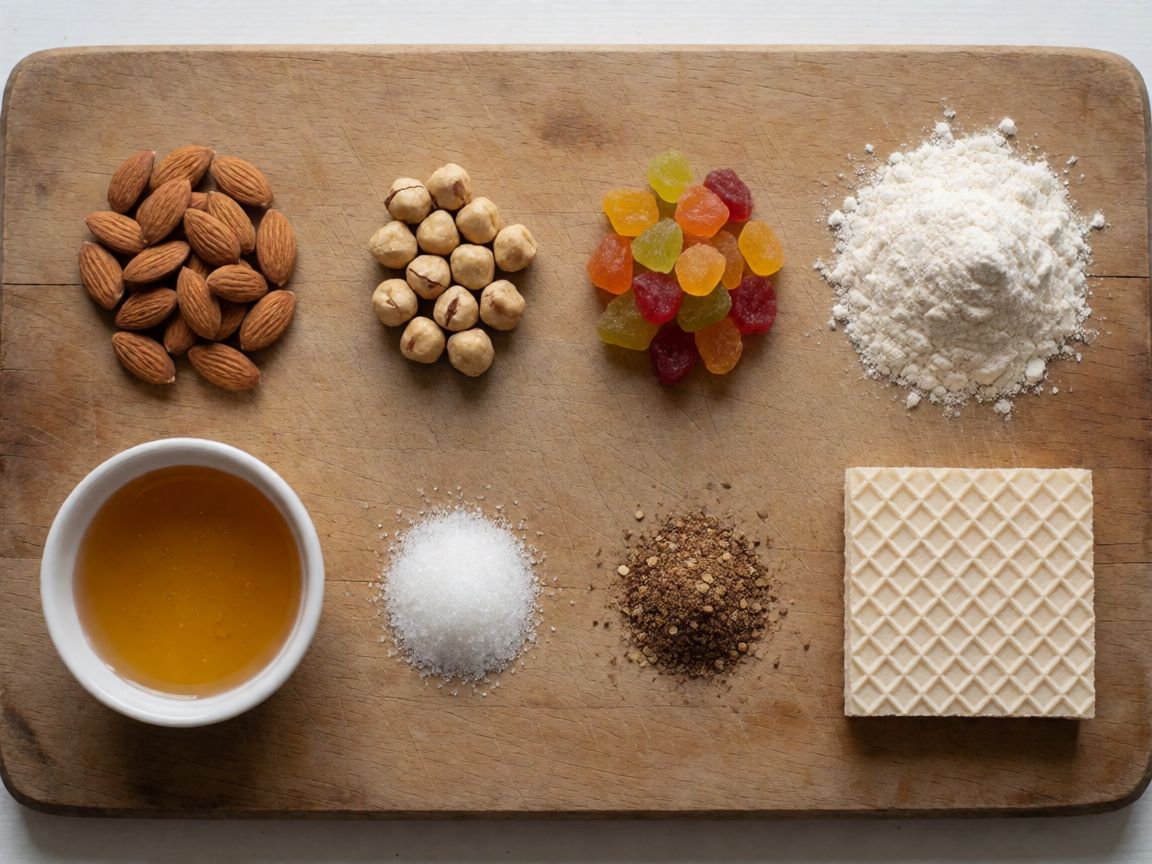
- 125 g Almonds
- 50 g Hazelnuts
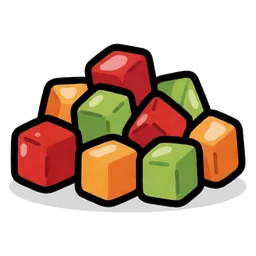
- 100 g Candied fruit mix
- 75 g Plain flour
- 75 g Wildflower honey
- 75 g Sugar
- 1 tbsp Water
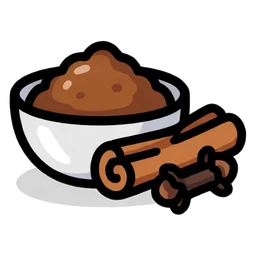
- 1 tsp Mixed spice
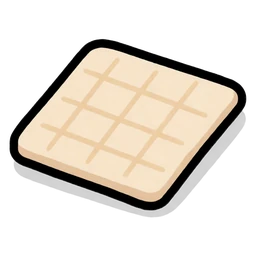
- 1 pcs Edible wafer paper or baking paper
- 1 tbsp Icing sugar to taste, for dusting
- 1 tbsp Butter for greasing






Steps
In a large bowl combine the almonds, hazelnuts, diced candied fruit, flour and mixed spice. Stir with a spoon.
In a small bowl combine the honey, sugar and water. Warm gently in the microwave or over a very low heat.
Cook the syrup over a low heat, stirring constantly, until it thickens, to a temperature of about 115°C.
Add the hot syrup to the dry mixture of nuts and candied fruit and mix quickly.
Work the dough quickly until it firms up. It is ready when it looks glossy and pliable.
Grease an 18-20 cm springform tin with butter, line with wafer paper, spread the dough and smooth the top.
Bake the panforte at 180°C.
20 minRemove from the oven and let it cool completely before turning out of the tin.
Before serving, dust generously with icing sugar.
Panforte is basically a fruitcake that gave up on being a cake. There's no raising agent, barely any flour, and the structure comes entirely from sugar syrup setting around nuts and fruit like mortar around rubble. What you're baking isn't a sponge, it's a slab, and a dense, chewy, almost fudgy one if you get it right.
What decides whether it works is the syrup stage, not the oven. You're cooking sugar, honey and a splash of water to roughly 115°C — the "soft ball" stage, where a drop in cold water forms a squashable bead rather than a hard crack. Too cool and the panforte never sets, stays sticky and collapses when you cut it. Too hot and it turns into a nut-studded toffee you need a hammer for. A thermometer earns its keep here; guessing by colour alone is a myth worth retiring — sugar syrup barely changes shade in that window, it changes behaviour.
Once that syrup is ready, speed is the whole game. Honey-sugar syrup starts setting the moment it cools, so you fold it into the nuts, spices and flour fast, press it into the tin fast, and smooth it before it seizes into something you can't shape. This is why the recipe says "work quickly" rather than giving you minutes — by the time you'd finished counting, it would already be too stiff to move.
Almonds and hazelnuts are the skeleton of the thing — they want to stay whole or roughly chopped, not ground, because panforte's whole appeal is biting through a piece of nut, not a paste of one. Any firm, oily nut works here: walnuts, pistachios. Avoid anything soft like cashews, which go chewy themselves and blur into the fruit instead of giving contrast.
The candied fruit is doing a job cocoa or chocolate can't — it's dried enough not to leak liquid into the syrup, which matters, because any extra moisture pushes your syrup away from that 115°C setting point and softens the whole structure. Candied citron and orange peel are the Sienese standard, partly because citrus fruit was one of the few things worth preserving in sugar in a hot inland town with no coast and no reliable refrigeration — a medieval way of keeping fruit edible past its season, not a flavour chosen for magic. If you can't get candied peel, use glacé cherries or mixed peel cut small; just keep it dry, not syrupy-wet from the jar.
The flour is almost an afterthought — 75g against 175g of nuts — and that's deliberate. It's there to soak up a little moisture and give the dough enough body to hold its shape before the syrup sets, not to build any crumb. Plain flour is fine; you're not activating gluten here, there's no kneading, so there's nothing a "stronger" flour would buy you.
Honey plus sugar, rather than sugar alone, is what gives panforte its particular chew instead of a brittle snap — honey resists crystallising the way plain sugar syrup does, so the set stays pliable rather than glassy. Use a honey with some character, since at these quantities you'll taste it; a flavourless honey here is a wasted ingredient.
Mixed spice earns its place by cutting through all that sugar and fruit — cinnamon, nutmeg, that register — so don't skip it thinking it's decorative; without it, the whole thing reads as one-note sweet.
Edible wafer paper matters more than it looks: it's there so the set sugar doesn't fuse itself permanently to the tin or to greaseproof paper, which panforte will absolutely do once it cools and hardens. Baking paper, well greased, is a fair substitute, as the recipe already allows — just butter it properly, because any gap is where the finished slab decides to stick.
And the one ingredient not listed: time to cool. Panforte needs to go from a hot, half-set syrup structure to a fully firm one at room temperature before you turn it out or cut it — rushing this isn't a shortcut, it's how you end up with a cracked disc and sugar glued to your tin. Patience here isn't a virtue, it's the last ingredient the recipe needs from you.