
 AI photo
Red Velvet Pancakes
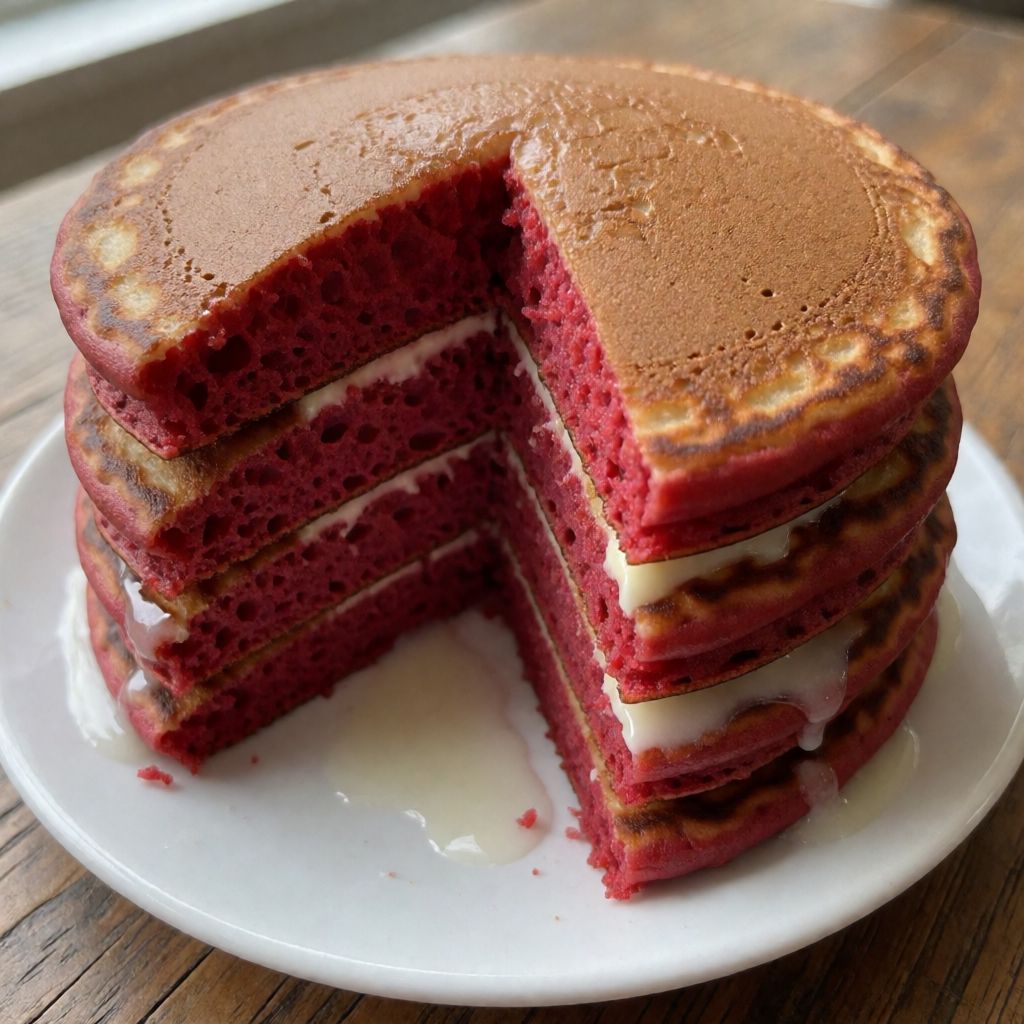
Fluffy red velvet pancakes coloured with food colouring, topped with a cream cheese frosting and maple syrup.
Labels are worked out automatically from the ingredients and can be wrong. Check the packaging if it matters to you.
Ingredients
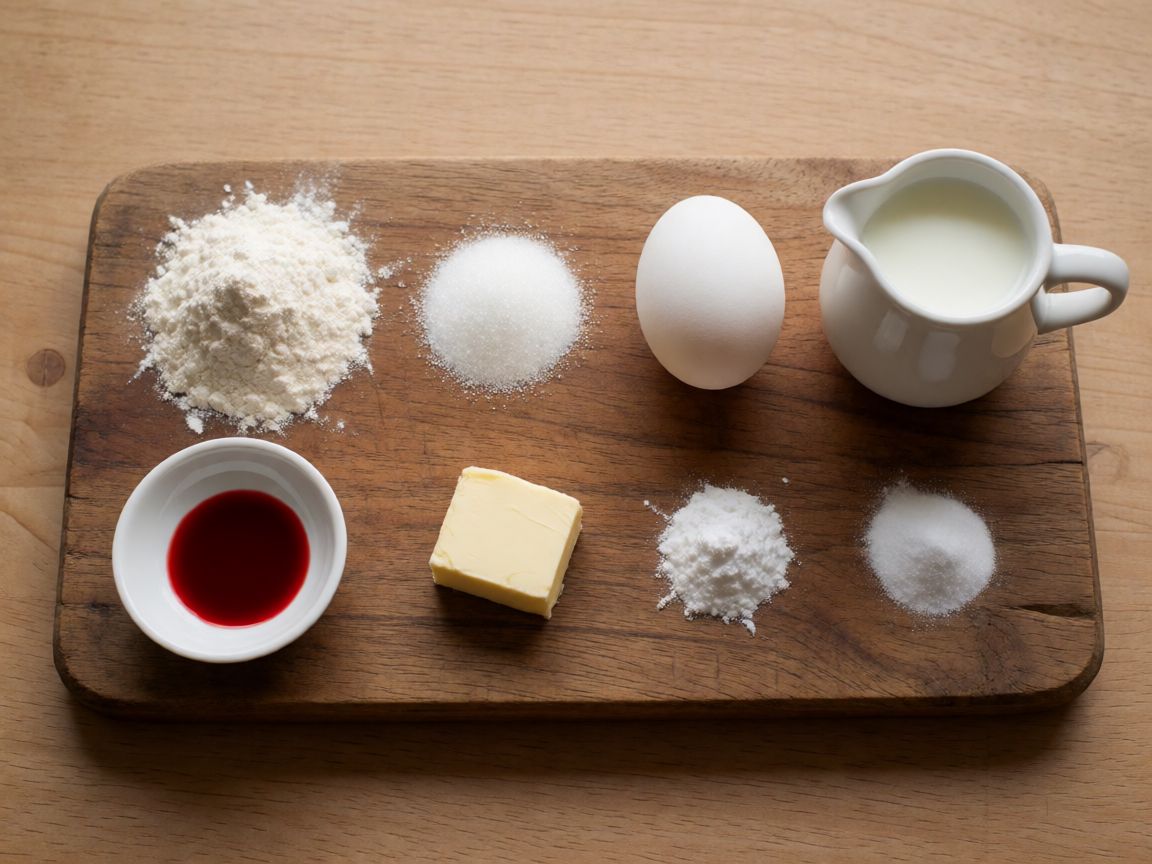
- 120 g Plain flour
- 1 tbsp Caster sugar
- 1/2 tsp Salt
- Food colouring to taste, red
- 1 pcs Eggs
- 200 ml Milk
- 30 g Butter
- 1 tsp Baking powder
- Bicarbonate of soda a pinch
- 70 g Cream cheese
- 70 ml Double cream
- Icing sugar to taste
- Maple syrup to taste











Steps
Sift the flour into a large bowl, add the baking powder and bicarbonate of soda.
Add the salt and sugar, mix lightly so the dry ingredients are evenly distributed.
Separately, melt the butter in a bain-marie, then let it cool slightly.
Add the melted butter, milk and egg to the flour mixture, being careful not to overmix.
Add the red food colouring until you reach the desired shade, mixing until evenly distributed.
Leave the batter to rest for at least 30 minutes at room temperature.
30 minHeat a non-stick pan with a thin layer of butter and start pouring the batter, two tablespoons at a time.
Cook the pancakes until small holes appear on the surface, which means they have set.
Flip the pancake to cook the other side.
Repeat until the batter is finished.
Beat the cream cheese until smooth, gradually adding the icing sugar.
Add the double cream and whip the mixture to a light, creamy texture.
Stack the pancakes on top of each other and pour the cream cheese frosting over the top.
Generously drizzle everything with maple syrup.
Red velvet is, chemically, a bit of a magic trick that long predates the bottle of red colouring. Before food dye was common, bakers in the American South noticed that cocoa reacting with buttermilk or vinegar under heat could turn a faint brick-red — the anthocyanins in raw cocoa shift colour with acid. Dutch-processed cocoa (alkalised, to make it smoother and less bitter) killed that reaction stone dead, so by the mid-20th century the red had to come from a bottle instead. These pancakes skip the cocoa altogether and just go straight for the dye — which is honest, if you think about it. Nobody's pretending the colour means anything about flavour. It's buttermilk-style pancakes wearing a costume.
What decides whether this works is the same thing that decides any pancake: the rest and the ratio of wet to dry. You're not making crêpes, you're making American-style drop pancakes — thick enough to hold their shape in the pan, risen by baking powder and that pinch of bicarbonate rather than by beaten egg whites or yeast. The bicarb's job is specific: it needs an acidic partner to fire properly, and here that's largely the buttermilk-ish tang if you're using soured milk, or just a secondary lift alongside the baking powder if you're using plain milk. Either way, the little holes that open on the surface as they cook are your bicarb and baking powder doing their work — CO2 pushing up through batter that's just set enough to trap it. That's the cue to flip, not a clock.
Flour first: plain flour, nothing fancier, because the rise here comes from chemical leavening, not gluten development or yeast. Overmixing the batter once the wet ingredients go in is the one real danger — gluten strands tighten up and your pancake goes from tender to rubbery. Stir until it's just combined, streaky is fine, lumps are fine. Some say you need to beat batter smooth for a good pancake — no, because smooth batter usually means you've worked the gluten, and tough is the result, not tenderness.
The thirty-minute rest is not a formality, it's doing two things: letting the flour fully hydrate so the batter thickens properly, and giving the baking powder's slower-acting component time to start working before it ever hits the pan. Skip the rest and you get pancakes that spread thin and cook flat, no lift, no structure. Patience here isn't virtue for its own sake — it's the difference between a pancake and a crêpe you didn't mean to make.
Butter, melted and cooled slightly before it goes into the batter: the cooling matters because hot butter poured straight in will start cooking the egg on contact, giving you little scrambled flecks through your batter. Let it sit a minute off the heat. Any neutral fat with no flavour of its own would do the leavening and tenderising job of the butter inside the batter, but for frying the pan, butter earns its place — it browns and smells like itself, which oil won't give you, and in a dish this sweet, that faint savoury edge from browned butter solids matters more than people think.
Milk: whole milk gives you richer, more tender pancakes than skimmed, because fat coats the gluten strands and keeps things soft. If you want the old-fashioned acid-driven lift, sour the milk yourself — a spoon of lemon juice or vinegar in your 200ml, left five minutes to curdle slightly, mimics buttermilk and gives the bicarbonate something proper to react against. Not essential with baking powder doing most of the lifting, but it's the version closer to where red velvet actually comes from.
Food colouring: gel colouring goes further with less liquid than liquid drops, which matters because you don't want to loosen the batter chasing a shade of red. Add it gradually — you can always deepen it, you can't take it back out.
On the hob: this is a domestic pan job, not a griddle, so heat control is by eye and smell, not a dial setting. A thin film of butter, enough to stop sticking, not so much that the edges fry crisp — you want pancake, not a lacy fritter edge. Pour, wait for the surface to go from wet-shiny to matte with little craters opening up, that's your flip signal, full stop. Flip too early, before the holes set, and the top half tears or the whole thing folds on itself when you try to turn it.
Cream cheese, full-fat block style, not the spreadable tub kind if you can help it — the tub versions carry more water and your frosting goes thin and weepy instead of holding its shape over the stack. Whip it smooth before the sugar goes in, or you'll be chasing lumps forever once the cream's folded through. Icing sugar dissolves rather than crystallising like caster would, which is the whole reason it's specified here and not swapped. The double cream, whipped in afterwards, lightens the frosting from a dense cheesecake-paste into something that pours and drapes down the stack instead of sitting on top like a lid. Four to six pancakes is a reasonable stack for two people with this quantity of batter — plan the frosting to be generous rather than thrifty, there's nothing to save it for afterwards.