
 AI photo
Pasta with Asparagus and Mushrooms
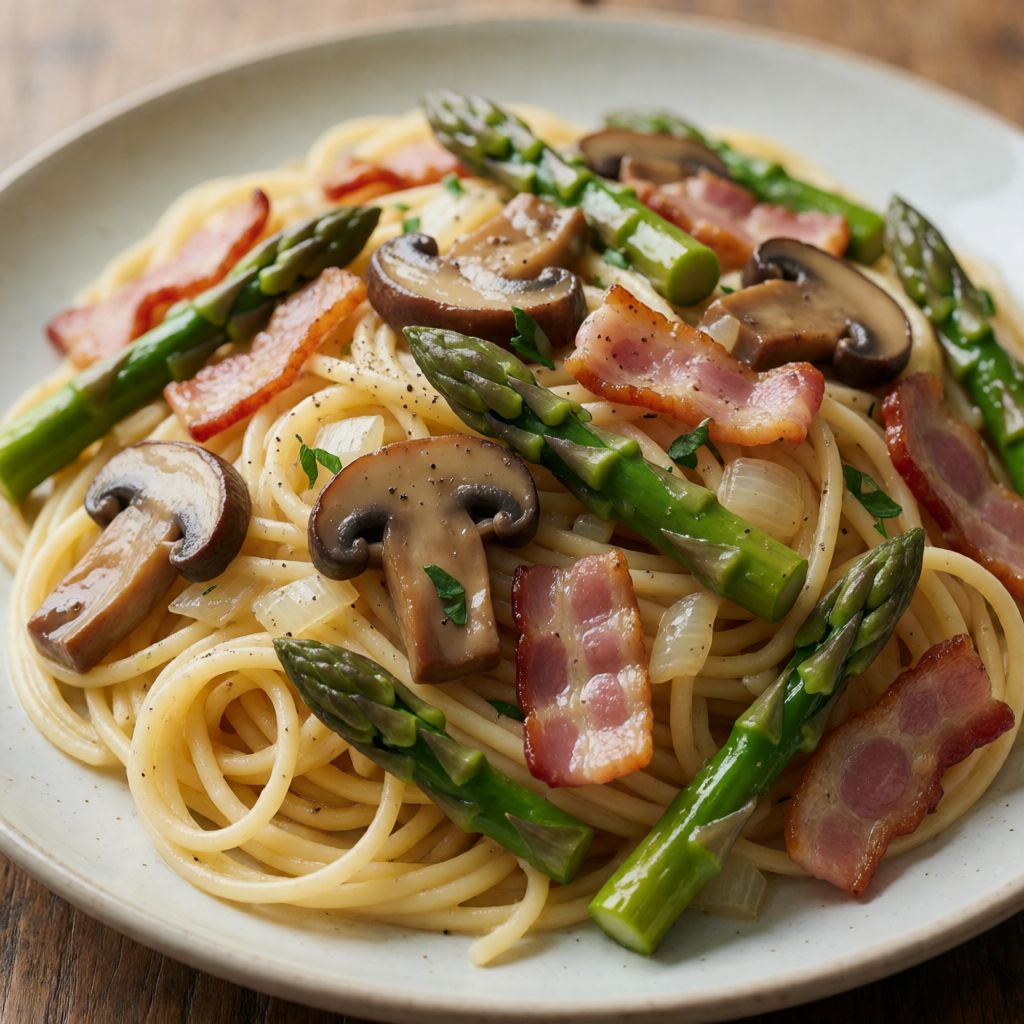
A hearty pasta dish with dried mushrooms, asparagus, pancetta and herbs, finished with butter and grated cheese.
Labels are worked out automatically from the ingredients and can be wrong. Check the packaging if it matters to you.
Ingredients
- 400 g Pasta
- 250 g Dried porcini mushrooms dried
- 350 g Asparagus
- 100 g Pancetta
- 1 pcs Onion
- 125 ml White wine
- 500 ml Vegetable stock
- 1 pcs Celery stalk
- Olive oil to taste
- a handful Coriander fresh
- a handful Parsley fresh
- Butter to taste
- Parmesan grated, to taste (or Pecorino Romano) [c1]
- Salt to taste
- Black pepper to taste















Steps
Soak the dried mushrooms in hot water, changing to fresh hot water once.
Rinse the asparagus under running water and trim off the tough lower part of the stalks.
Peel and finely chop the onion, and chop it together with the celery stalk. Finely chop the fresh coriander and parsley.
In a large pan, fry the onion and celery in olive oil until golden, then add the pancetta, mushrooms and chopped asparagus. Cook until the pancetta is fully browned.
Pour in the wine and let it evaporate, then add the chopped herbs.
Pour in the vegetable stock and simmer covered until the mixture is tender. Season with salt and pepper and cook for a further 10 minutes.
10 minCook the pasta, drain and transfer it into the pan with the sauce.
Mix in the butter and grated Parmesan until creamy.
Serve the dish immediately, hot and fragrant.
What was changed
The hard cheese topping is swapped for Parmesan, the one most commonly found in UK shops.
This isn't a five-minute pasta where you just chuck raw vegetables on top. It's built the way a ragù is built — a base fried down first, then simmered into something thick and savoury, and only at the very end does the pasta meet it. What decides whether it works is almost entirely what happens before the stock goes in: how far you take the soffritto, how well you brown the pancetta, and whether you let the wine actually disappear instead of just splashing it in and moving on.
The mushrooms are doing two jobs. One is flavour — dried porcini have a concentrated, almost meaty depth that fresh mushrooms don't have, because drying breaks down proteins into the same glutamates that make stock taste like stock. The other job is grit removal, which is why you soak and change the water: porcini grow close to the ground and trap sand in their gills, and the first soak is mostly there to pull that sand out, not to soften the mushroom. Some people pour the second soaking water straight down the sink — don't. It's mushroom stock. Keep it and use it in place of some of the vegetable stock if you want the sauce to taste of more mushroom, not less.
Asparagus goes in raw and chopped, which means it's going to cook twice — once in the fry, once in the simmer. That's deliberate: it's there to fall apart slightly and thicken the sauce, not to stay crisp and green like it would in a stir-fry. If you want it to keep some bite, chop it coarser and add it later, but then you're changing the dish, not following it.
On the dried porcini amount: 250 g of dried porcini is a serious quantity — expensive too, especially bought from a UK supermarket rather than an Italian deli where it's sold loose and cheaper. If you can't justify the cost, use a smaller handful of dried porcini for the depth and make up the bulk with fresh mushrooms — chestnut or portobello, sliced thick so they don't disappear. The criterion is: dried for concentrated flavour, fresh for texture and volume. You lose nothing by rebalancing that way; the dried ones are a seasoning as much as an ingredient.
Asparagus: trim where it bends and snaps on its own, not at a measured point from the tip. The bottom third of a spear is often woody regardless of where you cut, because that's the part that was underground or near it — fibrous, not tender. Snapping finds the actual boundary; cutting with a knife at a fixed length is a guess.
Pancetta is there for fat and for the browned bits it leaves in the pan — those bits are flavour that nothing else in the dish replaces, which is why step 4 tells you to cook it until fully browned, not just until it's no longer pink. If you can't get pancetta, use any cured, fatty pork — bacon lardons work, though they're wetter and will need a bit longer to render and brown properly. What you're avoiding by waiting for full browning is a sauce that tastes of boiled vegetables and nothing else, because the Maillard browning is doing a job the stock can't.
The onion and celery base — a rough soffritto — exists for the same reason it exists in most Italian long-cooked sauces: it's the cheapest way to put a foundation of sweetness and savour under everything else, built from vegetables that keep for weeks and cost almost nothing. There's no magic in it, just old thrift that outlasted the poverty that invented it.
Wine goes in to be cooked off, not tasted as wine — "let it evaporate" means the sharp, raw alcohol smell has to go, replaced by something rounder. Any dry white with no noticeable sweetness will do; what matters is dryness, not the label.
Stock: vegetable, because this isn't a meat dish even though pancetta is in it. If you've kept your mushroom soaking liquid, strain it well — through a paper towel in a sieve if you don't have muslin, since that's the kind of substitute a flat kitchen actually has — and use it to replace part of the stock.
Parmesan or Pecorino Romano: the criterion is a hard, aged, low-moisture cheese that melts into fat rather than clumping — a young, wet cheese won't do this. Butter: unsalted if you can, since the cheese already brings salt, and you want to control that separately, not guess at the end.
Last thing, and it isn't really an ingredient but it behaves like one: patience. The sauce needs the simmer to actually reduce and thicken, not just to reach a boil and get called done. Rushing that stage is the single most common way this dish ends up thin and watery instead of clinging to the pasta the way it should.