
 AI photo
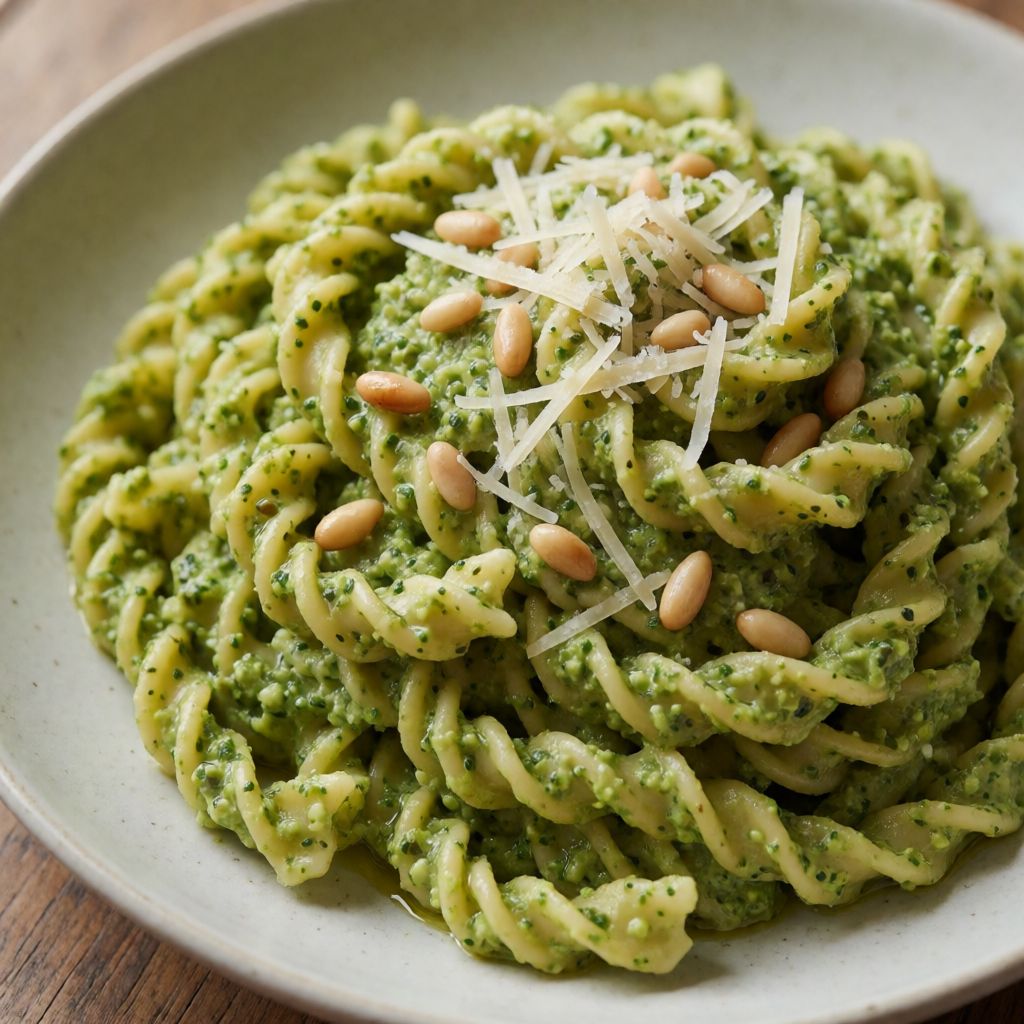
Broccoli Pesto Pasta
A quick pasta tossed in a creamy broccoli pesto with pine nuts and two Italian cheeses.
Labels are worked out automatically from the ingredients and can be wrong. Check the packaging if it matters to you.
Ingredients
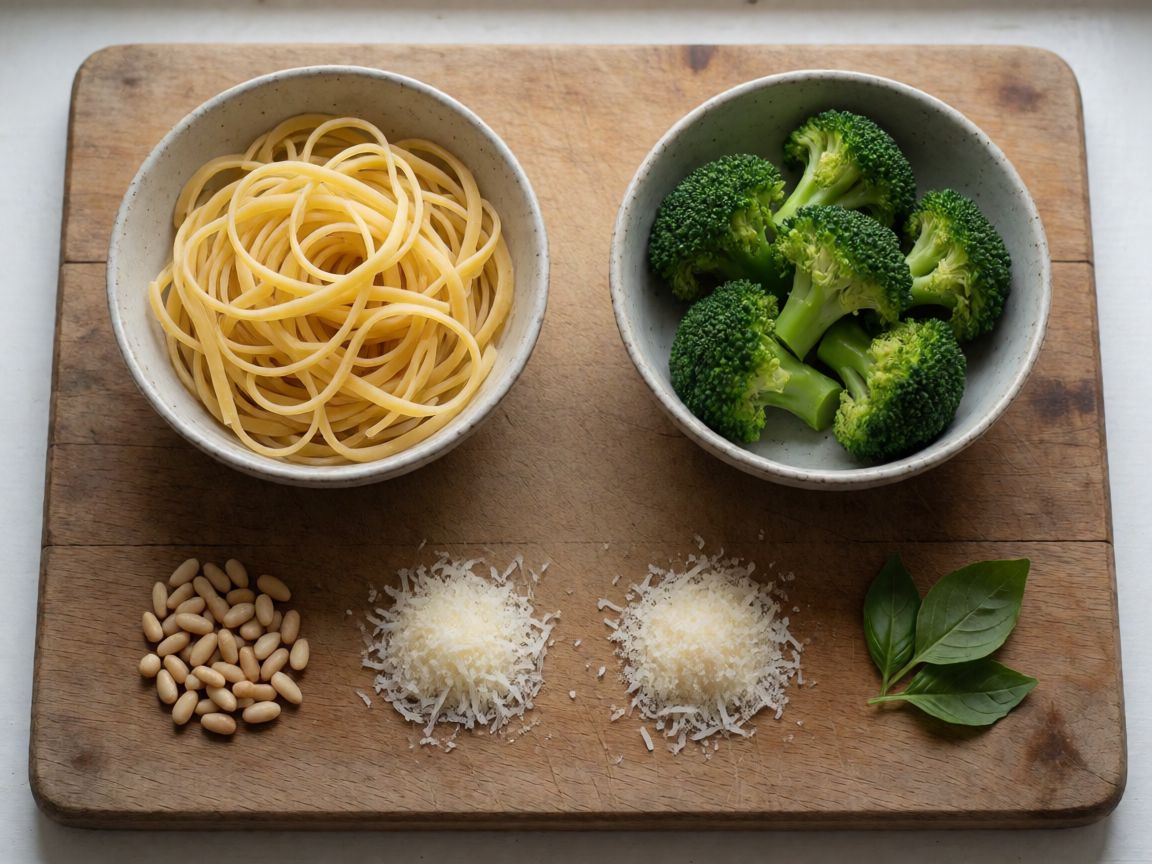
- 320 g Pasta
- 300 g Broccoli florets
- 20 g Pine nuts
- 40 g Parmesan
- 40 g Pecorino Romano
- 6 tbsp Olive oil
- Basil to taste
- Salt to taste
- Black pepper to taste









Steps
Clean and rinse the broccoli, then break it into florets.
5 minBring a pan of water to the boil, salt it and cook the broccoli florets until tender.
5 minTransfer the broccoli to a bowl of cold water with ice cubes.
2 minBring a large pot of water to the boil, salt it and cook the pasta.
10 minToast the pine nuts in a dry frying pan until golden.
3 minIn a blender, combine the broccoli, olive oil, parmesan, pecorino romano, pine nuts, salt, black pepper, basil and a little pasta cooking water. Blend until creamy.
3 minDrain the pasta and toss it well with the broccoli pesto sauce.
2 min
This isn't the Genovese pesto with its temple of a mortar and its superstition about metal "killing" the basil. This is a kitchen shortcut dressed in the same word: a sauce built from a vegetable you cook once, shock cold, then grind into cream. What decides whether it works isn't the blender — it's whether you understand that broccoli, unlike basil, has to be cooked before it goes in, and that the whole dish turns on temperature timing across three separate jobs on one hob, not on any single clever trick.
The broccoli goes into salted boiling water until it bends, not until it's soft enough to mash with a spoon — a fork should meet slight resistance before it gives. Straight after, into iced water. That's not fussiness, it's chemistry doing you a favour: boiling water keeps attacking the chlorophyll in the florets even after you've drained them, the vegetable carries on cooking on its own residual heat, and left to its own devices it turns that dull khaki-grey you see in a school dinner. The ice stops the clock cold, literally, and keeps the green bright and the texture from collapsing into mush when it hits the blender.
The cream in this "creamy" sauce isn't cream at all — it's starch. A splash of the pasta's own cooking water, cloudy and salty, works as the glue that binds oil, cheese fat and blitzed broccoli into something that coats the pasta instead of sliding off it in a puddle at the bottom of the bowl. People throw that water down the sink without a thought; here it's an ingredient, not washing-up.
Broccoli: pick heads with tight, dark florets and firm stalks — if the florets have started to yellow or flower, the vegetable's put its sugar into opening buds instead of staying sweet, and you'll taste the difference as bitterness. You only need the florets here; keep the stalk for soup or don't bother buying a head with much stalk on it at all, since nothing in this recipe uses it.
Pine nuts are the costly bit, and there's no shame in swapping them — the criterion is a mild, oily nut that toasts to gold rather than scorching black before it softens. Blanched almonds or walnuts both do the job; walnuts bring a slight bitterness of their own that actually sits well against the broccoli, almonds are more neutral and let the basil lead.
Parmesan and Pecorino Romano together aren't decoration, they're doing two different jobs: Parmesan (cow's milk, long-aged) gives nutty depth without much saltiness, Pecorino (sheep's milk) brings sharpness and a lot of salt on its own. Taste the sauce before you reach for the salt pot — between the two cheeses and the salted pasta water, you may need none at all. If you've only got one or the other, use more of it; a pesto with just Parmesan will be rounder and quieter, with just Pecorino it'll bite harder, neither is wrong.
Olive oil here isn't a neutral cooking medium, it's a flavour you're choosing on purpose — go for an extra virgin with some fruitiness to it, not the blandest bottle on the shelf, because unlike in frying, you taste this oil raw and cold in every mouthful. A flavourless vegetable or rapeseed oil will still make a sauce, but it'll be a green sauce, not really a pesto — worth knowing if that's the compromise you're making, not pretending otherwise.
Basil goes in raw, at the blending stage, after the broccoli's already cooked and cooled — that's what keeps its smell alive instead of boiling it off into the pan. If you've only got a sad, bruised supermarket bunch, use it anyway rather than skip it; a weak basil note is still better than none, though don't try to replace it with dried — dried basil tastes of dust, not of itself.
On the pasta itself: any shape that can hold a clinging sauce in its folds works better than a smooth one that the pesto just slides off — this is really a question for the pasta aisle, not for this recipe, so trust what you'd normally reach for. And don't drain it bone-dry; a little clinging water on the strands is doing the same emulsifying work as the spoonful you add on purpose, so there's some margin for error here, not a precise science.
None of this is fast if you want it done properly rather than just done — the broccoli needs its full time in the water before it bends, the nuts need watching rather than a timer, and the blended sauce wants tasting and adjusting, not blitzing and serving. Patience here isn't virtue for its own sake; it's the only thing standing between bright green and school-dinner grey.