
 AI photo
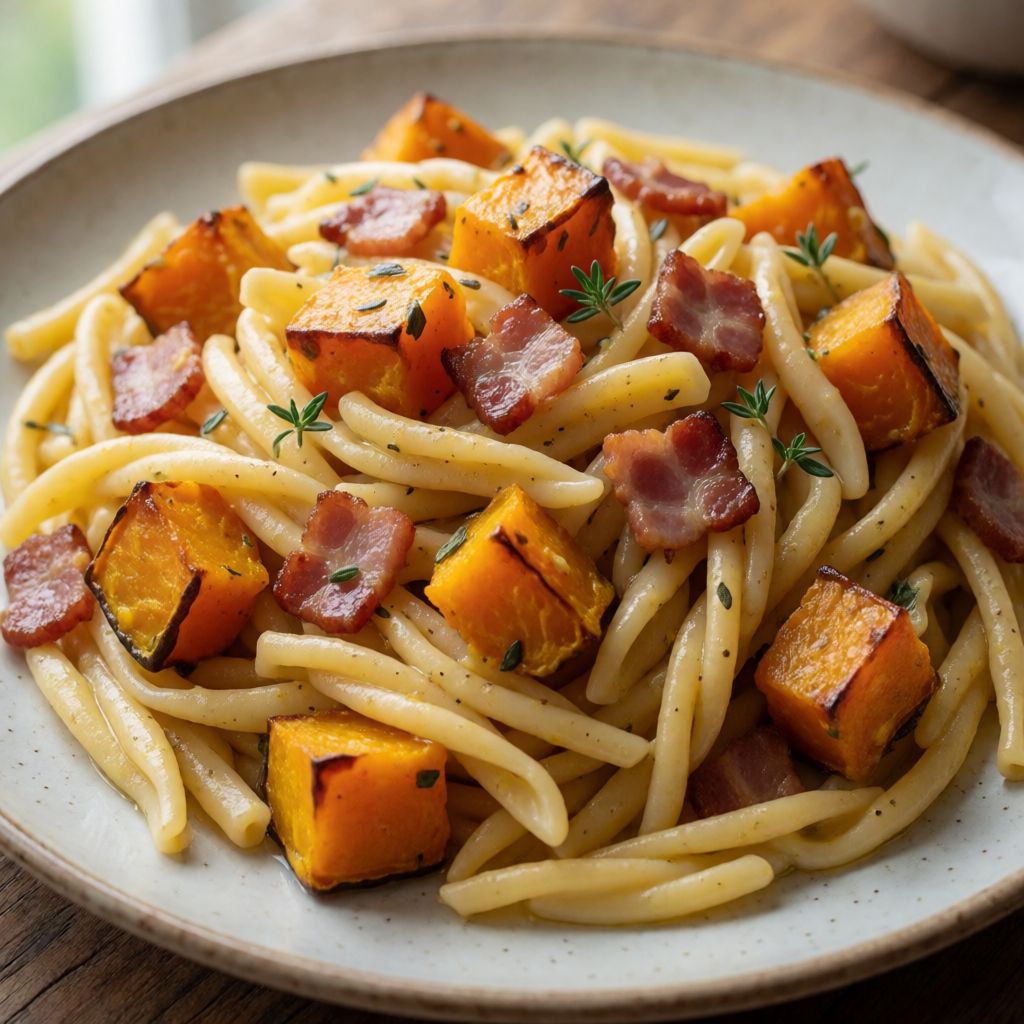
Pasta with Pumpkin and Bacon
A comforting pasta of diced pumpkin and crisp bacon, finished with red onion, thyme and grated Parmesan.
Labels are worked out automatically from the ingredients and can be wrong. Check the packaging if it matters to you.
Ingredients
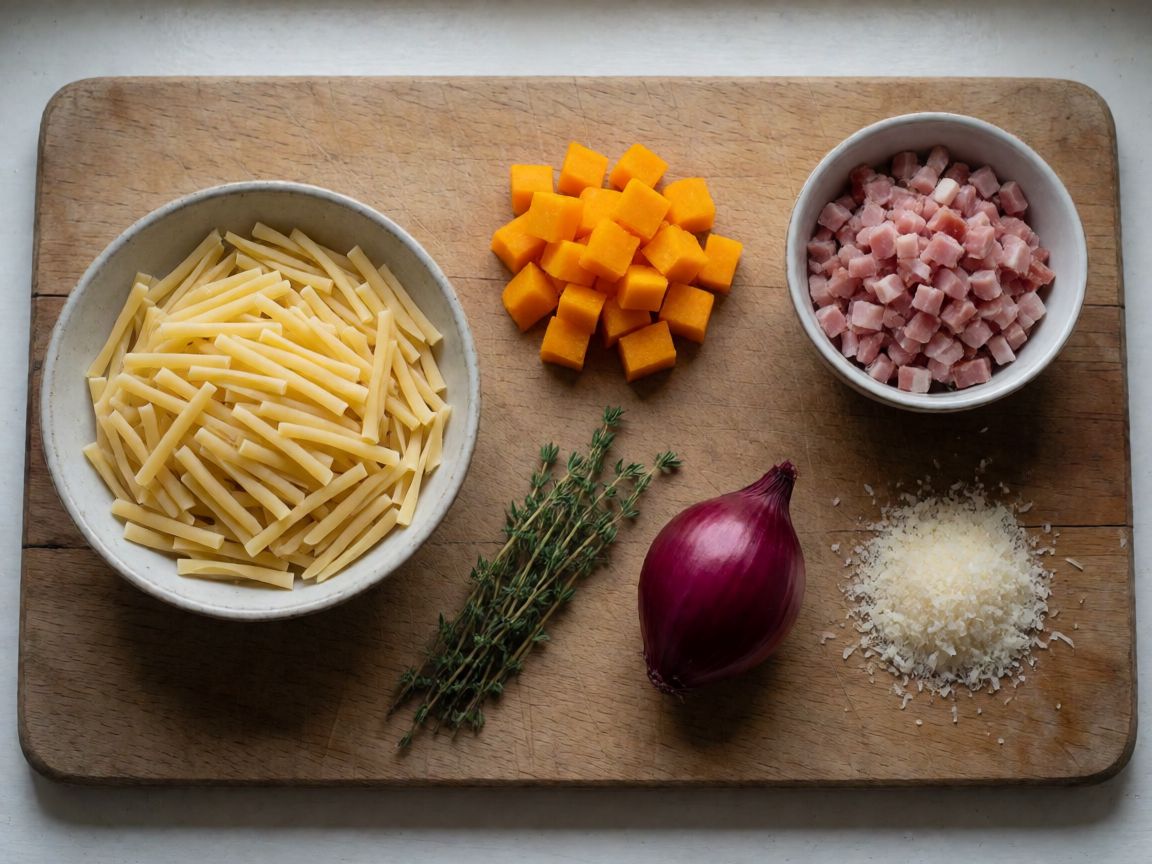









Steps
Bring a large pot of salted water to the boil. Dice the pumpkin into cubes.
In a wide frying pan, heat 3-4 tbsp of olive oil and gently cook the finely chopped red onion and thyme until soft.
Add the pumpkin and cook over high heat for a few minutes.
Pour in a ladle of boiling water or hot stock, cover and simmer over medium-low heat for about 15 minutes.
15 minSeason with salt and pepper to taste.
Dice the bacon and fry in a pan with a little olive oil until crisp.
Add the cooked bacon to the pumpkin.
Cook the casarecce in salted boiling water.
Continue cooking the pumpkin and bacon sauce for a few more minutes so the flavours combine well.
Drain the pasta very al dente and toss it with the pumpkin and bacon sauce.
Toss the pasta over high heat, adding a few spoonfuls of the pasta cooking water.
Serve immediately with freshly ground black pepper and grated Parmesan.
This is a sauce built on the oldest trick in the Italian kitchen: cook a vegetable down until it half-disintegrates, and it becomes the sauce, not a topping for one. Pumpkin cubed small, simmered covered in a splash of water, turns soft enough to collapse against the pasta rather than sit on it like a garnish at a buffet. Bacon gives it the salt-fat backbone that pumpkin, being watery and sweet, cannot provide on its own.
What decides whether this works is restraint at two points. First: don't drown the pumpkin. A ladle of water, lid on, and it steams itself soft using its own moisture plus what you gave it — too much liquid and you've made soup, not sauce, and you'll be reducing it back down anyway, wasting the ten minutes you just spent being patient. Second: the pasta comes out of its pot before it's actually done, because it finishes cooking in the pan, in the sauce, picking up starch-thickened water that glues everything together. Boil it to full doneness in the pot and you've already lost the thing that makes the dish cling rather than slide apart on the plate.
Casarecce — the little twisted tubes — exist for a reason here: their curl traps diced bits of pumpkin and bacon that a flat ribbon would just shed. If you've only got penne or fusilli in the cupboard, use it; the mechanism (something with a pocket or a twist) matters more than the specific shape's name.
Pumpkin: go for a dense, drier-fleshed one — butternut if your shop doesn't sell it already cut and labelled "pumpkin" — because a wet, stringy pumpkin turns to mush and water rather than to a cuttable-then-collapsible cube. Dice it small, roughly a centimetre, not because a recipe says so but because a bigger cube won't soften through in the time it takes the onion and bacon to do their work; it'll be raw-centred while the outside falls apart. No pumpkin at all, in the dead of a British winter when squash disappears from the shelves — carrot or swede cooked the same way gives you a workable sweetness, though you lose the particular grain pumpkin has when it breaks down.
Bacon here is doing the job pancetta does in guanciale's absence everywhere else in the UK: salt-cured pork fat rendered out in its own pan until crisp. Don't fry it in the same pan as the onion first — render it separately so its fat doesn't just steep the onion in smoke and salt before the onion's had a chance to go soft and sweet on its own terms. Streaky bacon, cut thick and diced, renders proper fat; back bacon is leaner and will give you chewy bits rather than crisp ones, closer to ham than to the crackling texture you actually want fighting the soft pumpkin.
Red onion rather than white or brown isn't fussiness — it's sweeter raw and holds that sweetness a touch longer under heat, which matters when the onion's whole job is to melt into background flavour rather than announce itself. If all you've got is a brown onion from the Sunday-roast bag, use it; cook it a shade longer and gentler so it doesn't bite through the finished sauce.
Thyme sprigs, left whole and fished out or just left in (nobody's counting), infuse the oil while the onion softens — that's the actual mechanism, oil carries aromatic compounds that water doesn't, so adding thyme to the fat at the start does more work than scattering dried thyme over the finished dish at the end. If you only have dried thyme, add a pinch now, early, while there's fat to carry it, not as a garnish.
Olive oil: use one with "no smell of its own" — the mild, everyday bottle, not your good finishing oil — because this isn't the dish where you want the oil to compete with pumpkin and bacon for your attention. Save the peppery extra-virgin for drizzling if you must, at the very end, off the heat.
Parmesan at the finish isn't tradition for tradition's sake — grated hard cheese melts into the hot, starchy pasta water clinging to the casarecce and thickens the sauce one more notch, the same mechanism as the pasta water itself, just salty and savoury instead of plain. Pre-grated Parmesan from a tub won't melt the same way; it's been through anti-caking treatment and sits on top rather than dissolving in. A hard British cheese like a mature Lancashire grated fresh will do the same job if Parmesan isn't to hand, though it won't taste identical.
And the patience point, because it's easy to rush past step four: that covered simmer isn't filler time, it's the only part of the dish where nothing you do with your hands matters — the lid and the low heat are doing the work of breaking the pumpkin down without your interference. Lift the lid every thirty seconds to check and you let the steam out, and the pumpkin takes longer, not less, because you kept resetting the clock. Leave it.