
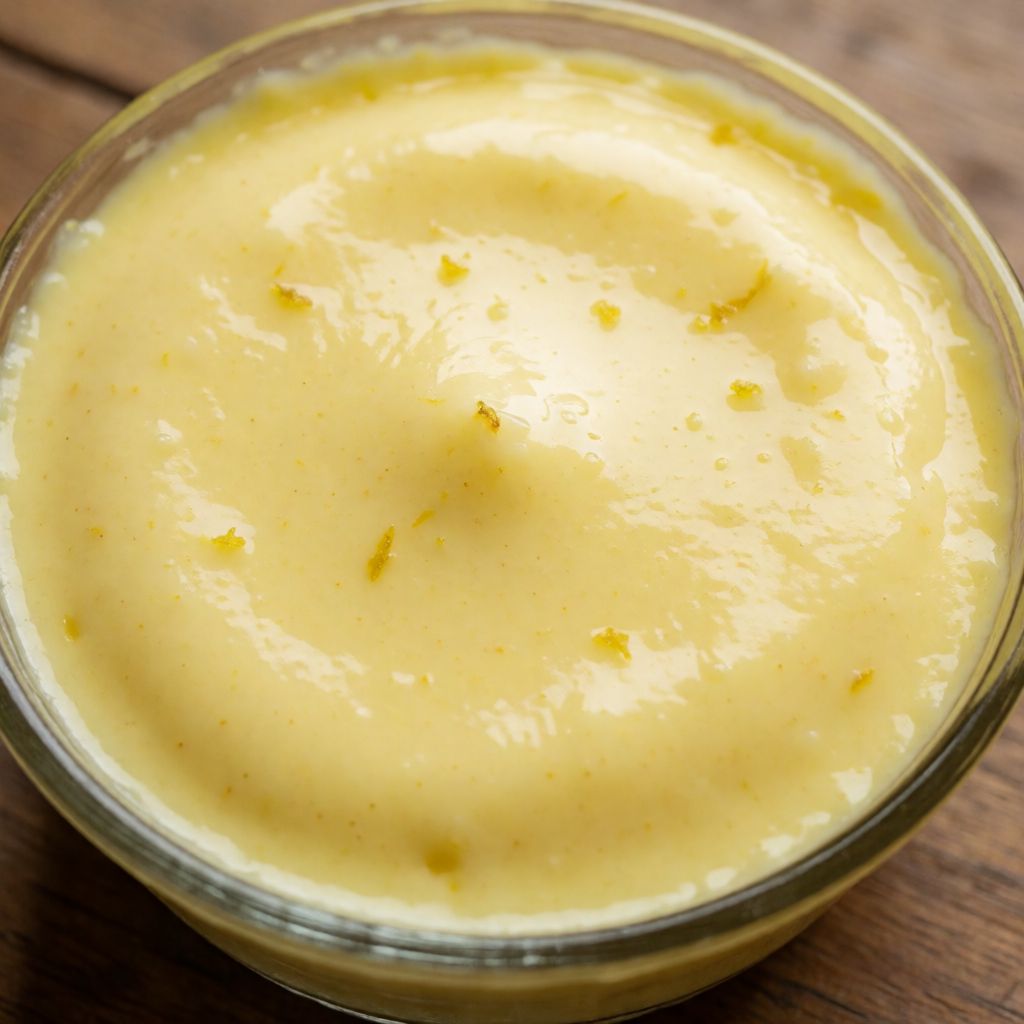
 AI photo
Eggless Custard
A smooth, eggless custard thickened with flour and cornflour, lightly tinted with turmeric.
Labels are worked out automatically from the ingredients and can be wrong. Check the packaging if it matters to you.
Ingredients
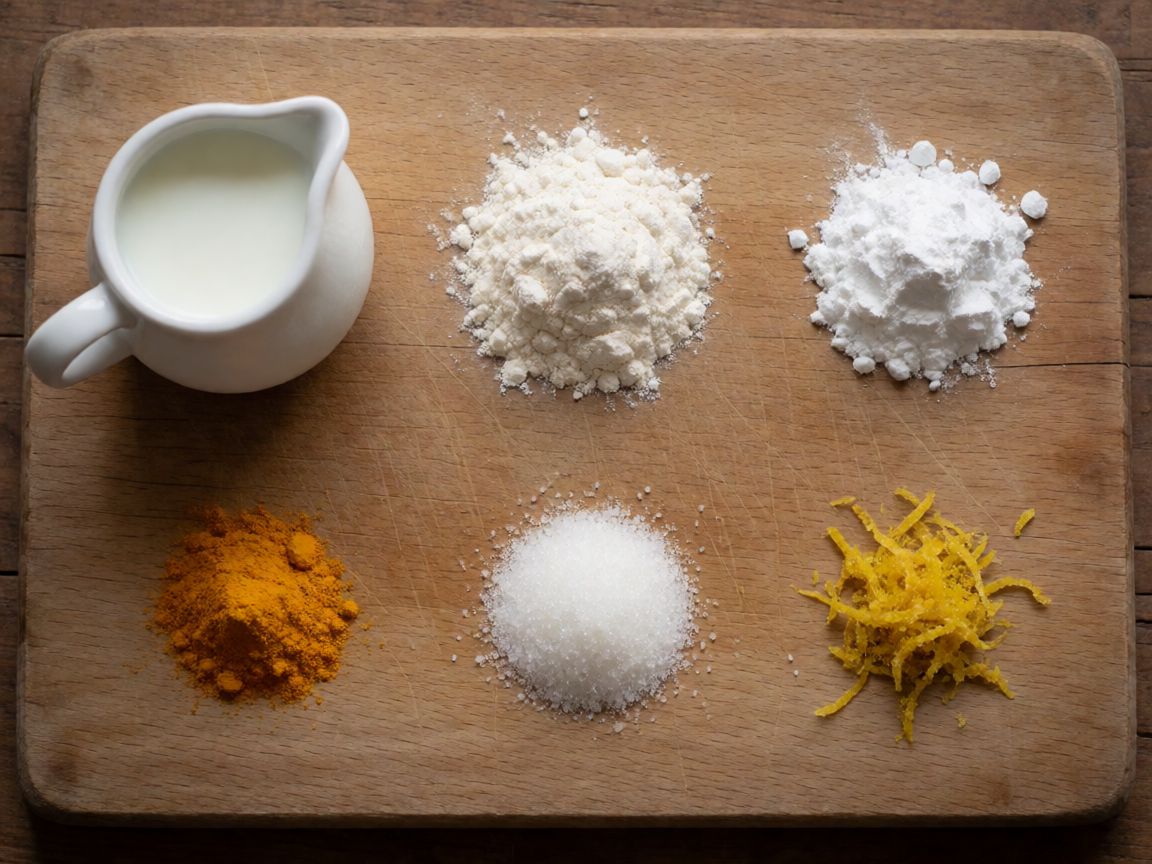
- 500 ml Milk
- 60 g Plain flour
- 30 g Cornflour
- 0.5 tsp Turmeric
- 100 g Caster sugar
- 1 pcs Lemon zest




Steps
In a saucepan, combine the sifted flour and cornflour with the sugar.
Pour in the milk in a thin stream, whisking constantly so no lumps form.
Add the lemon zest over low heat.
Bring to the boil, stirring constantly, and cook until it reaches the desired thickness.
Remove from the heat, add the turmeric and stir.
Place the saucepan in a container of cold water and keep stirring.
This is Bird's custard, homemade — the pourable yellow sauce you tip over a crumble or a sponge on a Sunday. It isn't a shortcut version of "real" egg custard; it's a different dish doing the same job with a different mechanism, and it's worth knowing which one you're making.
What sets it is starch, not egg. Flour and cornflour swell in hot milk, burst, and lock the liquid into a gel — that's the entire trick. Some say custard needs egg yolks to be proper custard — no, because setting here has nothing to do with egg protein at all. A chemist called Alfred Bird worked this out in the 1830s because his wife couldn't eat eggs; it turned out cheaper and far more forgiving than the egg version, which is why every corner shop in Britain still sells the tin.
What decides whether it works: how the starch gets into the milk, and whether your hand stays on the spoon once it's on the heat. Lumps aren't bad luck — they're dry starch granules that clumped together and met hot liquid before anything separated them, so a little cooked shell formed round an uncooked centre. Mixing the flour and sugar dry first, then pouring the milk in slowly, is what stops that happening before it starts.
Flour and cornflour are doing different jobs, which is why the recipe uses both instead of doubling one. Wheat flour thickens cloudier and holds body a little longer as it cools, but left slightly undercooked it leaves a raw, floury edge on the tongue. Cornflour — pure starch, no protein in it — gelatinises clearer and glossier and keeps the custard smooth rather than pasty. Together you get body from one, shine from the other. Short of one: more cornflour alone gives something thinner-looking but still working; flour alone gives something heavier and duller, so give it another minute or two of proper simmering to cook the rawness out of it.
Milk carries both the dissolving and the flavour. Whole milk rounds the sauce out and softens the starchy edge with its fat; skimmed will set the same way but taste thinner. Whatever's already in your fridge for tea is exactly the grade this was built around — no need to buy anything richer specially.
Caster sugar is fine on purpose: fine grains dissolve into the cold starch-and-flour mix before any heat is involved, with no grit left to feel later. Granulated works too, it just needs longer in the pan to vanish completely. A hundred grams to half a litre of milk is mild — pudding-sauce sweetness, not a dessert on its own.
Lemon zest is the one fresh flavour in the whole pan, so it earns some care. Use an unwaxed lemon if you can find one, or scrub a waxed one under hot water first — you're grating the oil-bearing skin, and a layer of wax sits right on top of that oil and keeps it out of the milk. It goes in over gentle heat, milk just warming with no bubbles yet, and sits there while the rest comes up to temperature, giving the oil time to infuse without frying or turning bitter. Any citrus peel with scent in its skin can stand in — orange works, it's simply a different custard at that point.
Turmeric goes in last, off the heat, and it's there for colour, not flavour. At half a teaspoon in half a litre of milk there's too little of it to taste as spice; cooking it longer wouldn't make it stronger, so there's nothing to gain by adding it early, and the recipe times it to the one moment it's actually needed — after the texture's already set.
The cold-water bath at the end isn't the gentle kind of bain-marie — here it's pulling heat out fast, the opposite job. A saucepan holds its warmth long after you take it off the hob, and starch keeps setting as it cools; left to cool slowly on its own, the surface dries into a skin and the base can set a touch firmer than the middle. Sit the pan in cold water and keep the spoon moving, and the whole batch cools at roughly the same rate, smooth right through with nothing to peel off the top. None of this is a dish you start and leave — every stage wants a hand on the spoon. Forty-five minutes of attention, not forty-five minutes of waiting. That's the trade an egg-free custard makes: no risk of it splitting, but no autopilot either.