
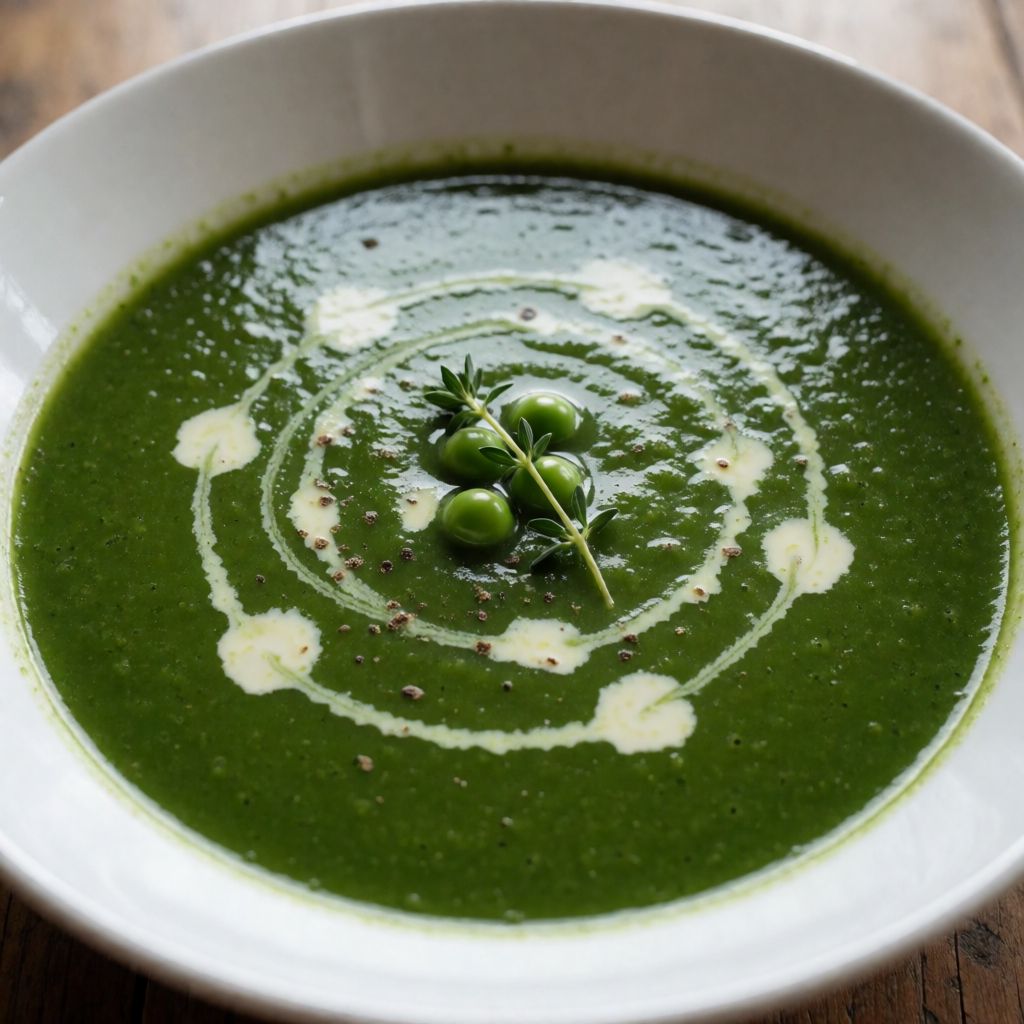
 AI photo
Pea Soup
A quick, creamy pea soup, ready in under twenty minutes.
Labels are worked out automatically from the ingredients and can be wrong. Check the packaging if it matters to you.
Ingredients
- 2 pcs Onion finely chopped
- 2 clove Garlic finely chopped
- 600 g Peas frozen or fresh
- 1 tsp Dried thyme dried
- 800 ml Stock
- 100 ml Whipping cream
- 1 tbsp Olive oil
- Salt
- Black pepper freshly ground
- 100 ml Almonds salted
- 100 ml Crème fraîche










Steps
Put the onion and garlic in a pan with the oil and sauté over medium heat until the onion is soft.
3 minAdd the peas and thyme, stir, then pour in the stock. Cover and simmer for 5-7 minutes.
7 minPour in the cream and blend the soup with a stick blender until completely smooth and creamy.
2 minSeason with salt and freshly ground black pepper to taste.
1 minServe the soup hot with a dollop of crème fraîche and some roughly chopped salted almonds.
Pea soup is the fastest kind of alchemy in a kitchen: a bag of frozen peas, barely cooked, turned by blending into something that looks and tastes like it took all afternoon. Four bowls, ten minutes of actual cooking. What decides whether it works is restraint — at every stage. Boil the peas a minute too long and you get a dull, khaki soup instead of a bright green one; blend before the cream goes in and you get a grainy purée instead of something silky.
Some say frozen peas are a compromise, a stand-in for the "real" ones. No — because frozen peas are picked and frozen within hours of harvest, while the fresh peas sitting in their pods at the shop have usually spent days converting sugar into starch. By the time you shell them, they're often less sweet than the frozen bag. Frozen is the serious choice here, not the fallback.
The whole structure of the soup depends on two things happening at the right moment: the onion losing its bite without picking up any colour, and the peas staying barely cooked before they hit the blender. Everything else — the thyme, the stock, the cream — is there to carry flavour into that short window, not to fight for attention.
Onion and garlic go in together, which only works if you watch the pan, not the clock. "Medium heat" means nothing on its own — what you're watching for is the onion turning from opaque white to glassy and translucent, softening at the edges without colouring. The garlic is the fragile one here: chopped fine, it has almost no mass to protect it, so if the onion takes its time, the garlic underneath is already scorched and bitter by the time you've noticed. Keep the heat low enough that what you smell is sweetness, not the sharp catch of burning garlic.
The peas need almost no cooking, because frozen peas are already blanched before they go in the bag — you're reheating and softening slightly, not cooking from raw. Cover the pan while they simmer, not because the lid does anything magical, but because it traps steam and stops the stock reducing away while the peas soften — and your liquid ratio here is fixed, so losing stock to evaporation means a thicker, saltier soup than you planned. The real cue to stop is colour: the moment the peas turn from that icy, matte green to something bright and saturated, take them off. A minute past that and the chlorophyll starts breaking down under heat and the acidity in the stock, and you get the grey-green, tired look people associate with school dinners.
Stock is doing a job water can't — carrying savour into the base so the soup isn't just sweet peas and cream. A kitchen that does a Sunday roast usually has some going spare, bones simmered down afterwards, and that's really the economics of why a recipe like this assumes you have stock sitting around: it's a byproduct of something else, not a separate shopping trip. If you don't have any, a cube dissolved in hot water does the job — blunter, but the structure of the soup doesn't change.
Cream goes in before blending, not after, and the order matters. Blend hot starch and fibre on their own and you get something thick but faintly chalky on the tongue. The fat in the cream coats the purée as the blades break it down, which is what gives you the completely smooth result the recipe is asking for — test it on the back of a spoon, not by the clock. If you can still feel grain, blend longer.
Crème fraîche and the almonds aren't decoration. Left alone, the soup is sweet and soft all the way through — crème fraîche's sourness is the one sharp note cutting across that, and the almonds are the one thing in the bowl with crunch and salt. Any toasted nut with a bit of bite and some salt on it will do the same job in a pinch — hazelnuts, cashews, even seeds.
Patience here isn't about long hours; it's about not rushing the two minutes where the dish actually gets decided — the onion going soft rather than brown, the peas going bright rather than dull. Everything else in this recipe is quick because those two minutes carry all the weight.