
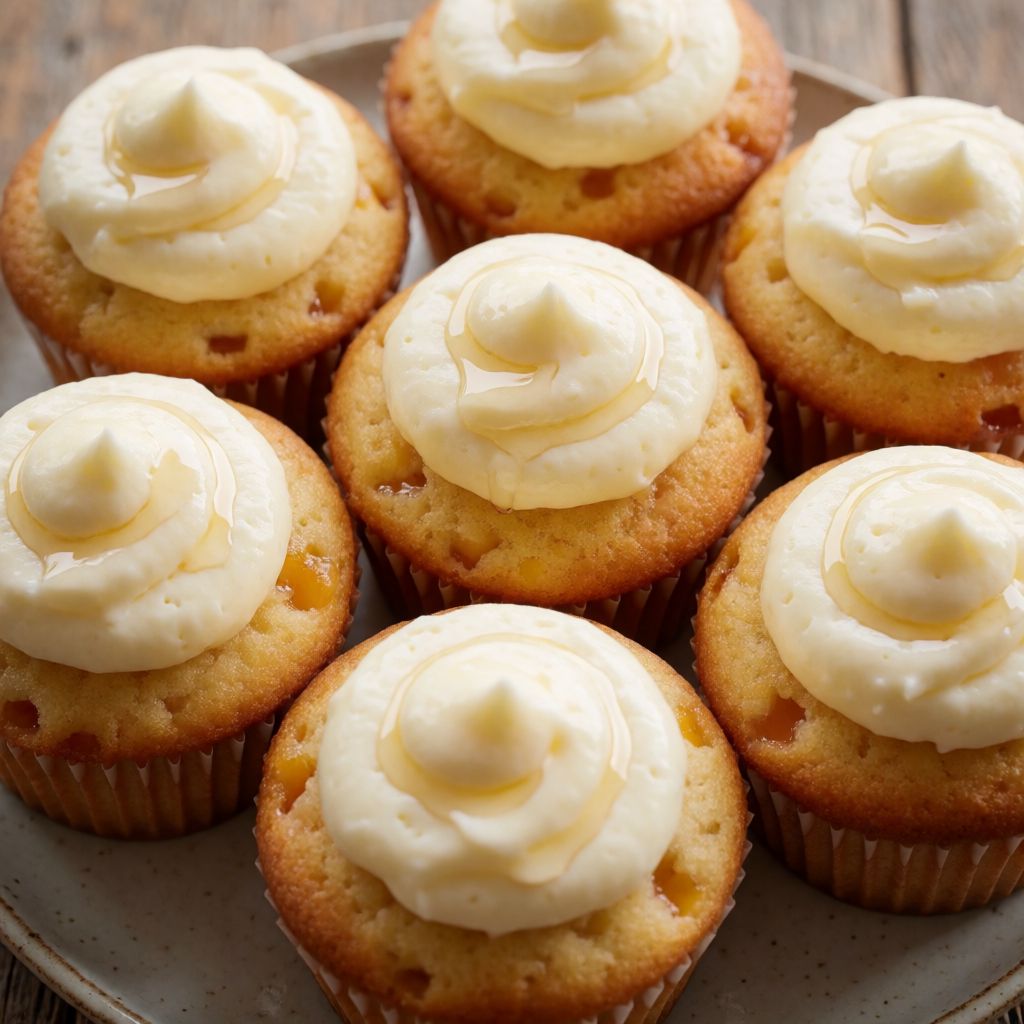
 AI photo
Peach Cupcakes
Soft wholemeal cupcakes with juicy nectarine and honey, finished with a honey cream cheese topping.
Labels are worked out automatically from the ingredients and can be wrong. Check the packaging if it matters to you.
Ingredients
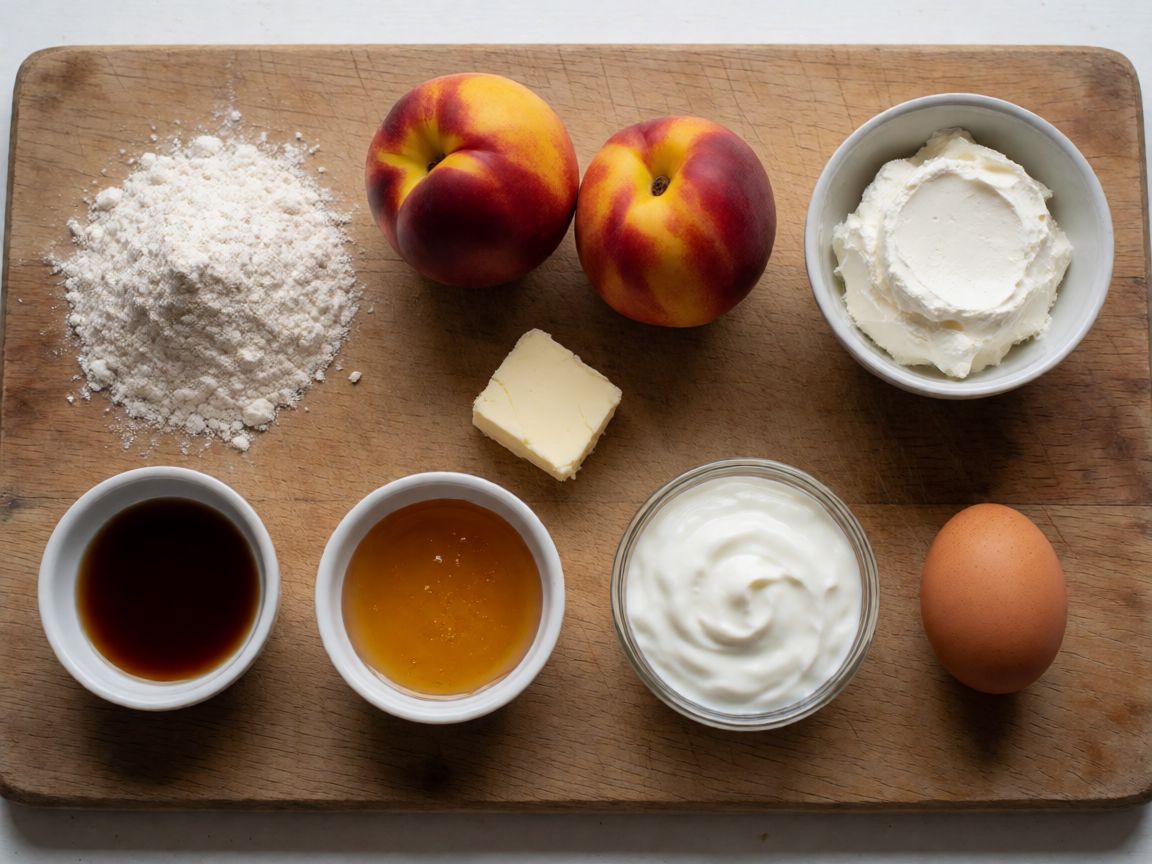
- 150 g Wholemeal flour
- 225 g Nectarine
- 250 g Cream cheese
- 60 g Butter at room temperature
- 140 g Wildflower honey
- 100 g Peach yoghurt
- 0.5 tsp Vanilla extract
- 1 pcs Eggs
- 1 bunch Mint to taste
- 1 pinch Salt
- 5 g Baking powder








Steps
Mix the wholemeal flour with the baking powder and a pinch of salt.
Beat the soft butter with a mixer, adding 1-2 heaped tablespoons of the flour.
When the mixture turns creamy, add the egg and the peach yoghurt.
Beat and add 90 g of the wildflower honey (melt if needed).
Add the vanilla extract, mint and the remaining flour, and mix until smooth.
Wash the nectarines, finely dice 100 g and fold them into the batter.
Divide the batter among cupcake cases in a muffin tin.
Bake the cupcakes for 25 minutes in an oven preheated to 180°C.
25 minRemove from the oven and let cool completely.
Mix the cream cheese with the remaining wildflower honey and top the cupcakes.
Decorate each cupcake with a slice of nectarine.
A peach cupcake is really a wholemeal muffin wearing a cheesecake-icing hat, and the thing that decides whether it works isn't the oven — it's whether your batter trusts the wholemeal flour to carry it. Wholemeal flour is heavier and thirstier than the white stuff, which is why the butter gets creamed with a spoonful of flour already worked in — that's not decoration, it's structure, giving the fat something to grip before the egg and yoghurt arrive and threaten to split it into a greasy puddle.
Some say wholemeal makes cakes "dense and healthy" as if those were the same word. No — it makes them dense if you treat it like plain flour and expect the same rise. The baking powder here is doing real work against real resistance, not just lifting an easy dough.
The nectarine inside is diced small and folded in late, after the flour, so it doesn't bleed its juice straight into the batter and turn it soupy — a mistake that shows up as a sunken, gluey middle no amount of extra baking time fixes. Honey instead of sugar isn't a health flourish either; it's wetter than sugar, which is exactly why the flour needs to be sturdy enough to take the extra liquid without collapsing.
The cream cheese topping is not icing in the piped, sweet sense — it's cheese loosened with honey, meant to sit rather than swirl, melting slightly against the warm nectarine slice on top. That's the whole architecture: a wet, fruit-studded cake underneath, a cool cheese layer over it, held together by patience, not by sugar.
Flour: wholemeal, 150 g, split — most goes in at the end, a spoonful goes in early. The early spoonful stops the creamed butter from looking "curdled" when the egg hits it; it's a buffer, not a measuring mistake. If you only have plain flour, use it, but expect a lighter, less toasty crumb — wholemeal's bran is what gives these a faint nuttiness that plain flour can't fake.
Nectarine, 225 g total, split between dicing into the batter and slicing for the top. Any firm stone fruit with no mush to it works — peach, apricot, even a firm plum at a push — the rule is firm enough to dice without turning to pulp, because pulp is what gives you that wet patch in the middle. Soft, overripe fruit belongs in the topping decoration, not in the mix.
Cream cheese, full-fat, for the topping. This isn't buttercream logic — you're not whipping air in, you're loosening a dense cheese with honey until it spreads. Low-fat cream cheese will weep and thin out under its own honey; it doesn't hold the way the full-fat version does.
Butter, at room temperature — not melted, not fridge-cold. Cold butter won't take air when beaten; melted butter won't take air at all, it just turns greasy. Room temperature means you press it and it gives, like an earlobe, not a show of being "soft enough" because it's been forgotten on the counter for ten minutes.
Honey, wildflower, 140 g split between batter and topping. Honey behaves differently from sugar in baking — it holds moisture, so it keeps these cupcakes from drying out over the two or three days they'll likely sit in a British kitchen tin, but it also means they brown differently, so "golden on top" is a better doneness cue for you than any clock.
Peach yoghurt supplies acidity and moisture against the heavy flour — plain yoghurt with a dash more honey is a fair substitute if peach yoghurt isn't on the shelf; the peach flavour is a bonus, not the engine.
Mint, "to taste" — this is the one ingredient where restraint matters more than measurement. Finely chopped, it should perfume rather than announce itself; too much and it turns these into toothpaste cupcakes. One or two small leaves per cupcake's worth of batter is plenty.
As for the bake itself: an oven thermometer is worth more than a timer here, because a UK domestic oven's 180°C and the dial's idea of 180°C often disagree. Watch for a cake that springs back when pressed lightly in the centre rather than counting to twenty-five and pulling blind — the 25 minutes is where to start checking, not where to stop looking.