
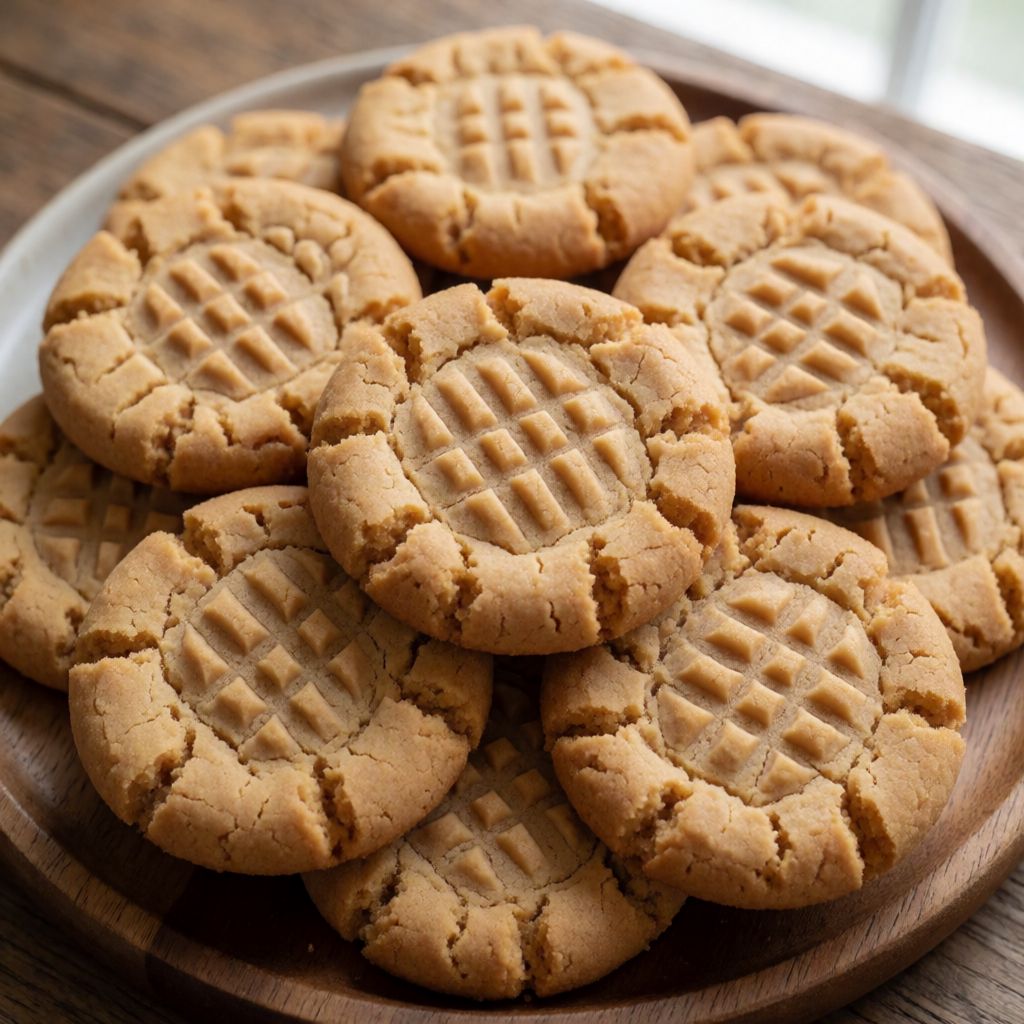
 AI photo
Peanut Butter Cookies
Soft peanut butter cookies studded with chunks of dark chocolate.
Labels are worked out automatically from the ingredients and can be wrong. Check the packaging if it matters to you.
Ingredients
- 110 g Butter at room temperature
- 75 g Caster Sugar
- 75 g Brown Sugar
- 1 pcs Egg
- 100 g Peanut Butter crunchy
- 150 g Plain Flour
- 1 tsp Baking Powder
- 125 g Dark Chocolate roughly chopped
- 50 g Peanuts salted







Steps
Cream the butter, sugar and brown sugar until light and fluffy, beat in the egg, then add the peanut butter and mix into the dough.
Mix the flour with the baking powder, sift into the dough and mix well, then add the roughly chopped dark chocolate and mix into the dough.
Shape the dough into balls and place them on a baking tray lined with baking paper, leaving enough space between them as they spread during baking. Flatten the balls slightly and scatter the peanuts on top.
Bake in a preheated fan oven at 175°C for 13-15 minutes, until the cookies turn golden but are still slightly soft inside.
14 minLet the cookies cool slightly on the tray before transferring them to a wire rack.
5 min
This is an American pantry trick wearing a British Sunday-tea outfit: peanut butter cookies, but with proper butter doing the main work and the peanut butter added as flavour, not as the fat. That's the key fact that decides everything else — because the moment you understand peanut butter is a guest here, not the host, you understand why the texture is soft-centred and slightly craggy, not the dense, almost shortbread-crumbly thing you get from recipes that use peanut butter alone.
What decides whether it works is spread control. You've got a lot of fat (butter plus the fat in the peanut butter) against not much flour — 150g against 110g butter and 100g peanut butter is a loose ratio, a dough that wants to run thin and crisp on a hot tray. The brown sugar fights that: it holds water in its molasses, keeps the centre damp while the edges set. Caster sugar does the opposite — it melts clean and helps the edge crisp and spread. You're not choosing one sugar over the other for taste; you're using two sugars to get two textures in the same biscuit, chewy middle, snap at the rim.
Butter at room temperature isn't a fussy instruction, it's physics: creaming works by trapping air between fat and sugar crystals, and soft butter holds air, cold butter won't take it, melted butter can't hold anything at all. Skip this and you get a flat, oily puck — the classic failure, and it's always blamed on the oven when it's actually the butter never having been creamed properly. If your butter's gone too soft on a warm day (rare enough in a British kitchen, but it happens), the dough will spread further than you want — chill it for ten minutes before shaping, that's the only time chilling earns its place here, not as a ritual but as a fix for a specific problem.
The egg does two jobs: it's the main liquid holding the dough together, and when you beat it into the creamed fat, it emulsifies — binds the fat into a stable mixture rather than letting it sit as separate pools that would leak out as grease on the tray during baking. This is also why you cream fat and sugar first, then add egg, then flour last: mix the flour too long or too early and you build gluten you don't want, turning a tender cookie into a chewy, bready one.
Crunchy peanut butter, specifically — because the crunch gives you a second kind of texture inside the dough itself, tiny bits that survive baking. Choose one where the first ingredient is peanuts, not sugar and palm oil; the cheaper supermarket spreads with added stabiliser fat behave differently in the oven, they can make the dough stiffer and less likely to spread properly. If all you've got is smooth peanut butter, use it — you lose a bit of internal texture, nothing more; it's not a reason to not bake.
Baking powder here is a small lift, not a rise — enough to keep the structure from being flat and dense, not enough to turn this into a cakey biscuit. Don't be tempted to add more because "more rise is good"; too much and the cookie puffs then collapses as it cools, leaving a sunken middle.
The salted peanuts scattered on top before baking aren't decoration, they're seasoning placed exactly where your tongue meets it first — salt against sweet dough, which is also why if your peanuts are unsalted, you should add a small pinch of salt to the dough itself rather than skip the contrast altogether.
Peanut butter cookies themselves come out of American thrift — depression-era baking, where peanut butter was cheap protein and cheap fat when actual butter was dear or rationed, so whole recipes replaced butter with it entirely. This one doesn't do that; it treats peanut butter as flavour on top of proper butter, which is a more generous, less economical version of the idea — worth knowing, so you don't go looking for some "authentic" version that's actually just the poorer one. Baking paper on the tray matters for the same reason sugar-heavy doughs always need it: direct metal contact caramelises the sugar on the bottom faster than the centre can set, giving you a burnt base and a raw middle. Line the tray, and give the balls real space — they spread more than you expect, and two cookies baked together fuse into one soft mess with no crisp edge at all, which is the one shape failure here that has nothing to do with oven temperature.