
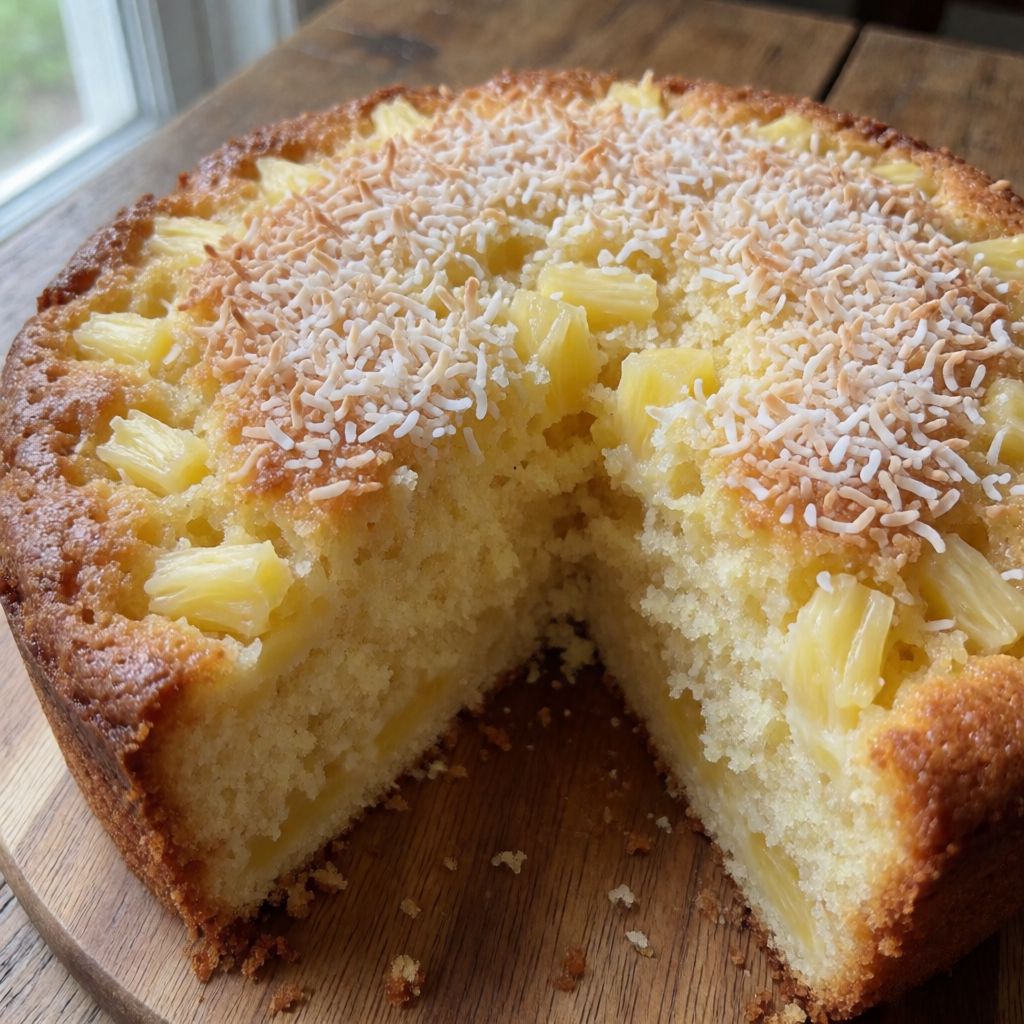
 AI photo
Pineapple and Coconut Cake
A light sponge cake with ricotta, coconut and pineapple, decorated with pineapple slices and dark chocolate.
Labels are worked out automatically from the ingredients and can be wrong. Check the packaging if it matters to you.
Ingredients
- 3 pcs Eggs
- 150 g Caster sugar
- 170 g Plain flour sifted
- 100 g Desiccated coconut
- 250 g Ricotta
- 1 pinch Salt
- 1 pcs Baking powder
- 150 g Pineapple diced
- 200 g Pineapple sliced, for decoration
- 70 g Dark chocolate
- 1 pcs Butter for greasing the tin
- 1 pcs Icing sugar for dusting










Steps
Whisk the eggs with the sugar for about 5 minutes until you get a pale, fluffy cream.
5 minAdd the ricotta and salt, mix, then stir in the sifted flour and fold in gently with a spatula.
Fold in the baking powder.
Add the desiccated coconut, diced pineapple and dark chocolate. Mix the batter well.
Grease the tin with butter and dust with flour, pour in the batter, decorate with pineapple slices and dust with icing sugar.
Bake at 170°C in a fan oven for 50–55 minutes.
52 minLet the cake cool, lightly dust with icing sugar and serve.
This is a wet-crumbed, slightly rustic cake — ricotta instead of butter, coconut instead of ground almonds, pineapple doing double duty inside the batter and on top. What decides whether it works is restraint with the eggs and patience with the oven, not the list of fruit and fat.
Five minutes of whisking eggs and sugar isn't a throwaway instruction — that's the whole leavening mechanism for the first stage. You're beating air into the mixture until it goes pale and holds a ribbon shape when it falls off the whisk. That trapped air is structure. Skip it or rush it and the cake sits low and dense, because the baking powder alone can't lift a batter this heavy with ricotta and coconut — it can only maintain volume that's already there, not create it from nothing.
Folding, not stirring, is the other half of that same mechanism. Once you've built air into the eggs, every heavy-handed stir after that knocks it back out. The ricotta goes in first because it's wet and dense — easier to loosen the batter with it before the dry ingredients arrive. Flour and coconut go in with a spatula, turning the bowl, not beating it, because coconut especially is thirsty and clumps if you attack it with a whisk.
The diced pineapple inside is for moisture and pockets of sharpness against the sweetness of the coconut and chocolate; the sliced pineapple on top is purely for the eye and a slightly caramelised edge where it meets the oven's heat. Don't confuse the two cuts — the dice needs to disappear into the crumb, the slices need to survive as a surface.
Eggs: three, whole, not separated. Some recipes insist you must separate eggs for a "proper" sponge — no, because here the ricotta and coconut already weigh the batter down enough that whipped whites would just collapse under them. Whole eggs whisked with sugar give you enough lift for this particular density of batter, nothing more is needed.
Ricotta is the fat and the moisture here, standing in for butter or oil. Use the firmer tub ricotta, drained if it looks watery on top — excess whey thins the batter and you'll fight it in the oven, ending up with a soggy centre that never quite sets. If you can't get ricotta, a thick quark or well-drained cottage cheese blitzed smooth will do the same job: something soft, mild, slightly acidic, with body you can fold rather than pour.
Desiccated coconut: dry, unsweetened. It's there for texture as much as flavour — it absorbs liquid from the ricotta and pineapple as it bakes, which is part of why the crumb holds together instead of slumping. Sweetened or flaked coconut will throw off both the sugar balance and the absorption, so stick to the plain desiccated kind sold for baking, not the big curls meant for decorating.
Pineapple, fresh or tinned — if tinned, drain it properly and pat it dry, because the syrup it sits in is sugar water you don't want added to an already-balanced batter. This is also where the "fresh is always better" myth falls over a bit: tinned pineapple, well drained, actually gives you a more even dice and less risk of a wet pocket in the finished cake than a fresh one that's under-ripe or stringy.
Dark chocolate, chopped or in small chips, melts into little dark seams through the crumb rather than staying whole — pick something with no more sweetness than you can taste through the coconut and pineapple, 60–70% cocoa is the sensible range, so it reads as bitterness against the fruit rather than more sugar.
On the hob and oven side: a fan oven at 170°C circulates heat evenly round the tin, which matters more than the number itself — if you're using a conventional (non-fan) oven, you're looking at closer to 180–185°C to get the same effect, because still air transfers heat more slowly. The 50–55 minutes is a lower bound, not a deadline: the cake is done when a skewer through the centre comes out clean and the top springs back rather than leaving a dent, not when the timer rings. A domestic oven with an unreliable thermostat can run cooler or hotter than the dial says, so trust the skewer over the clock.
This feeds six as a dessert with tea, which fits the dish well — it's not a cake that wants to be the main event of an afternoon, it's the kind you cut properly thin, dust again with icing sugar at the table since the first dusting half-sinks into the warm cake, and let the pineapple and ricotta do something gentler than a Victoria sponge would.