
 AI photo
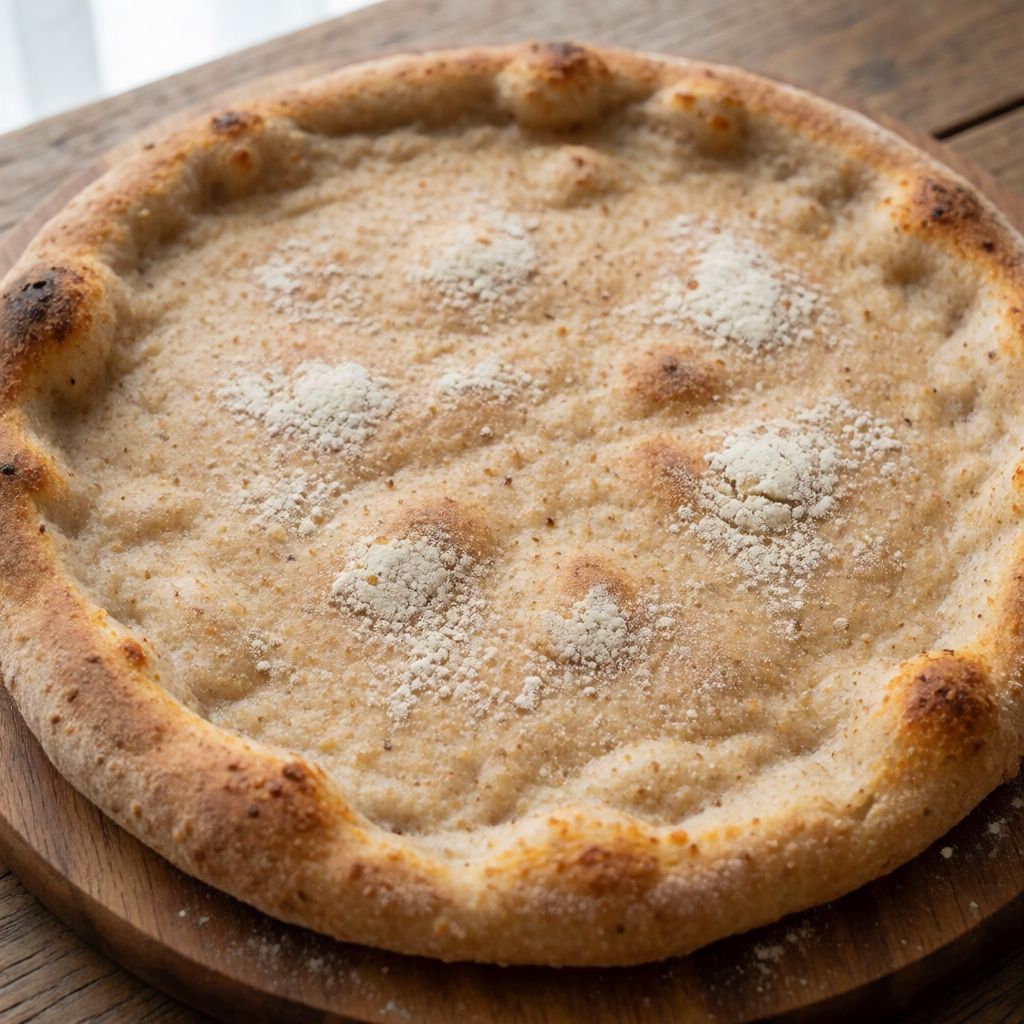
Wholemeal Pizza
A homemade pizza made with a blend of wholemeal and plain flour, topped with tomato sauce, mozzarella and fresh basil.
Labels are worked out automatically from the ingredients and can be wrong. Check the packaging if it matters to you.
Ingredients
- 250 g Wholemeal flour
- 12 g Yeast
- 50 g Olive oil
- 10 g Wildflower honey
- 250 g Plain flour
- 300 g Water
- 8 g Salt
- Tomato sauce to taste
- 2 pcs Mozzarella
- Basil to taste









Steps
Sift the wholemeal flour into a large bowl, add the honey and crumbled yeast, and mix. Pour in the water and knead until smooth.
Cover the bowl with cling film and leave to rise in a switched-off oven.
60 minAdd the sifted plain flour and knead energetically. Add the salt and olive oil.
Transfer the dough to a work surface and fold it. Cover with a tea towel and leave to rest.
15 minRepeat the folding of the dough.
Transfer the dough to a bowl, cover with cling film and leave to rise until doubled in volume.
Divide the dough into two parts. Grease the tins with oil, spread out the dough and leave to rest for 30 minutes.
30 minHeat the oven to 250°C.
Spread the bases with tomato sauce and bake for 15 minutes.
15 minAdd sliced mozzarella and bake for a further 5 minutes, until the cheese has melted.
5 minGarnish with fresh basil and drizzle with olive oil.
Wholemeal pizza is wholemeal flour arguing with white flour, and the recipe is really the negotiation between them. Wholemeal bran is sharp — it cuts gluten strands as they try to form, which is why a 100% wholemeal pizza base is always a dense, honest-but-heavy thing, more like a cracker than a crust. Here you let the wholemeal flour start the fight alone, soaking and softening in that first wet dough, before the plain flour arrives to supply the stretch the bran keeps breaking. That's the whole architecture: wholemeal for flavour and fibre, plain for elasticity, and the order they go in is not fussiness, it's physics.
What decides whether this works is not the oven, it's the waiting. Three separate rests, and each does a different job. The first hour lets the yeast wake up and the wholemeal bran drink in water it's too coarse to absorb quickly — skip it and you get a dough that tears instead of stretching. The fold-and-rest-fold fifteen minutes later is not decoration; folding realigns gluten that kneading alone leaves tangled, the same reason bread bakers fold rather than just knead harder. The final rise to double volume is the one people cut for time, and it's the one that costs you the most — a dough that hasn't doubled bakes dense no matter how hot your oven is.
Some say wholemeal dough needs no resting because "it's already rough, a bit more density won't hurt." No — bran already weakens the gluten network; skip the rests and you're stacking two weaknesses on top of each other, and the base turns to cardboard.
Yeast — 12 g is a lot for 500 g of flour combined, more than a sourdough-leaning baker would use. That's deliberate: this dough has one rise to do a lot of work against a stiffer-than-usual gluten structure, so it needs the push. Any dried or fresh yeast works if you adjust — fresh needs roughly double the weight, and either way it wants lukewarm water, not hot. Hot kills it outright; this is the actual reason behind "proof in a warm place," not superstition, just enzymes that stop working above a certain point.
Wildflower honey feeds the yeast fast sugar and adds a faint flower-note the yeast mostly eats before you taste it — any honey does the job, and so does a teaspoon of sugar if that's what's in the cupboard. The myth that "pizza dough must have no sugar, only real Neapolitan flour" — no, because even Neapolitan dough recipes vary on this, and a hungry yeast culture doesn't care about regional pride, it cares about available glucose.
Olive oil at 50 g does two things: it coats some of the gluten strands so they slide rather than snap, which is why oiled dough stretches thinner without tearing, and it keeps the crumb from drying out in a home oven that can't hold steady heat like a wood-fired one. Use any oil with no smell of its own if you want a neutral base — sunflower, rapeseed — but olive oil's slight bitterness actually balances the sweetness from the honey and the acidity of the tomato sauce later, so it's not purely decorative here.
Salt at 8 g (added after the first knead, not before) controls the yeast's pace — salt pulls water away from yeast cells and slows fermentation, so adding it too early fights the rise you're trying to encourage. This is the actual mechanism behind "add salt last," not tradition for tradition's sake.
Tomato sauce and mozzarella are "to taste" because they're not structural — but mozzarella matters in one way: a very wet, fresh buffalo mozzarella will flood the base in the oven and undo everything the dough did. A firmer, lower-moisture mozzarella (the block kind, not the ball swimming in whey) holds its shape and melts instead of weeping. If what's in the fridge is the wet kind, pat it dry on paper towel first — a sensible domestic fix, no special tool needed.
On your hob: 250°C is near the ceiling of most UK domestic ovens, and that's the whole point — pizza wants a blast of heat a wood oven gives in ninety seconds and your oven gives in fifteen minutes instead. There's no fixing that gap with a trick, only with patience and the top shelf, where the heat is fiercest. A pizza stone or an upturned heavy baking tray preheated in the oven helps more than any amount of extra time, because it gives the base a hot surface to meet the second it lands, which is the thing a flat cold tray can never do.