
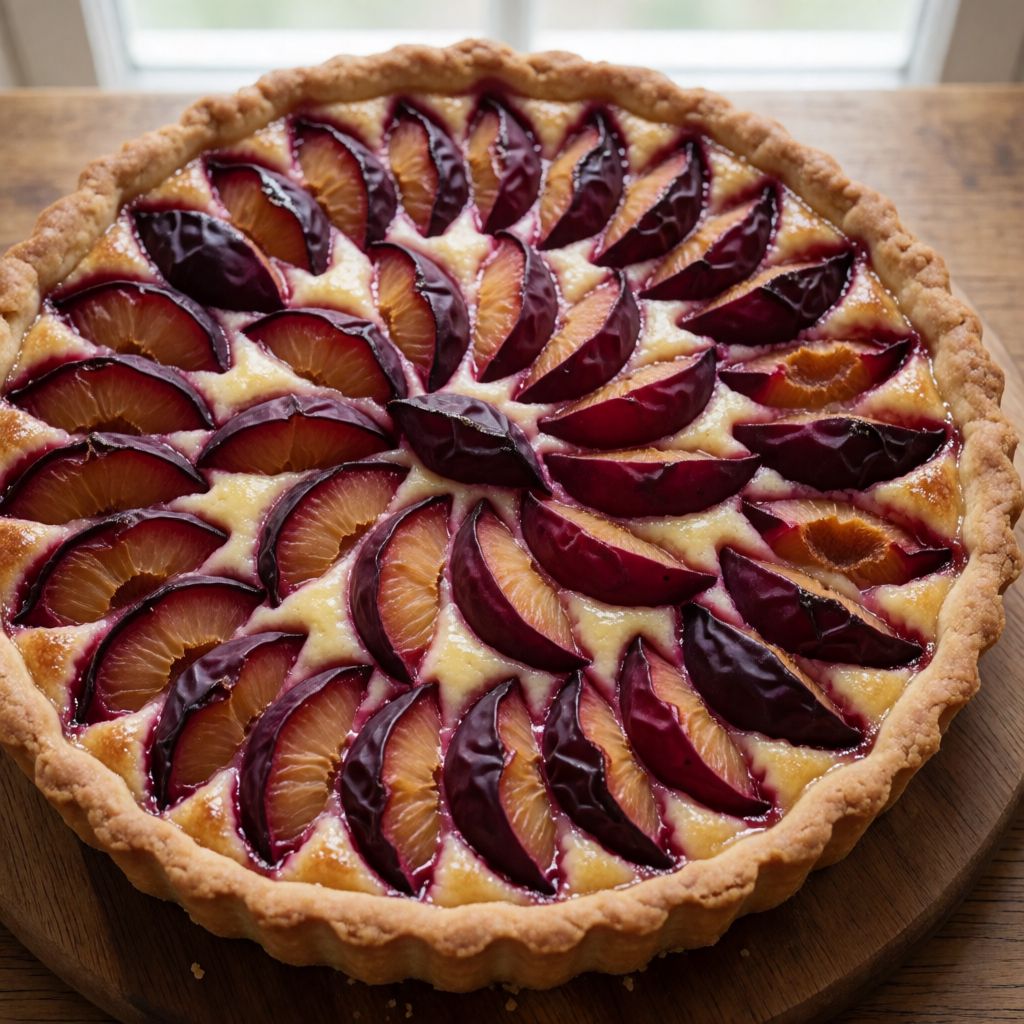
 AI photo
Plum Tart
A classic shortcrust tart topped with plum jam and fanned fresh plum slices, finished with flaked almonds.
Labels are worked out automatically from the ingredients and can be wrong. Check the packaging if it matters to you.
Ingredients
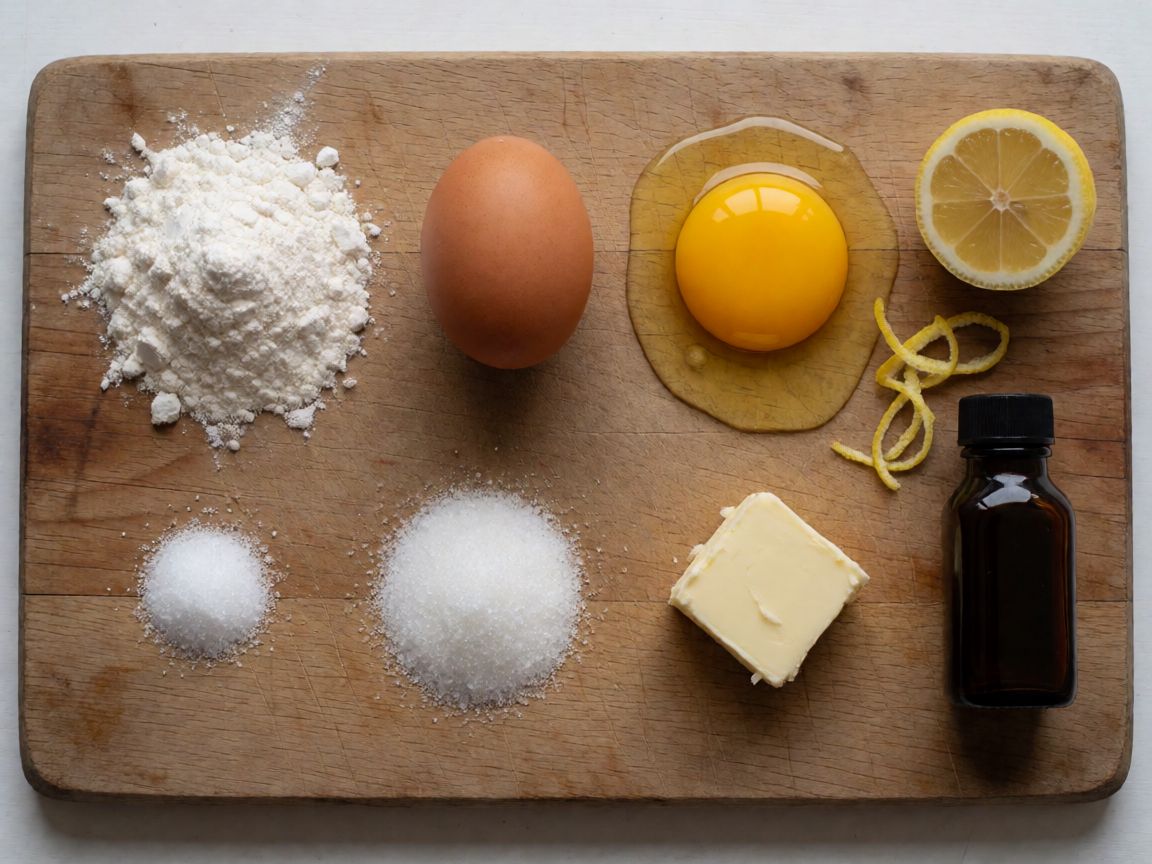
- 250 g Plain flour
- 1 pcs Egg
- 1 pcs Egg yolk
- 100 g Caster sugar
- 100 g Butter
- 1 tsp Vanilla extract
- 0.5 pcs Lemon zest or lime zest
- 1 pinch Baking powder
- 1 pinch Salt
- 200 g Plum jam
- 4-5 pcs Plum
- Flaked almonds optional





Steps
Pile the flour on the worktop, add the sugar, baking powder, salt, vanilla extract and lemon zest, the egg with the yolk, and the butter cut into cubes.
Rub the ingredients together with your fingertips until the dough is smooth.
Shape into a smooth ball, wrap in cling film and chill in the fridge for 30 minutes.
30 minRoll out the dough on a lightly floured surface.
Line a 22 cm tin, trim away the excess dough from the edges and prick the base with a fork.
Cover the dough with a sheet of baking parchment and top with baking beans or dried pulses.
Bake the tart base at 180°C for about 15 minutes.
15 minRemove the parchment and beans and bake for a further 10 minutes.
10 minTake the base out of the oven and let it cool completely.
Spread the plum jam evenly over the base.
Wash and dry the plums, then cut them into thin slices.
Arrange the plum slices in a fan, overlapping them slightly.
Decorate with flaked almonds and serve the tart.
This is a pâte sablée shell, blind-baked, filled with jam, then dressed with raw plum like a fan. Nothing here is cooked twice — the plums go on cold, after the oven, which is the whole point. You're not making a plum pie. You're making a biscuit base that happens to be shaped like a tart, and a piece of fruit that's there for colour and bite, not for stewing down.
What decides whether it works is the dough and the blind-bake, not the fruit. Pâte sablée means "sandy pastry" — you want a crumb, not a chew, and that comes from rubbing cold butter into flour until it disappears into tiny beads, never kneading it into a smooth elastic mass. Some say you must work fast because the butter "melts in your hands" — no, the real risk is gluten: the more you push and fold, the more the flour's proteins link up into a stretchy web, and that web is what turns a short, sandy biscuit into a tough disc. Fast hands just happen to also mean less working.
The blind-bake with beans on paper isn't theatre. An empty pastry case left to its own devices will puff and slump unevenly as steam tries to escape through the thinnest spot, usually the base — so you weigh it down until the structure sets, then take the weight off to let the base dry and colour properly underneath. Skip that second uncovered bake and you get a pale, slightly damp floor that goes soggy the moment jam touches it.
And the jam layer is doing a real job: it's a moisture barrier between the raw plum's juice and the baked crumb, bought in a jar instead of made from scratch, because nobody needs to cook plums twice in one tart.
Flour, egg, yolk, sugar, butter, in those proportions, give you a dough with just enough binding (from the eggs) and just enough fat (from the butter) to hold a flat disc without springing back like bread dough. The extra yolk on top of a whole egg isn't decoration — yolks carry fat and emulsifiers, no extra water, so you get richness and a tender bite without loosening the dough the way a second whole egg would. If you're short a yolk, don't panic and skip it: a splash more butter, a few grams, covers the same ground.
Butter here wants to be cold and cubed, not softened, because the method is rubbing-in, not creaming. Cold cubes stay as little solid lumps that coat the flour grains in fat; when they later melt in the oven, they leave tiny gaps that air and steam escaped through — that's your short crumb. Soften the butter first and you'd cream it into the sugar instead, pulling in air and gluten both, and end up with something closer to a cookie than a tart shell. Any butter with a fat content high enough to set hard in the fridge will do the job; there's no substitute here that behaves the same way, margarine included, because the water content is different and the dough turns greasy rather than sandy.
Baking powder is a pinch, not a spoonful, because you don't want lift — a tart base that puffs is a tart base that cracks under a plum fan. The pinch is just insurance against a dough gone slightly dense from overworking. Salt, the same logic as in any pastry: not for saltiness you'd notice, but to sharpen the sugar and stop the whole thing tasting flatly sweet. Lemon or lime zest is the perfume, not the acid — use whichever citrus is in the fruit bowl, the oil is in the skin, so zest finely and avoid the white pith, which is bitter.
The jam: 200g of plum jam spread over a cooled base, and it has to be the cooled base — jam on a warm shell slides and pools at the edges instead of sitting as a layer. Any stone-fruit jam with a similar sugar content (apricot is the classic stand-in) works the same way; what you need from it is body and sweetness, not a particular flavour, since the fresh plums on top carry the actual plum taste.
Fresh plums: 4–5, sliced thin and fanned, overlapping like roof tiles. Thin matters for two reasons — thin slices cook through in the short time the tart might go back in the oven in some versions, and thin slices lie flat enough to overlap without the fan collapsing into a heap. Firmer, slightly under-ripe plums slice cleaner than soft ripe ones, which tend to tear; save the very ripe fruit for eating with your tea.
Flaked almonds at the end are entirely optional, and honest about it — they add crunch and a faint toasted-nut smell if you catch them under the grill for a minute, but the tart stands up without them. On patience: the dough's 30 minutes in the fridge isn't dead time, it's the gluten relaxing and the butter resetting, so the pastry doesn't shrink or slump when it hits the heat. Skip the chill because you're in a hurry and the tin will tell you — unevenly, at the edges, where it slumps first.