
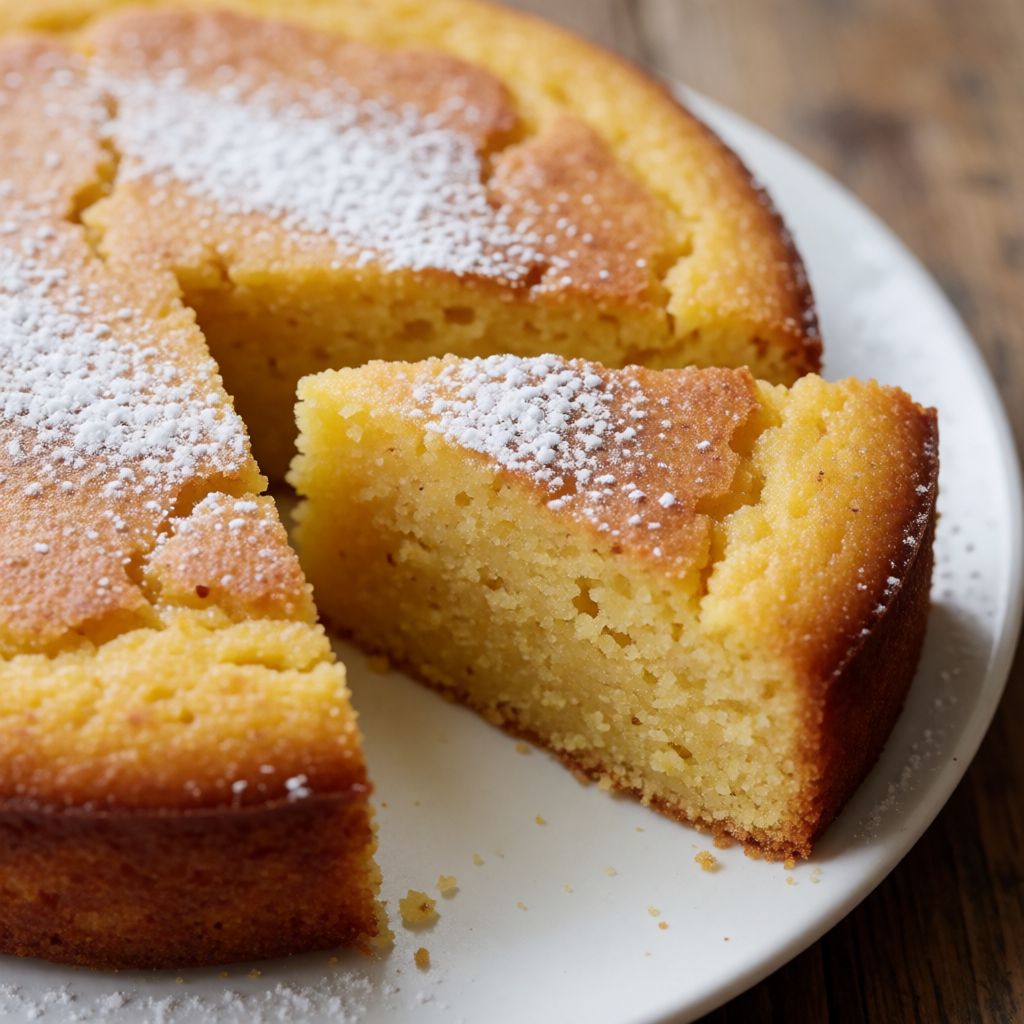
 AI photo
Gluten-Free Polenta Cake
A light, gluten-free polenta cake made with fine polenta, ground almonds and lemon zest, perfect for an afternoon treat.
Labels are worked out automatically from the ingredients and can be wrong. Check the packaging if it matters to you.
Ingredients
- 2 pcs Eggs
- 90 g Sugar
- 50 g Butter
- 150 ml Yogurt
- 150 g Fine Polenta (Cornmeal)
- 50 g Ground Almonds
- 10 g Baking Powder
- 1 pcs Lemon Zest from 1 lemon








Steps
Separate the egg whites from the yolks. Beat the yolks with the sugar until the mixture becomes light and creamy.
Add the melted butter and continue mixing until the ingredients are well combined.
Add the lemon zest and pour in the yogurt.
Gradually add the ground almonds, then the fine polenta and baking powder, continuing to mix.
In a separate bowl, whisk the egg whites until stiff, then gently fold them into the batter.
Grease the tin with butter and dust it with fine polenta, then pour in the batter.
Bake in a preheated fan oven at 180°C for 30-35 minutes.
33 minCheck that it's done with a wooden skewer.
What was changed
Fine Polenta (Cornmeal) is used because UK cornflour is cornstarch, not the maize flour this cake needs. The oven temperature is rounded to to match the display steps used in UK recipes.
This is a yellow, slightly gritty cake that has nothing to hide behind — no flour to soften the bite, no long bake to build a thick crust. Cornmeal cakes like this one are old Mediterranean economics, not a dietary trend: wheat cost money, corn was what the mill ground for free or for cheap, and once sugar stopped being a luxury, somebody put the two together. Gluten-free is a modern label stuck onto a peasant habit.
What decides whether it rises or sits flat as a biscuit is the egg white, not the baking powder. Wheat flour holds a cake up by itself — the gluten stretches into a net and traps the air. Cornmeal has no gluten, so it can't do that job. The whipped whites are your actual scaffolding; the baking powder is only there to give the scaffolding a second push once it's in the heat. Beat the whites to stiff peaks, not to a wet foam that slides off the whisk, and fold them in like you're trying not to wake them. Stir hard and you knock the air back out — the cake you pull out will be dense and you'll blame the recipe, when the fault was in your wrist five minutes earlier.
Some say gluten-free cake is always dry. No — because this one isn't built dry. Melted butter, yogurt and ground almonds are three separate sources of fat and moisture doing a job flour usually does on its own. Leave any one of them out or skimp on it and then you get the dry, sandy result people expect from cornmeal, and blame the corn instead of the shortfall.
Eggs: separated for a reason, not for show. The yolks go in with the sugar to build an emulsion with the butter — this is what gives the crumb its tenderness rather than a crumbly dryness. The whites are whipped separately because that foam is the rising mechanism described above. Use eggs at room temperature if you can; cold whites whip up slower and never hold quite as much air, which costs you height before you've even opened the oven.
Sugar: here it's not just sweetness, it's also what you're creaming the yolks against to get that pale, thick, ribbon-like texture in step one — the friction and the sugar crystals help trap tiny air bubbles into the yolk mixture before the whites even arrive. If it stays thin and translucent instead of going pale and heavy, you haven't beaten it long enough; that's not fussiness, it's one more small contribution to the final rise.
Butter: melted, so it mixes into the batter rather than sitting in lumps. Any fat that's solid at room temperature and carries no smell of its own will do this job — butter gives the flavour people expect from a cake, but a neutral solid fat works mechanically the same way. Don't swap in oil unless you accept a wetter, denser crumb; oil never firms up again once it cools, and that firming is part of what holds the slice together.
Yogurt: moisture, yes, but also acid, and the acid is what wakes up the baking powder properly. Any fermented dairy with a similar tang — soured cream, buttermilk — does this job. Sweet milk alone won't; you'd lose both the moisture and the chemical trigger, and have to compensate elsewhere.
Fine polenta: the word "fine" is not decoration, it's the whole texture of the cake. Coarse polenta — the kind meant for porridge — stays gritty under heat because the granules are simply too big to soften through in a 33-minute bake. If fine polenta isn't on your shelf, a few seconds in a blender with the coarse kind gets you close enough. This is also where the old peasant economics shows its edge: coarse cornmeal was cooked long and slow over a fire because it had to be; fine cornmeal in a cake is a shortcut that only became possible once mills could grind that finely for everyone, not just for bread flour.
Ground almonds: fat, protein, and a little extra structure, standing in for some of what gluten would normally provide. Any mild ground nut works on the same principle — hazelnut will change the flavour more than the mechanics. If you're working around a nut allergy, more polenta plus a touch more butter gets you a cake, but a denser, less forgiving one; the almonds are doing real binding work, not just flavour.
Baking powder and lemon zest: the powder is your backup lift once the oven's heat expands the gas it releases — it won't save a batter where the whites were folded in badly, but it does genuinely help a well-made one go a bit further. The zest is there because cornmeal on its own tastes a little flat and dusty; the citrus oil in the zest cuts straight through that. Grate only the yellow skin, not the white underneath — that part is bitter and will fight the sugar instead of working with it.