
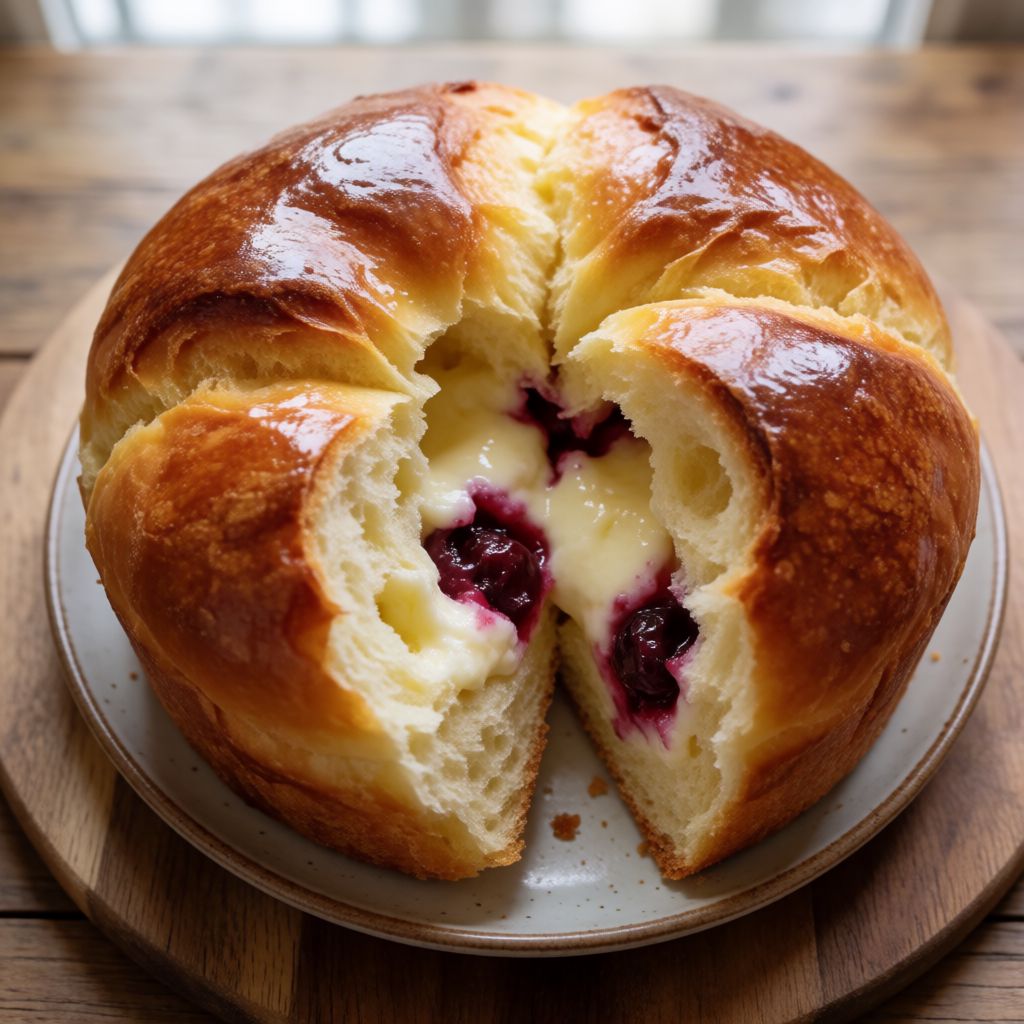
 AI photo
Aversana Cherry Cream Brioche
A soft enriched bread filled with vanilla custard and amarena cherries, finished with pearl sugar.
Labels are worked out automatically from the ingredients and can be wrong. Check the packaging if it matters to you.
Ingredients
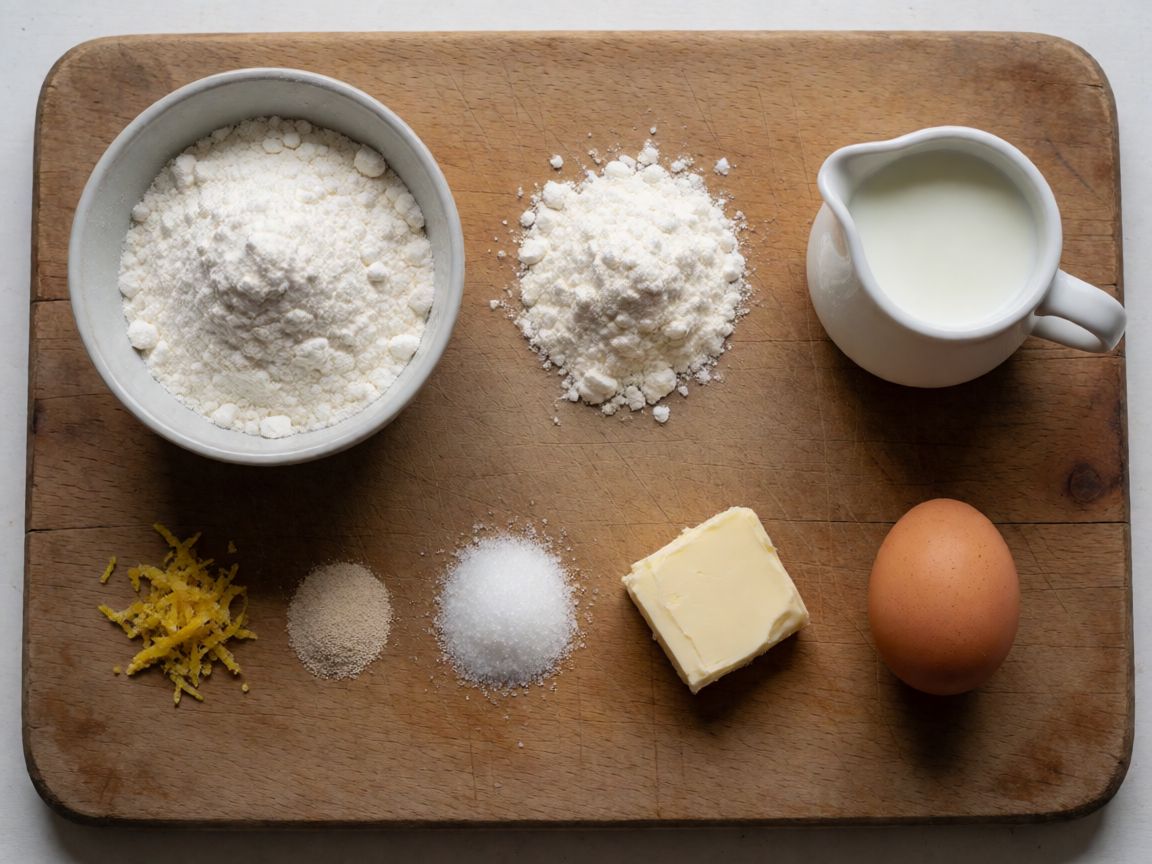
- 150 g Strong white bread flour
- 120 g Plain flour
- 100 g Milk
- 60 g Caster sugar
- 1 pcs Eggs
- 50 g Butter
- 12 g Yeast
- 1 pcs Lemon zest
- Salt a pinch
- 500 ml Milk
- 1/2 pcs Vanilla pod
- 3 pcs Egg yolk
- 60 g Caster sugar
- 40 g Plain flour or cornflour
- 100 g Amarena cherries in syrup
- 1 pcs Egg yolk
- 1 tbsp Milk
- Pearl sugar to taste








Steps
Prepare the custard cream following your usual recipe and let it cool.
Combine both flours, the sugar, salt, lemon zest, crumbled yeast, egg and milk. Mix the dough vigorously.
Add the soft butter in small pieces, waiting for each piece to be fully absorbed.
Knead the dough until smooth.
Shape into a ball, place in a bowl and leave to prove.
150 minDivide the dough into two equal pieces.
Roll out the first piece into a 23 cm circle on baking parchment.
Spread the custard cream in the centre and scatter over the amarena cherries.
Cover with the second disc and press the edges firmly together.
Leave to prove for a further 45 minutes.
45 minBrush the surface with the egg yolk mixed with milk.
Sprinkle with pearl sugar.
Bake at 170-175°C in a conventional (static) oven for about 30 minutes.
30 min
This is a brioche, but not the fussy knotted loaf you buy for bread-and-butter pudding — it's flattened into a disc, split, filled like a cake, and sealed shut. Two rounds of enriched dough sandwich a custard-and-cherry filling, then the whole thing proves again before baking, so it comes out of the oven looking like a giant stuffed bun and eating like a cross between a Chelsea bun and a Victoria sponge. The name tells you where it's from: this is Sicilian-Italian patisserie-shop food, the kind that sits under glass next to the espresso machine.
What decides whether this works is not the baking — 170-175°C in a fan-off oven is forgiving, it just colours the crust steadily without scorching the sugar on top. What decides it is the dough's fat content and how patiently you let it rise twice. Butter worked into a yeasted dough does two contradictory things: it feeds the yeast's enemy (fat coats the gluten strands and slows gas production) while making the crumb soft and rich once baked. That tension is why the first prove gets a full two and a half hours and the second, after shaping, gets its own 45 minutes — you're giving the yeast time to do its job despite the butter working against it, twice.
The filling is the other half of the engineering. Custard cream baked inside bread wants to boil and split the dough from underneath if it's too hot or too wet going in — that's why the recipe has you cool it first. A warm custard loosens, a cold one holds its shape and doesn't turn the brioche soggy on the inside while the outside's still pale.
Start with the flour split: strong white bread flour plus plain flour, not all-purpose on its own. Bread flour's extra protein builds the gluten net that has to hold a heavy, butter-laden, cherry-studded dough together without collapsing under its own weight. All plain flour and the dough is softer, true, but it tears when you try to close the disc edges — exactly where this bake most needs strength. If you've only got plain flour in the cupboard, it'll still work, the crumb will just be a touch more cake-like and less chewy.
The milk and egg aren't just liquid — they're what makes this a brioche rather than a bun. Milk's proteins and sugars brown the crust faster than water would and keep the crumb tender; the egg adds structure and that pale yellow crumb colour everyone associates with "enriched." Twelve grams of yeast for this amount of flour is a generous dose, and it needs to be — it's working against sugar, salt and fat, all of which slow it down by competing for water or coating the gluten. Use fresh or dried, just don't expect it to behave like a lean bread dough; it's slower and needs the long first prove to actually double, not just puff.
Butter goes in soft, in small pieces, each one absorbed before the next — that's not fussiness, it's mechanics. Throw it all in cold and at once and it sits between the gluten strands as greasy lumps rather than coating them evenly; the dough turns slick on the outside and never properly smooths. Any butter with a clean, mild flavour works; margarine will get you through in a pinch but you lose the flavour the whole enriched-dough idea is built on.
The custard: egg yolks, sugar, flour or cornflour, milk, vanilla. The starch (flour or cornflour, pick one) is what lets the custard set thick enough to sit inside bread without weeping — a thin custard turns the crumb beneath it gummy, the real reason you cool it properly before using it rather than any fear of "melting the dough." Vanilla pod rather than extract if you can get it; a scraped half-pod in hot milk infuses more gently and doesn't leave the bitter edge a cheap extract can. Amarena cherries in syrup are the traditional filling here — sharp-sweet, intensely flavoured cherries from Italy — and if you can't find them, a good quality morello cherry jam or well-drained tart cherries in syrup gets you close; just avoid anything too wet, which brings back the soggy-crumb problem.
The egg wash and pearl sugar on top are about the crust, nothing more. Egg yolk loosened with a spoon of milk gives you shine and even browning without the surface turning tough; pearl sugar doesn't melt at 170°C the way caster would, so it stays as little crunchy flecks rather than dissolving into a sticky glaze. If you haven't got pearl sugar, roughly crushed sugar cubes do a passable job — ordinary granulated will just melt and disappear.
One honest note for a domestic oven: without a stand mixer this dough takes real elbow work to get smooth, because enriched doughs are slacker and stickier than a plain loaf. Don't fight it by adding flour — that dries out the crumb you're trying to keep soft. Patience here isn't a virtue word, it's an ingredient: both proves are doing real chemical work, and rushing either one gets you a dense disc with a raw, under-risen seam where the two halves meet.