
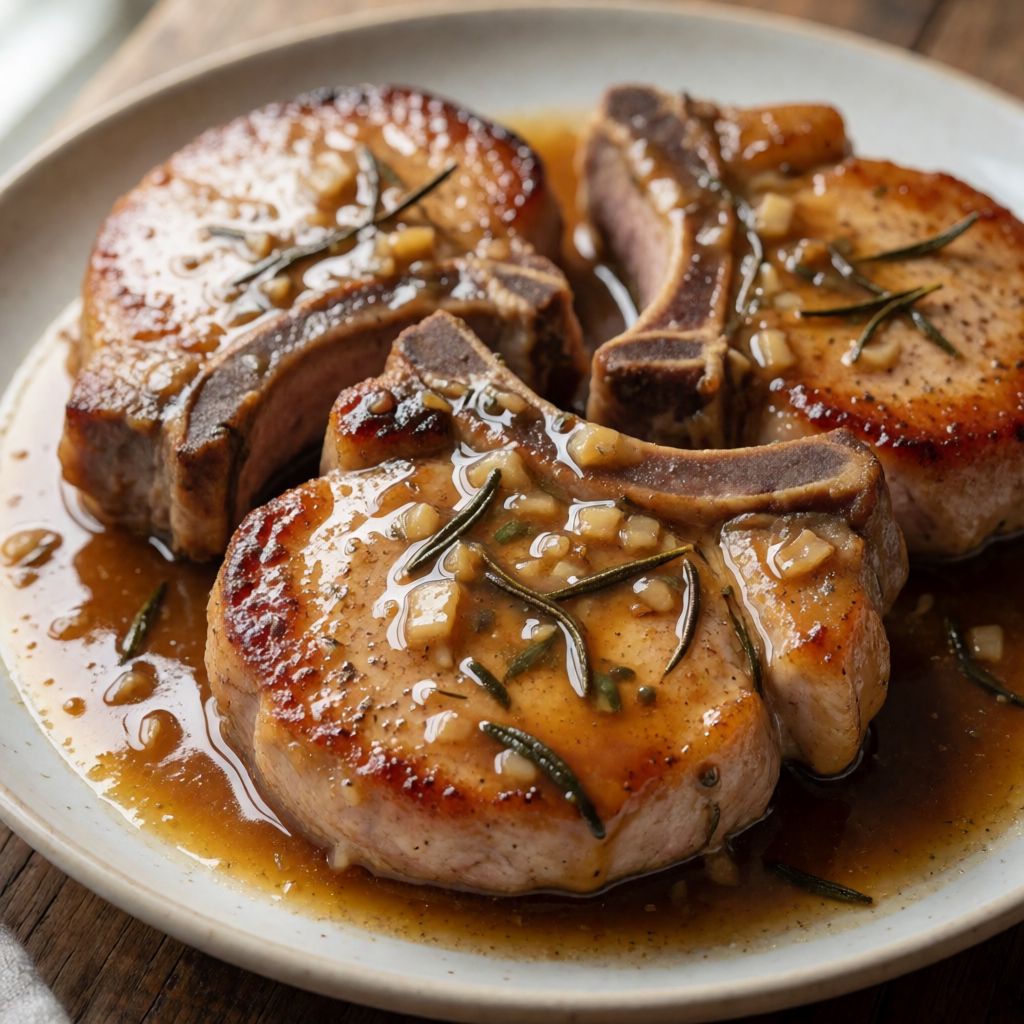
 AI photo
Pork Chops in Beer Sauce
Juicy pork chops pan-fried and finished in a rich beer sauce with rosemary, thyme and lemon zest.
Labels are worked out automatically from the ingredients and can be wrong. Check the packaging if it matters to you.
Ingredients
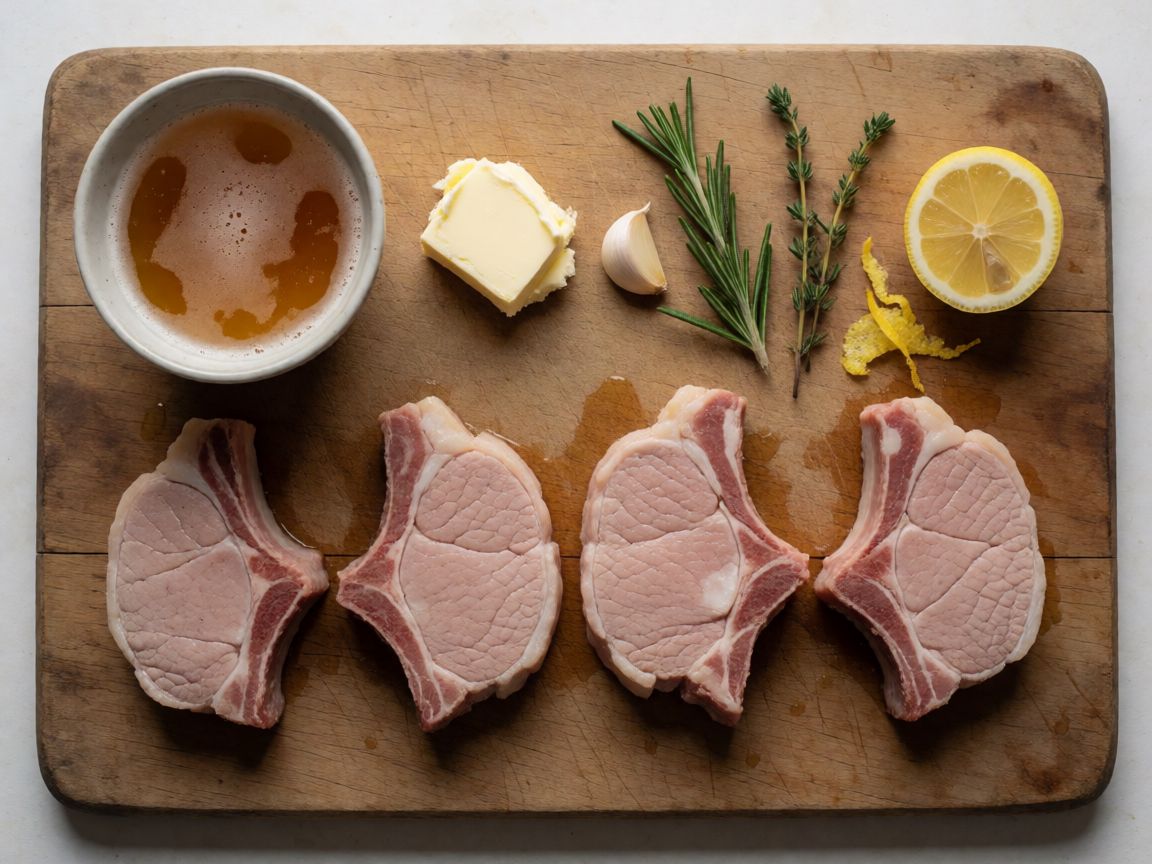
- 4 pcs Pork chop
- 100 ml Red ale
- 40 g Butter
- 40 ml Olive oil
- 0.5 clove Garlic
- 1 pcs Rosemary sprig
- 2 pcs Thyme sprigs
- 0.5 pcs Lemon zest zest of half a lemon
- Salt to taste
- Black pepper to taste










Steps
Heat the olive oil in a large frying pan, add the pork chops and season with salt and pepper to taste.
Fry the chops for 5 minutes on each side until cooked through (internal temperature 70°C).
10 minWhile the meat is frying, peel and finely chop the garlic, grate the lemon zest, and finely chop the rosemary and thyme.
Transfer the cooked chops to a plate.
In the same pan, melt the butter, then add the chopped herbs, lemon zest and garlic.
Pour in the red ale and let the sauce reduce until it reaches a creamy consistency.
Plate the chops, spoon over the ale sauce and serve.
This is a pub kitchen's answer to a French pan sauce — the same logic that gives you steak au poivre, but with a chop instead of a fillet and ale instead of wine, because that's what's open on a Sunday in a British kitchen, not a bottle of Burgundy. The chop gets seared hard, comes out, and the pan — still dirty, still full of the brown bits stuck to the metal — becomes the sauce. That's the whole trick, and it's the only part you can actually ruin.
What decides whether it works has nothing to do with the beer brand and everything to do with two things: how hot the pan was when the chop went in, and whether you scraped that pan clean before making the sauce. Crowd four chops into a pan too small and they don't sear, they steam — the juice they release can't escape fast enough, the surface stays wet, and wet meat doesn't brown, it goes grey and rubbery no matter how long you leave it. So: a pan wide enough that each chop has its own patch of metal, oil hot enough that it shimmers and a drop of water spits when it hits it. If you can't fit all four, fry in two batches rather than crowd one.
Start with the chop itself. Bone-in holds juice better through a hard sear because the bone is a poor conductor and slows the cooking right at the edge where it matters most — if your butcher only has boneless loin chops, fine, but watch them, they go from done to overdone faster with nothing to buffer the heat. Thickness matters more than weight: four thin chops will each need less than five minutes a side, four thick ones more — the 5+5 in the recipe is a starting point for an average chop, not a law.
Olive oil goes in first, not butter, and that's not snobbery — butter's milk solids scorch and turn bitter well before the pan is hot enough to sear meat properly, while a plain olive oil (and any oil with no strong flavour of its own would do the same job — a flavourless vegetable oil, sunflower, whatever's in the cupboard) can take that heat and stay clean. The butter's job comes later, once the direct heat is gone, where it can melt gently and carry the herb flavours into the fat without catching.
The beer is standing in for wine, and that substitution is really a class and supply question more than a culinary one: ale was always in the house, wine wasn't, and ale's malt sugars do a similar job to wine's — they caramelise slightly as the liquid reduces and give the sauce body and a faint sweetness to balance the garlic and lemon. A red ale brings a caramel, biscuity note; the criterion for swapping it is a malty beer without heavy bitterness — a brown ale works, a pale IPA will fight you with its hop bitterness as it concentrates, so avoid that end of the shelf. No beer in the house at all — a splash of dry cider gets you closer than wine would, oddly, because it shares that same slight sweetness.
Garlic here is a whisper, half a clove, chopped fine so it melts into the butter rather than frying into bitterness — this is seasoning, not a garlic sauce, so don't be tempted to double it. Rosemary and thyme are both tough, oily herbs that survive a few minutes in hot fat without turning to mush or going bitter the way a delicate herb like basil would; any other hardy, woody herb — sage, for instance — follows the same rule and can stand in. The lemon zest is there for its oil, not its juice — juice would add sourness and water where you want neither; grate only the yellow skin, stop before you hit the white pith, which is bitter and does nothing for you.
Butter at the end — proper butter, the kind that's solid in the fridge — gives the sauce its gloss; that glossy sheen comes from fat emulsifying into the reduced liquid, which is why you whisk or swirl it in rather than just letting it sit and melt. There isn't a good dairy-free substitute that gives you the same shine; a plant spread with lots of water in it will just make the sauce look thin and split.
One domestic-kitchen point worth saying plainly: don't rinse or wipe the pan between frying the chops and building the sauce. Those dark flecks stuck to the metal are the fond — concentrated meat flavour — and washing it away under the tap, which feels like good kitchen hygiene, is actually how people end up with a thin, flat sauce and wonder why it doesn't taste of anything. Rest the chops under an upturned plate or a loose tent of foil while the sauce reduces — you've no lid that fits a frying pan in most flats, and you don't need one; you need the meat to sit undisturbed so the juices settle back through it instead of running out onto the plate the second you cut in.