
 AI photo
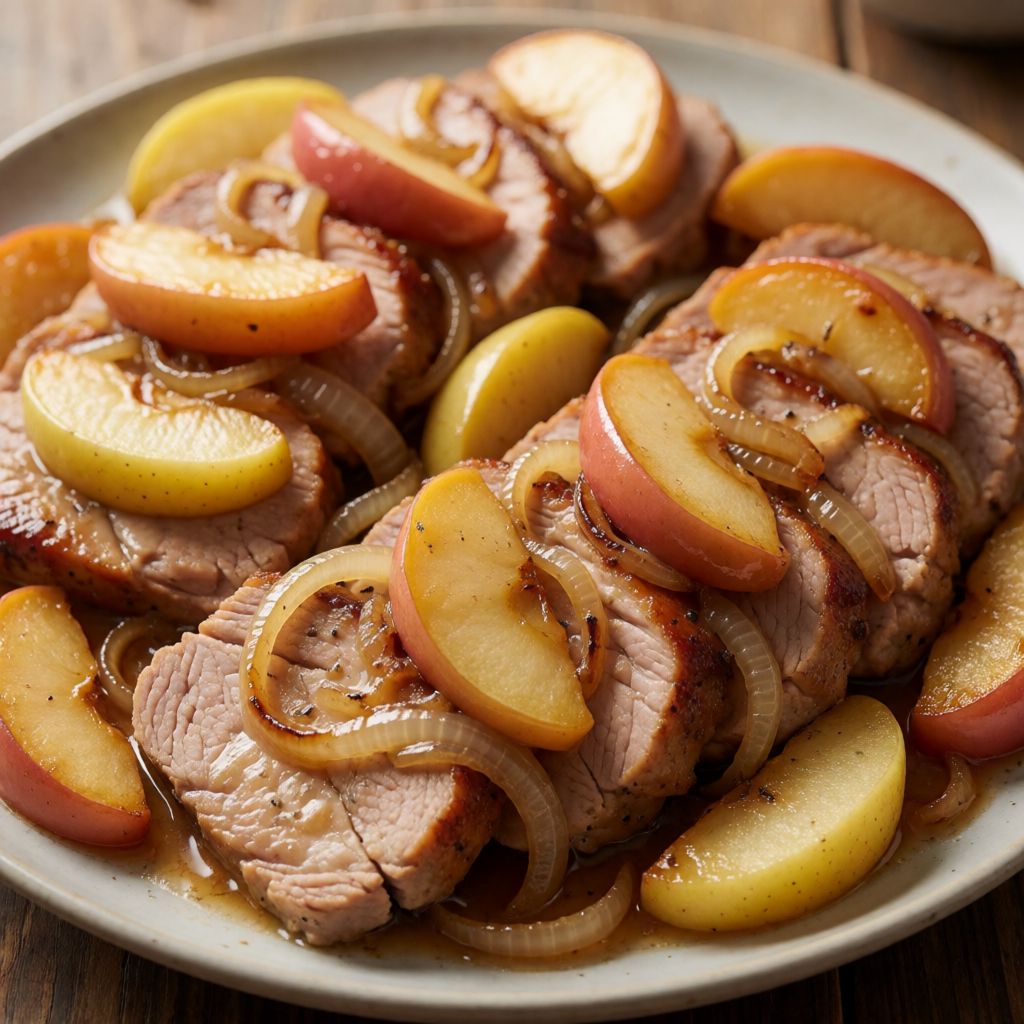
Pork Loin with Apples
Tender pork loin braised with apples, white wine and rosemary until meltingly soft.
Ingredients
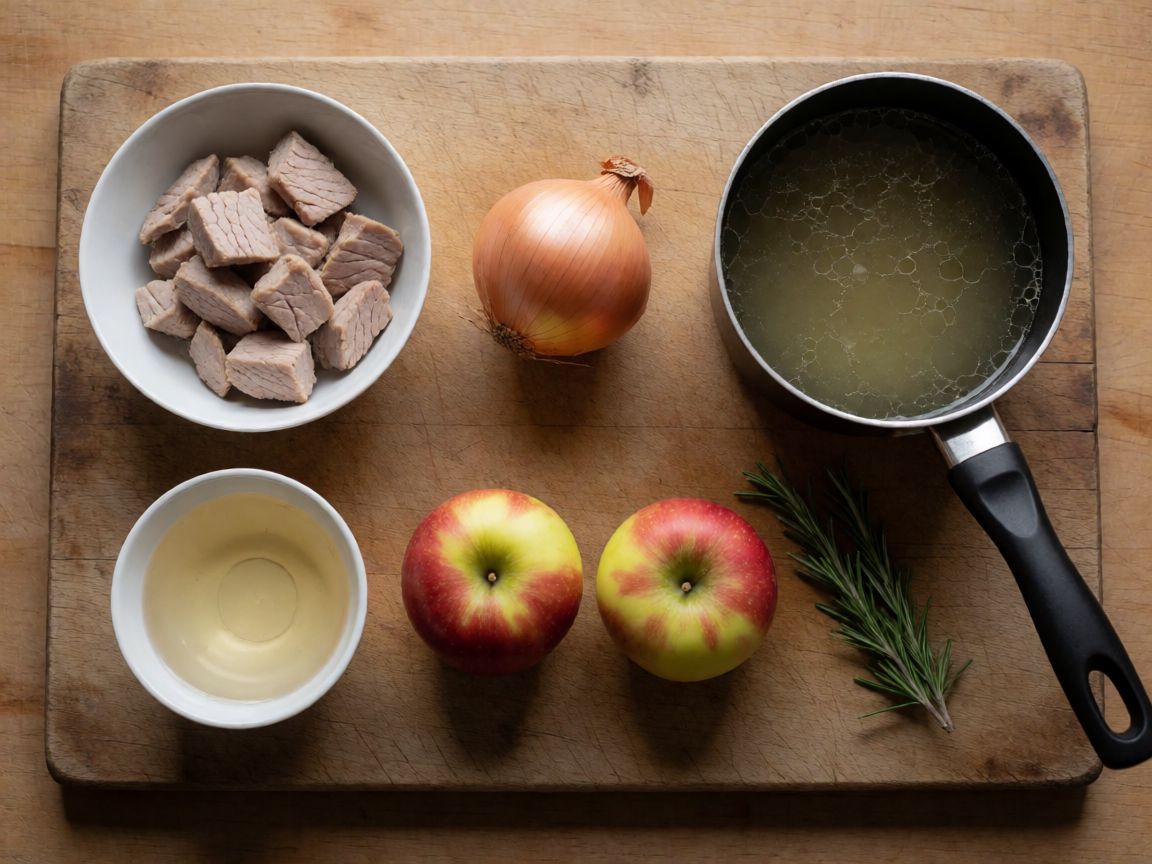
- 1 kg Pork loin
- 1 pcs Onion
- 350 ml Vegetable stock
- 150 ml White wine
- 2 pcs Apple
- 1 pcs Rosemary sprig
- Olive oil to taste
- Salt to taste
- Black pepper to taste









Steps
Tie the pork loin with kitchen string and tuck a sprig of rosemary between the string and the meat.
Chop half of the onion and fry it in a pan with olive oil until golden.
Add the pork loin and sear it on all sides over high heat until browned.
Add the sliced apples, pour in the white wine and cook until it has evaporated completely.
Pour in the vegetable stock a little at a time, cover and braise the meat, checking occasionally and topping up with more stock. It is done when the inside reaches 70°C.
60 minTransfer the cooked loin to a plate, remove the string and slice it.
Blend the apples left in the pot until smooth, pour over the meat, then season with salt and pepper.
This is a lean loin braised in its own perfume — onion, apple, wine — until it gives up being tough and the apples give up being apples, turning into the sauce. Two different kinds of heat are doing two different jobs here, and that's the whole mechanism: a hard, dry sear first, then a slow, wet braise second. Mix them up — sear too long, or let the braise boil — and you get dry rope instead of sliceable meat, because loin carries almost no fat to protect it from your mistakes.
The number that actually matters is the 70°C at the core. Get a probe thermometer for this one; lean meat gives you no fat-rendering, no visual tell to go by, nothing to poke and guess at. Everything else in the method — how golden the onion gets, how long the wine takes to vanish from the pan — is a cue, not a clock, and the clock in the recipe is only ever a floor, not a ceiling.
Some say searing 'seals in the juices.' No — meat isn't a bag with a zip. The crust you build at high heat is flavour, the Maillard browning of sugars and proteins, and it has nothing to do with what happens to moisture later. The juices are won or lost entirely in the second act, the slow braise, where liquid goes in a splash at a time so the pot never climbs past a murmur. Dump all the stock in at once and you're not braising anymore, you're boiling, and boiling toughens a lean muscle before the centre has caught up.
Pork loin: buy it with a thin fat cap still attached if the butcher will leave one on — it's the only insurance a lean muscle gets. Tying it with string isn't ceremony, it's structural: an untied loin is an irregular cylinder, thick in the middle, tapered at the ends, and in a pan or pot that shape cooks the ends to dryness while the middle is still raw. The string forces it into an even cylinder so heat arrives at the same rate everywhere. Myth worth retiring here: you don't need the bone in for flavour in a braise like this — bone matters for roasting, where it slows heat into the centre; here the liquid and the lid are doing that job instead.
Onion: only half goes in, chopped and fried to gold before the meat ever touches the pan — this is the base, sweetness laid down early so it has time to mellow rather than sit raw underneath everything. Keep the other half for stock or a different dish; there's no reason to throw it in just because it's already cut.
White wine: dry, something you'd actually drink. 'Cooking wine' off a supermarket shelf is often sweetened and salted precisely so it keeps badly disguised as flavour, and it will throw the acid balance off in a dish that depends on cutting through fat and sweetness. No wine in the house — dry cider is the honest British swap, because there's already apple in the pot and it won't fight it; diluted cider vinegar with a splash of water is the fallback if there's no alcohol at all, just expect a sharper, flatter result.
Apples: the criterion is whether the flesh will collapse under gentle heat into something you can blend smooth, or whether it stays stubborn. A soft cooking apple — Bramley is the obvious British one — falls apart almost on its own, generous for the final purée but giving you less visible apple in the braise itself. A firmer eating apple like Braeburn holds its slices longer, cooks into the sauce more slowly, and still blends fine once the pot's done its hour. Either is right; know which effect you're choosing.
Rosemary: one sprig, tucked under the string against the meat rather than loose in the oil, because that position lets it toast gently in the fat released from the pork's own surface instead of frying naked in hot oil, where a woody herb like this scorches and turns bitter fast. If you've no rosemary, thyme behaves the same way — resinous, stands up to direct heat. A soft herb, basil, parsley, would just burn there and contribute nothing.
Salt and pepper go on at the very end, once the sauce is blended, not earlier. Salt early in a long, slow braise pulls moisture out of the meat over that hour, which is exactly the kind of leak a lean cut can least afford. Season the concentrated sauce at the end instead, taste it, and adjust — it's a far smaller, more honest decision to make once than a guess made an hour too soon.
On the pairing itself: pork and apple together isn't a flavour mystery, it's geography and thrift. In cool, wet climates — Britain included — pigs and orchards have shared the same land for centuries, pigs fed on the windfalls nobody could sell, and the fruit that was too soft or bruised to eat raw went into the pot with the meat it was already standing beside. The Sunday habit of apple sauce next to roast pork comes from exactly that arrangement, not from anyone discovering a secret affinity.
In a UK kitchen, forget the kazan — a wide, heavy frying pan does the searing and the braising both, as long as it has a lid, or a lid's worth of foil pressed down tight, because what you're trying to trap here is steam, not splatter. A plate with paper napkins over the top will stop grease landing on your hob, but it won't hold moisture in the pot the way a real lid does, and moisture in the pot is the entire point of the second half of this recipe. And give the hour its hour — checking the stock level and topping it up is the one job you can't skip ahead on; patience is the ingredient doing the actual tenderising here, not any step written on the page.