
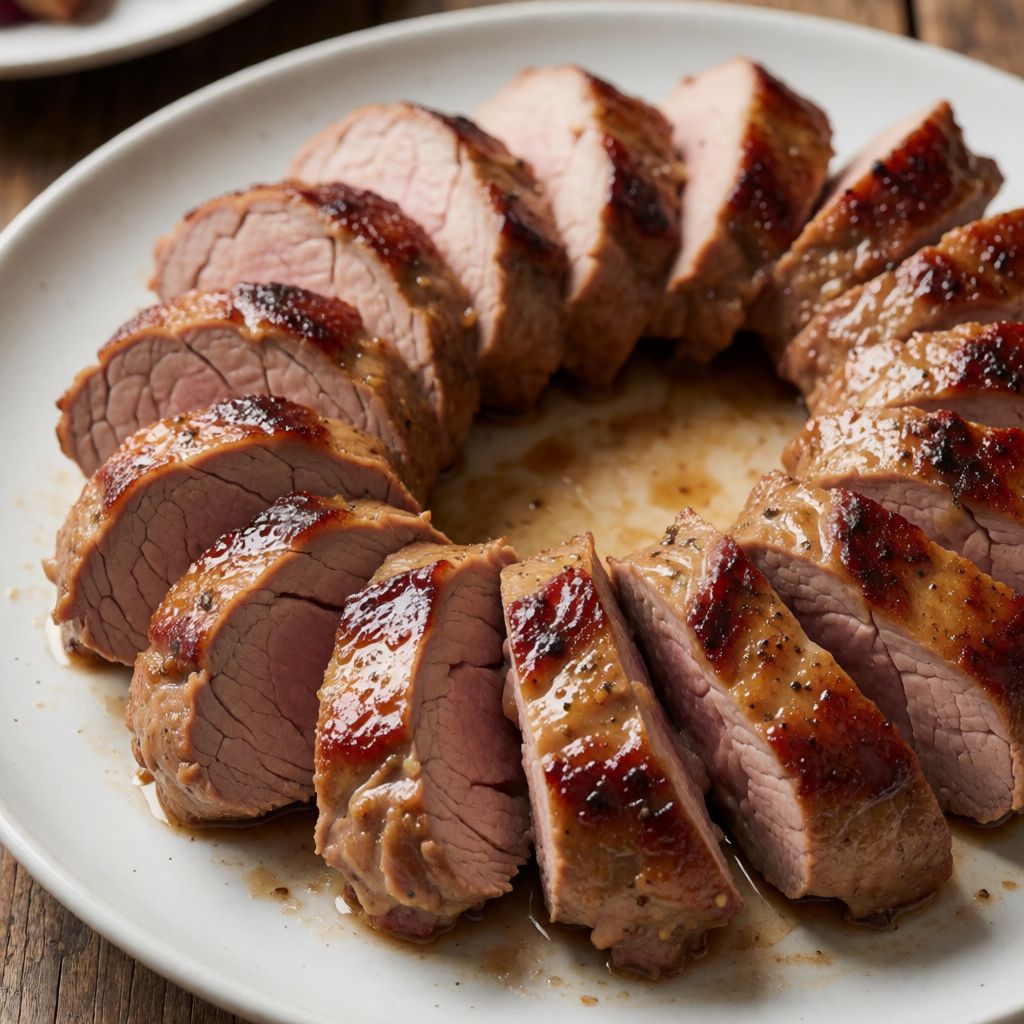
 AI photo
Pork Tenderloin with Plums
A tender pork tenderloin marinated with juniper and cloves, then braised with plums in white wine.
Ingredients
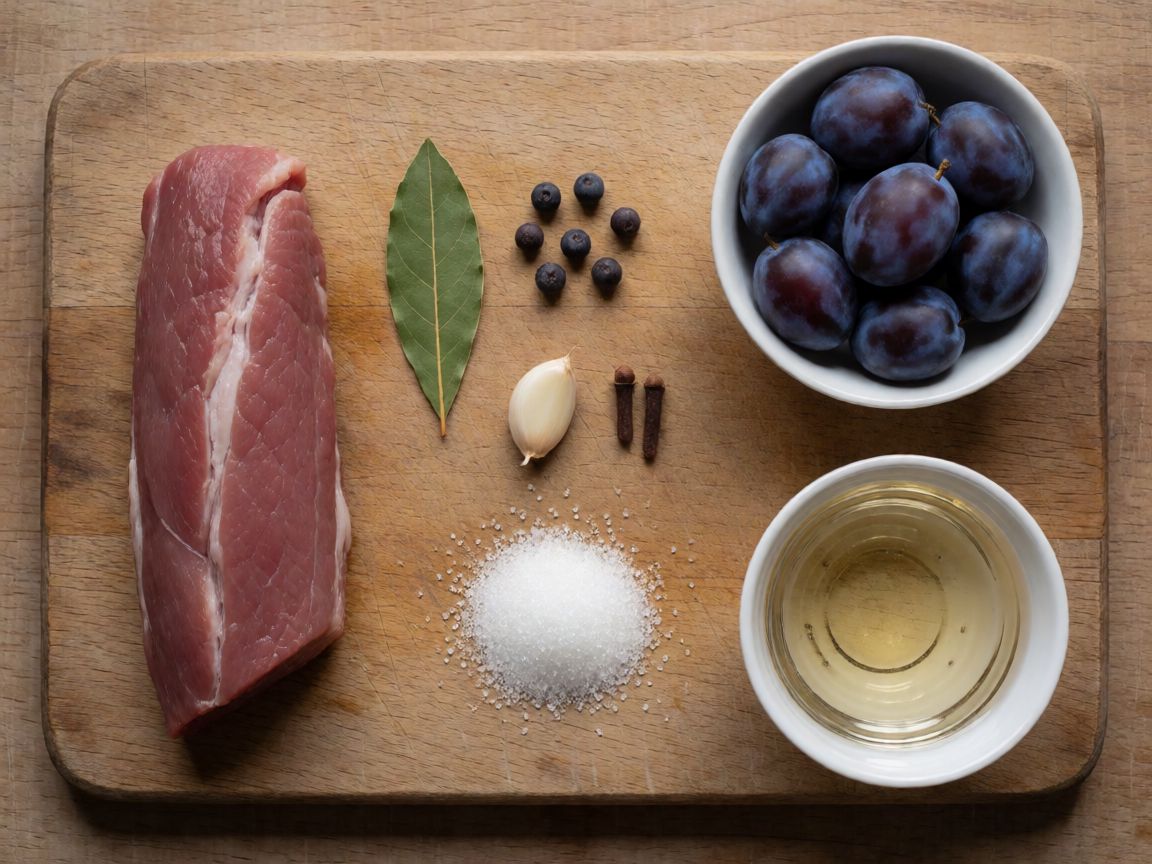
- 700 g Pork tenderloin
- 1 pcs Bay leaf
- 6 pcs Juniper berries
- 1 clove Garlic
- 1 pcs Cloves
- 3 tbsp Olive oil
- 350 g Plums
- 1 tbsp Sugar
- 125 ml White wine
- Salt to taste
- Black pepper to taste
- Parsley to taste
- 3 pcs Plums for garnish









Steps
Trim the pork tenderloin of fat, season with salt and pepper. Crush the juniper berries together with the cloves and garlic.
Place the tenderloin in a bowl, rub with the spices and olive oil, add the bay leaf. Leave to marinate for 3 hours.
180 minWash the plums, cut in half, and blanch in boiling water for 1 minute.
1 minIn a shallow pan, sear the tenderloin over high heat on all sides until evenly browned.
Pour in the wine and let it evaporate, add the plums and sugar, add a little water and simmer covered until the centre of the meat reaches 70°C.
Transfer the meat to a plate and keep warm.
Blend the sauce, season with salt and pepper, return to the pan and boil for 2 minutes.
2 minSlice the tenderloin and arrange on a serving plate.
Pour over the plum sauce and garnish with plum slices and parsley leaves.
Serve immediately.
Pork tenderloin is the leanest cut on the pig — it's the muscle that does almost no work, so it never builds the fat and connective tissue that give flavour and forgiveness. That's the whole problem this recipe solves. You can't braise it low and slow like shoulder, because there's nothing in it to break down and it will just dry out and go to string. So the method here is sear hard, cook briefly, and build the flavour and the forgiveness outside the meat — in the marinade, and in the sauce.
What decides whether this works is two separate things done right: the marinade actually has time to do its job, and you stop the meat at the right point rather than a guessed time. Juniper and clove and garlic in oil aren't decoration — oil carries their aromatics into the muscle in a way that a dry rub or a wine marinade can't, because those compounds are fat-soluble, not water-soluble. Three hours is the real minimum for that to reach past the surface; less and you've seasoned the outside and left the middle tasting of nothing.
The plums are doing the forgiveness job that fat would do in a fattier cut. Their acid and sugar reduce with the wine into a sauce sharp enough to cut through lean meat that has no fat of its own to cut through. Some say pork needs to be cooked grey through to be safe — no, because tenderloin at 70°C in the centre is cooked and still faintly pink, and pushing it further just finishes the job of drying it out that the cut's leanness already started.
Pork tenderloin itself: buy it trimmed if you can, because the small amount of surface fat and silverskin on it won't melt away the way it does on a shoulder joint — it just sits there chewy. Trimming before marinating also means the oil and spice touch meat, not fat. There's no real substitute for the cut; chicken breast shares the leanness problem but not the flavour, so if tenderloin isn't sold where you shop, ask a butcher to cut you a piece from the loin instead — same logic, slightly less delicate.
Juniper berries, cloves, garlic, crushed together: this is a classic pairing for pork precisely because pork on its own is mild, and these three are assertive without being hot. Crushing rather than chopping matters — it breaks the cell walls open so the oils release into the fat you're about to rub in. If you've no juniper, a few crushed black peppercorns and a bay leaf lean closer to a plainer roast flavour; it won't be the same dish, but it won't fight the plums either.
Olive oil: the brief here is "any oil with no smell of its own that can carry fat-soluble flavour," and a light olive oil does that without adding much of its own taste over three hours. A strong extra virgin will argue with the juniper. Sunflower or a neutral vegetable oil works if that's what's in the cupboard — you lose nothing essential.
The plums need to be ripe enough to give up their juice readily but firm enough to hold their shape through a quick blanch — this is the same logic as blanching tomatoes to skin them, except here it's softening the skin and starting the flesh toward collapse before it ever meets heat in the pan. Skip the blanch and the skins stay tight and separate oddly in the finished sauce. If plums aren't in season — and in the UK that's most of the year — greengages or even tart eating apples with a squeeze of lemon will do the acid-and-sweetness job, though you'll lose the deep colour.
White wine: here it's doing the job of lifting the browned bits off the pan base (what the French call deglazing, though you don't need the word to understand the mechanism) and adding acid the plums can't fully supply on their own. A dry wine, not a sweet one — sweetness is what the sugar and plums are already bringing. If you don't cook with wine, a splash of cider vinegar loosened with water gets you the acid without the alcohol, though the sauce will taste leaner.
Patience is the real ingredient missing from most short versions of this dish. The three-hour marinate isn't a suggestion you can shave to twenty minutes and call close enough — it's the only time the spices have to get past the surface, and skipping it is why people end up with pork that tastes fine at the edge and of nothing in the middle. Everything after the sear moves fast; this is the one slow part, and it's where the dish actually happens.