
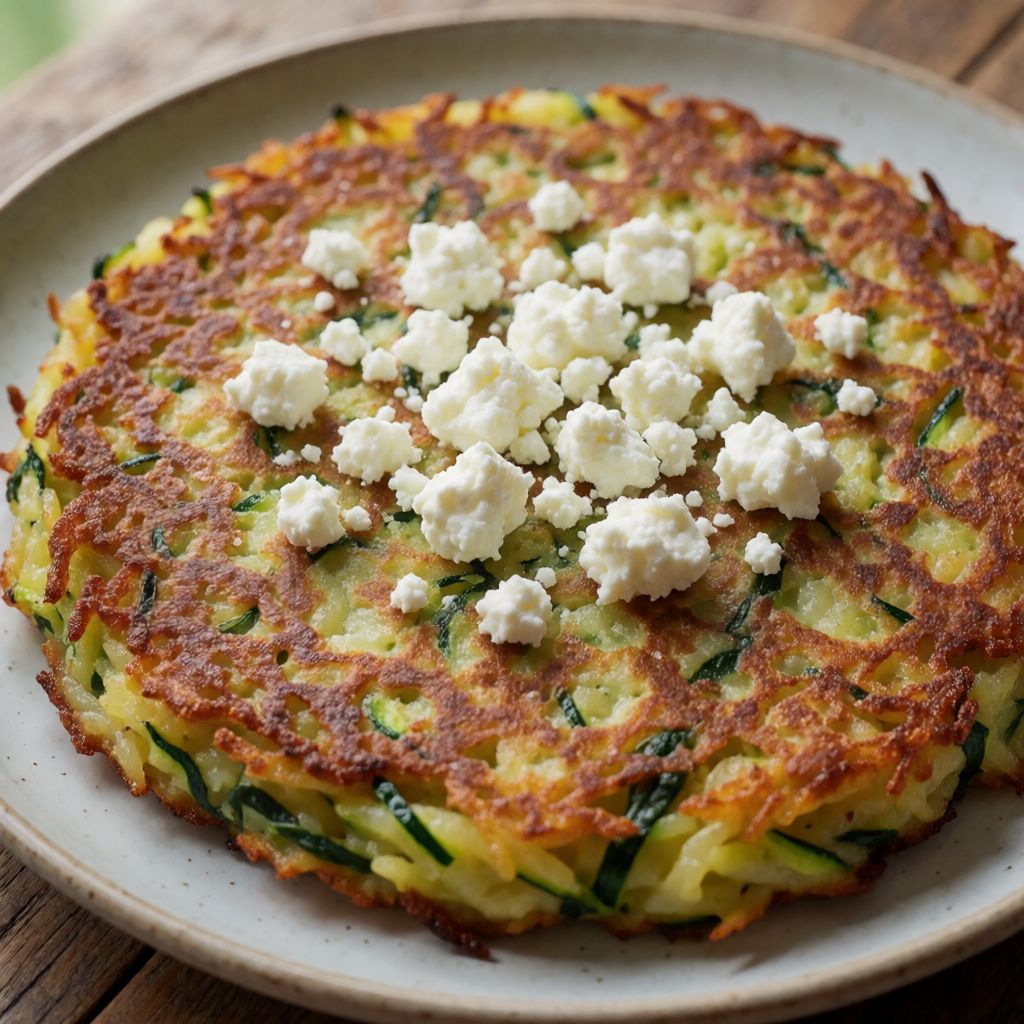
 AI photo
Potato and Vegetable Rösti with Feta
Crispy potato and courgette rösti with spinach and feta, served with avocado, edamame, rocket and roasted feta.
Labels are worked out automatically from the ingredients and can be wrong. Check the packaging if it matters to you.
Ingredients
- 200 g Potato peeled and coarsely grated
- 250 g Courgette coarsely grated
- 75 g Spinach finely chopped
- 4 pcs Eggs beaten
- 100 g Feta
- 50 g Wholemeal flour
- 1 clove Garlic crushed
- 1 tbsp Olive oil for frying
- Salt
- Black pepper freshly ground










To serve
- 150 g Feta for serving
- 1 tbsp Maple syrup
- 120 g Rocket
- 150 g Edamame beans shelled, thawed
- 1 pcs Avocado
- 1 pcs Lemon unwaxed, juice and finely grated zest
- 0.5 package Watercress ½
- 1 tbsp Olive oil
- Salt
- Black pepper freshly ground





Steps
Place the feta on a baking-paper-lined tray, drizzle with maple syrup and oil, and roast in a preheated fan oven at 220°C until golden.
15 minSqueeze the liquid out of the grated potato and courgette, then mix with the spinach, eggs, feta, flour, garlic, salt and pepper.
5 minDivide into four portions and fry one at a time in a hot pan, turning, until cooked through.
12 minPour boiling water over the edamame beans and leave to stand for a minute.
1 minMash the avocado flesh with the lemon juice and zest, and season with salt and pepper until smooth.
2 minPlate the rösti, top with rocket, edamame beans and avocado, crumble over the roasted feta and finish with watercress.
2 min
A rösti only works if the water's gone before the heat gets to it. Potato and courgette are both mostly water wearing a vegetable costume, and if you fry that water, you steam the inside while the outside burns — you get a sad grey pancake with a scorched rim, not the thing you wanted. So the whole dish turns on one unglamorous move: squeezing the grated veg dry in a tea towel or a sieve with your fist, until your hands ache a bit and the liquid runs out nearly clear. Skip it and no amount of pan skill saves you.
Some say rösti needs a special grater, a ricer, a mandoline. No — because the point isn't a perfect shred, it's surface area and dryness. A box grater does the job; the coarse side, so the strands are thick enough to hold structure and not just collapse into mash.
What makes this one more than a hash brown is the egg, flour and feta binding it into something you can flip without it falling apart, and the fact that it's dressed as a full plate rather than a side — avocado, rocket, edamame, roast feta — so one rösti becomes dinner for one person, not a garnish.
The roast feta is the other half of the mechanism: heat turns cheese's blandness into sweetness at the edges while maple syrup caramelises on contact, so you get salt and caramel from the same cube. That's not decoration, that's the second flavour engine on the plate alongside the crisp potato.
Potato: use a floury or all-rounder variety — Maris Piper, King Edward — not a waxy salad potato. Floury ones have less bound water and more starch, and that starch is doing real work here: once it's exposed by grating and meets heat, it gelatinises and glues the shreds together. A waxy potato stays slippery and your rösti falls apart at the first flip.
Courgette: grate it the same coarse way, and treat it with even more suspicion than the potato — courgette is close to 95% water. Salt it for ten minutes before squeezing if you have the patience, because salt pulls water out by osmosis rather than just by brute force, and you'll get a drier mix with less effort. No courgette, no great loss: any firm, low-flavour vegetable that grates and dries the same way — carrot, celeriac — will stand in.
Spinach: chopped fine so it distributes through the batter instead of sitting in wet clumps that steam the mix from inside. If you only have frozen spinach, that's actually easier — thaw it and squeeze it exactly like the potato, since it's already given up most of its water for you.
Eggs: not for flavour, for glue — the proteins set under heat and lock the grated strands together once the flour's starch has done its share. Four eggs for 450g of grated veg is a generous ratio; go much lower and the rösti is fragile to flip in a home pan that doesn't have a kazan's even, gentle heat across the whole base.
Feta inside the mix and feta on top are doing two different jobs. Inside, it melts just enough to add pockets of salt and fat through a batter that's otherwise lean. On top, roasted with maple syrup at a hot oven setting that'll brown and caramelise before the cheese dries out, it becomes something closer to a glazed, salty crumble. Any firm, salty white cheese — a Lancashire or a crumbly mature feta substitute — will roast the same way; soft, wet cheeses like mozzarella won't, they'll just collapse into a puddle.
Wholemeal flour is there for structure, not health points — it absorbs any residual moisture you didn't manage to squeeze out and thickens the mix enough to hold a disc shape. Plain flour works the same way if that's what's in the cupboard; the "wholemeal" part is a kitchen's preference, not a rule the chemistry insists on.
Frying: a hot pan, enough oil to coat the base thinly — any oil with no smell of its own, so a flavourless sunflower or light olive oil rather than a heavily peppery extra-virgin, which you're better off saving raw for the avocado and rocket. You're listening for a steady, confident sizzle, not a scream; when it's quiet, the pan's gone cold and you're back to steaming the thing you worked so hard to dry out. Doneness here isn't a stopwatch — it's a rösti that releases cleanly off the base when you nudge it, rather than tearing and sticking, and a firm edge you can see has gone from wet-looking to matte.
The avocado dressing is simple on purpose: lemon juice and zest stop the avocado browning — the acid slows the oxidation that turns cut avocado grey within minutes — and salt and pepper are there because avocado on its own is fat with almost no character; it needs the lemon to taste of anything at all.
As a Sunday-plate dish for four, this sits well instead of a roast if you want something lighter with the same unhurried, sit-down feel — patience with the squeezing and the pan is the actual ingredient that decides whether it holds together, and there's no shortcut that replaces it.