
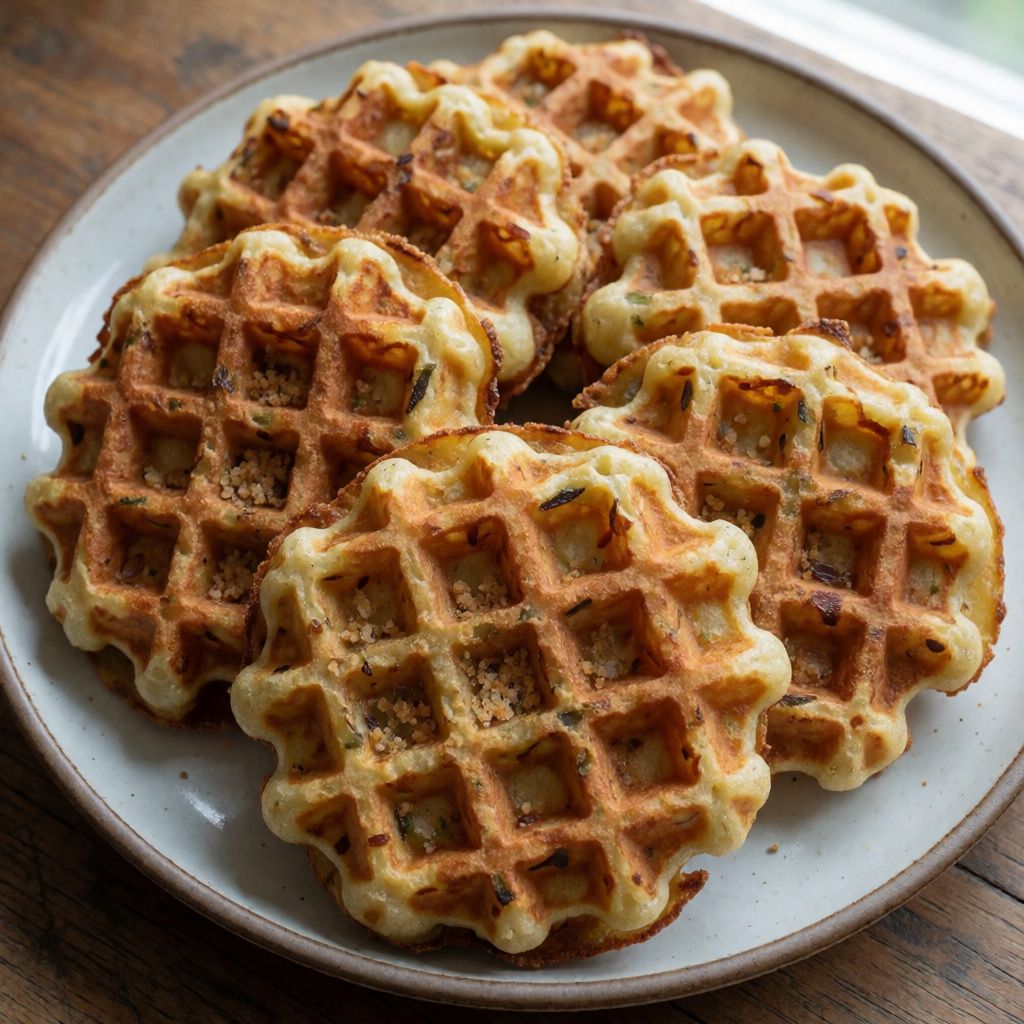
 AI photo
Potato Waffles with Oven-Roasted Vegetables and Burrata
Crispy potato waffles served with oven-roasted courgette and aubergine, burrata and toasted pine nuts.
Labels are worked out automatically from the ingredients and can be wrong. Check the packaging if it matters to you.
Ingredients
- 1 kg Potato coarsely grated
- 1 pcs Onion finely chopped
- 1 pcs Egg
- 50 g Plain flour
- 45 g Breadcrumbs dried
- 50 g Mature cheddar coarsely grated
- Salt
- Black pepper freshly ground
- 1 pcs Courgette diced
- 1 pcs Aubergine diced
- 4 clove Garlic finely grated
- 1 tsp Dried rosemary
- 4 tbsp Olive oil for frying
- Salt
- Black pepper freshly ground
- 1 pcs Burrata
- 40 g Pine nuts toasted
- 1 bunch Parsley finely chopped
- 1 tbsp Olive oil
- Salt
- Black pepper freshly ground





Steps
Put the coarsely grated potato into a bowl and mix well with a little salt.
2 minLeave the potato for 10 minutes to let the moisture come out.
10 minTip the potato into a sieve and squeeze out as much liquid as possible.
3 minPut the potato in a bowl with the rest of the ingredients (onion, egg, flour, breadcrumbs, cheese, salt and pepper) and mix well.
2 minCook the potato waffles one at a time in a waffle iron brushed with a little oil, until crisp and golden.
5 minPlace them on a rack or keep warm in the oven while you cook the rest of the waffles.
Put the diced courgette and aubergine into a greased heatproof dish.
2 minMix the olive oil, finely grated garlic, rosemary, salt and pepper and pour this mixture over the vegetables.
1 minMix the vegetables well so they are evenly coated.
1 minRoast in a preheated fan oven at 200°C for about 20-25 minutes.
23 minServe the hot potato waffles with the hot roasted vegetables, a whole or broken piece of burrata, a drizzle of olive oil and a sprinkle of toasted pine nuts, salt, freshly ground pepper and finely chopped parsley.
What was changed
Mature cheddar was swapped for the aged hard cheese shoppers here commonly buy, since the original cheese was unspecified.
This is a potato rösti dressed up as a waffle, next to a tray of roasted vegetables, with a ball of burrata melting into the heat of both. Nothing exotic in the parts — grated potato, courgette, aubergine, a soft cheese — but the whole thing hangs on one thing most people skip: getting the water out of the potato before it ever meets heat.
Raw grated potato is mostly water held in a loose net of starch. Salt it, and the salt pulls that water out by osmosis — you'll watch the bowl fill up. Squeeze that liquid away and what's left is starch and potato flesh packed close together, which is exactly what lets it crisp instead of steam. Skip this step and you don't get a crisp waffle, you get a potato pancake sweating itself soft from the inside, however hot your iron is.
What decides whether it works is dryness, twice over: dry potato for the waffle, and vegetables cut small and even enough that they roast rather than stew in their own juice. The waffle iron does the rest — it's just a grill with two hot faces instead of one, so both sides crisp at once without you flipping anything.
Some say a rösti needs a potato ricer or a proper grater you've owned for twenty years. No — any box grater does the coarse side fine; what matters is squeezing, not the tool that got you there.
Potato: a floury, high-starch variety behaves better here than a waxy salad potato — more starch means more glue holding the waffle together once the water's gone, and a drier crumb once cooked. In the UK that's a Maris Piper or King Edward, the ones sold for baking and mash rather than for potato salad. If all you've got is waxy, add a touch more flour to compensate for the weaker bind.
The egg and flour are the mortar, not the bricks — egg gives protein that sets like glue in the heat, flour soaks up any last moisture and thickens the mix so it holds a waffle's shape instead of running flat across the iron. Breadcrumbs do a similar job from the other direction: they're already dry, so they draw moisture in rather than release it, and they give the crumb some bite. Dried ones work because they're stable; if you only have fresh breadcrumbs, dry them in a low oven first or you've undone your squeezing.
Cheddar here is for savour and a little stretch, not melt — you want a mature one because a mild cheddar brings nothing but fat; "mature" is doing real flavour work that a young cheese can't. Onion, finely chopped rather than grated, keeps its own texture and a bit of sweetness that cuts the starchiness of the potato — grate it instead and it disappears into mush and bleeds liquid back into the mix you just dried out.
For the vegetables: courgette and aubergine are both watery vegetables, which is why they need real heat and a decent gap on the tray rather than a crowded dish — crowd them and they release steam that has nowhere to go, and you get boiled vegetables with a roast's name. 200°C fan is enough to drive off that water as steam and brown the surface before the inside turns to mush; you're watching for the courgette to go translucent at the edges and the aubergine to collapse and darken, not counting to twenty-five and stopping. Garlic grated fine rather than sliced dissolves straight into the oil and coats everything evenly instead of burning in patches, which is the usual reason roast garlic turns bitter. Rosemary dried is fine, even better than fresh here, because dried herbs want sustained heat to release their oil — a quick stir-fry wastes fresh rosemary, a twenty-minute roast suits dried rosemary perfectly.
Burrata isn't cooked, it's placed — the stracciatella centre wants gentle warmth from the hot vegetables and waffles around it, not an oven of its own, or it turns from a soft pool into rubber. Pine nuts are toasted beforehand for the same reason bread is toasted before a salad: raw, they're soft and a bit bland; a few minutes in a dry pan until they go from pale to light gold gives you the crunch and the nutty bitterness that holds its own against the cream of the burrata. If pine nuts aren't to hand, any oil-rich nut with a similar size — flaked almonds, chopped hazelnuts — does the same job, so long as you toast it. And the olive oil at the end, raw, uncooked — that's for scent, not fat; any oil with a clean, neutral smell works for frying, but at the finish you want one with flavour of its own, which is the whole point of drizzling it on at the very end rather than cooking with it.
This isn't a five-minute supper. The potato needs its ten minutes of patience before you've even started cooking, and the vegetables need their quiet half hour in the oven while you're not fussing over them — that's where a second waffle or two gets made. Feeds four as a light main or a generous side to something plainer; in a flat with no kazan and no waffle iron built for a crowd, you cook the waffles one at a time and keep the early ones warm on a rack over a low oven shelf, not stacked on a plate where the steam from each one goes straight back into the one below and undoes your crisping.