
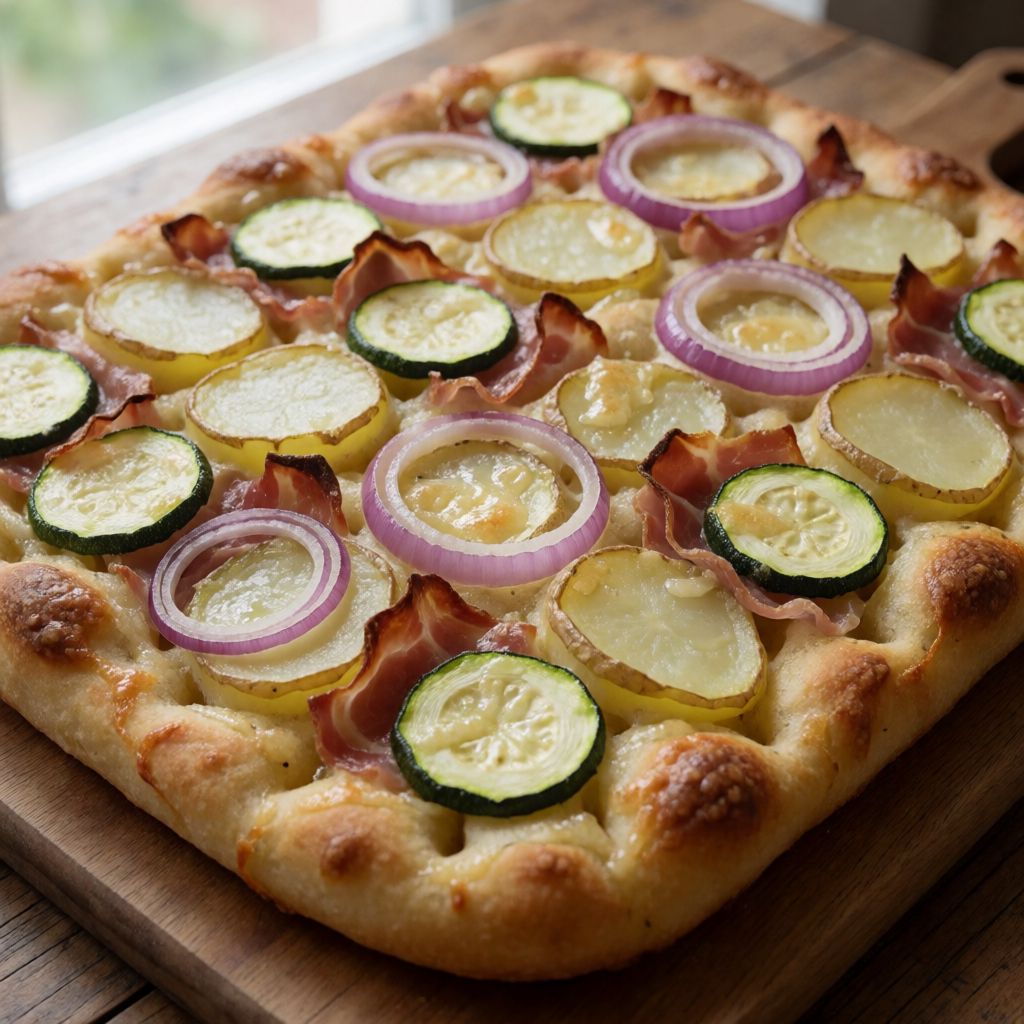
 AI photo
Potato and Courgette Focaccia
A rustic focaccia with grated potato, courgette and prosciutto folded into the batter.
Labels are worked out automatically from the ingredients and can be wrong. Check the packaging if it matters to you.
Ingredients
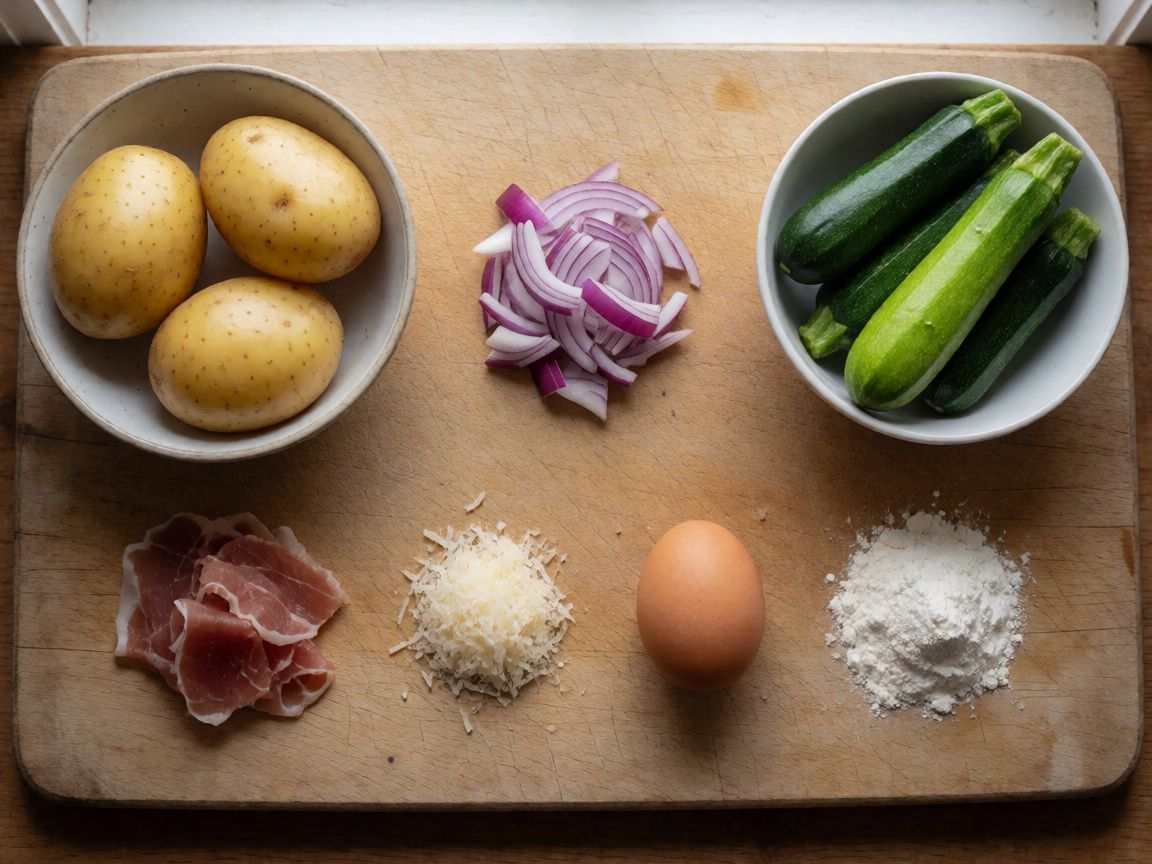
- 350 g Potato
- 25 g Red onion
- 60 g Prosciutto
- 200 g Courgette
- 30 g Parmesan
- 1 pcs Egg
- 180 g Plain flour
- 330 ml Water warm
- Salt to taste
- Black pepper to taste
- Olive oil to taste










Steps
Crack the egg into a bowl, then add the flour and warm water, stirring constantly to avoid lumps.
Peel, wash and coarsely grate the potato on the largest holes of a grater.
Peel and finely chop the onion.
Wash the courgette and slice it into thin rounds.
Add the potato, onion, Parmesan, courgette and prosciutto to the batter, season with salt and pepper and mix well.
Grease a 30 cm tin with olive oil or line it with baking paper.
Pour the mixture into the tin and smooth it out with the back of a spoon.
Preheat the fan oven to 220°C.
Or preheat a conventional (static) oven to 230°C.
Put the tin in the oven and bake until golden on both sides.
30 min
Call this what it actually is: a thin egg-and-flour batter carrying grated potato and sliced courgette, baked in a tin until it's brown top and bottom. Some call it focaccia because it ends up flat and oiled and golden-crusted like one — no, because real focaccia is yeasted dough that sits and breathes for an hour or more before it ever sees an oven. There's no yeast here, no rise, no dough to knead. What holds this together is starch and egg, not fermentation. It's closer to a vegetable torte that borrowed a fashionable name.
What decides whether it works is water management, plain and simple. Potato and courgette are mostly water held inside cell walls. Grate the potato and slice the courgette thin, and that water has a short distance to travel out as steam before the crumb sets around it. Pile it thick in a deep dish, and the same water gets trapped under a crust that's already closed — the middle stays gluey, the bottom stays pale and damp no matter how long you leave it in. A wide, shallow tin isn't a style choice, it's what lets the batter cook through before it seals itself shut.
Potato is the real glue of this bake, not the flour. Grate it raw and its starch bleeds straight into the batter, and that starch is what gelatinises in the oven heat and binds everything into a sliceable crumb rather than a loose vegetable mush. For that job you want a potato that's generous with starch — a Maris Piper or King Edward does this better than a waxy salad potato like Charlotte, which holds its structure and gives up far less starch, leaving you with a looser, wetter set. If all you've got is waxy, it'll still bake, just expect a softer, less cohesive slice.
Courgette is where the trouble usually starts, because courgettes vary a lot in how much water they're carrying. A small, firm one slices and bakes clean. A big one from the end of the summer glut has gone spongy inside and is mostly water with a bit of green around it — slice that thin as instructed and you can still end up with damp pockets. If that's what you've got, salt the rounds lightly, let them sit on a paper towel for ten minutes, pat dry, then mix them in. You're not seasoning at that point, you're pulling water out before it ever reaches the batter.
Red onion goes in raw and finely chopped because heat does the softening for you in the oven — you don't need to fry it first, and in fact frying it first would add a layer of job the batter doesn't need. Red onion is chosen for colour and a milder bite than a sharp white onion; if red is what you don't have, any onion works, just chop it finer and, if it tastes harsh raw off the board, give it five minutes in cold water first to take the edge off before it goes anywhere near the bowl.
Parmesan and prosciutto are doing two different jobs and neither is essential in the way the egg is. Parmesan brings salt and, because it browns, helps the crust colour — any hard, aged, salty cheese does the same work: grana padano, an aged pecorino, even a strong mature cheddar if that's the cupboard you've got, though the flavour shifts away from Italian and toward something more like a cheese-and-onion bake, which is no bad thing. Prosciutto adds salt and little pockets of fat scattered through rather than mixed in — swap it for pancetta, a smoked bacon if you want more smoke, or leave it out entirely and lean a bit harder on the parmesan and a pinch more salt if you're keeping this meat-free.
The egg is the one thing here you can't swap out for a substitute ingredient, because it's not flavour, it's structure — its proteins set firm in the heat and lock the grated vegetable mass together the way yeast and gluten would in an actual bread. Flour and water, 180g to 330ml plus that one egg, make a batter closer to a thick crepe mix than a dough — thin enough to pour, not something you'd ever knead. That ratio matters: there's more potato and courgette by weight than there is flour, so think of the flour-and-egg mixture as the glue holding a vegetable dish together, not the main event with vegetables as decoration.
For the tin, use any oil with no smell of its own if you want the olive oil's flavour to stay out of it — a flavourless vegetable or sunflower oil does the greasing job just as well. But olive oil earns its place here precisely because it does have a flavour, and some of it works its way into that bottom crust where the batter meets hot metal. If the mixture sticks to you more than it should on turning out, line the tin with baking paper instead of greasing it — this batter is wetter than a dough and more prone to grabbing a bare tin, no matter how well you've oiled it. On the oven numbers: a fan oven moves hot air onto the food faster, so it's set lower; a static oven relies on the air just sitting there and radiating, so it needs the extra ten degrees to do the same job in the same time — that's physics, not two different recipes. And trust your own oven's eccentricities over its dial: most home ovens run a good ten to twenty degrees off what they claim, so the first time you bake this, watch it rather than the display.
A 30cm tin like this feeds six as a side, closer to three or four as the whole lunch with a salad alongside. It holds up as a Sunday table addition in place of roast potatoes if you fancy a change, though it's its own thing rather than a stand-in for them — don't let the name on the recipe make you expect something it never promised to be.