
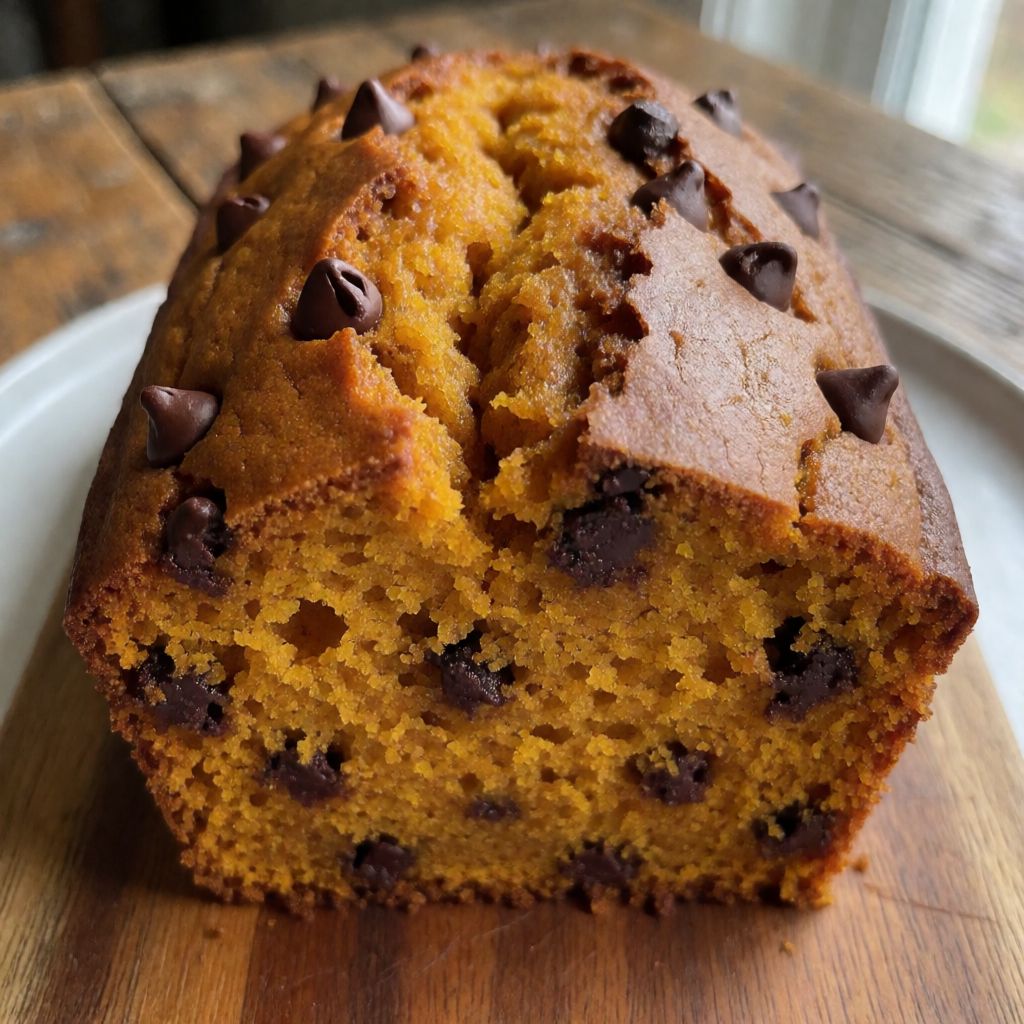
 AI photo
Pumpkin and Chocolate Chip Cake
A moist pumpkin cake studded with chocolate chunks and crushed amaretti biscuits, topped with extra chocolate.
Labels are worked out automatically from the ingredients and can be wrong. Check the packaging if it matters to you.
Ingredients
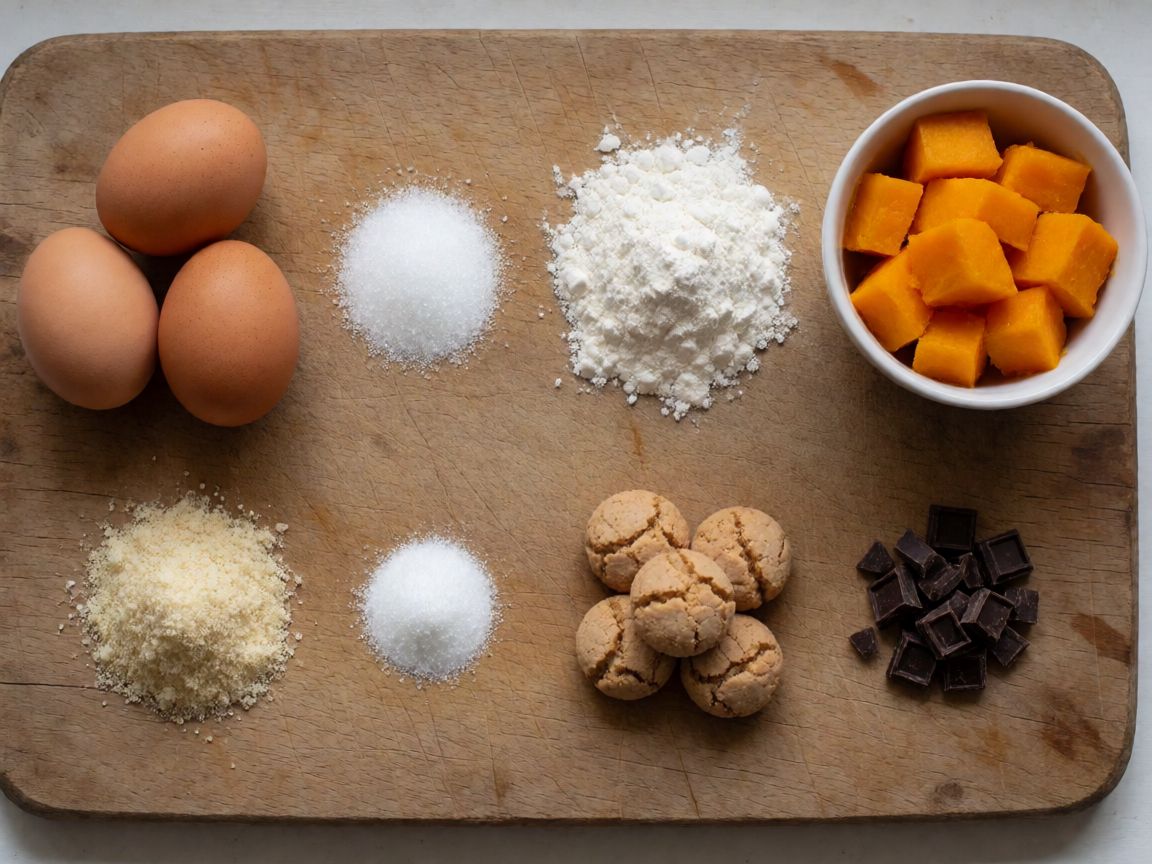
- 3 pcs Eggs
- 230 g Sugar
- 350 g Plain flour
- 60 g Almond flour
- 16 g Baking powder
- 110 ml Vegetable oil
- 650 g Pumpkin
- 60 g Amaretti biscuits crushed
- 100 g Dark chocolate roughly chopped, divided









Steps
Beat the eggs with the sugar in a bowl using an electric mixer, gradually pouring in the vegetable oil.
Sift the flour and baking powder, add to the mixture along with the almond flour, and mix thoroughly with a spatula.
Peel the pumpkin, cut it into cubes and blend until smooth, then stir into the batter.
Add the crushed amaretti biscuits and the roughly chopped dark chocolate, keeping some chocolate aside for topping.
Pour the batter into a 24 cm tin, greased and dusted with flour, then scatter the remaining chocolate on top.
Bake in a fan oven at 160°C for 60-70 minutes (or at 170°C in a conventional oven for 75 minutes).
65 minServe the cake while still warm.
This is a wet, heavy cake — more pudding than sponge. Pumpkin and almond flour and crushed amaretti do the moistening and the flavour that butter and spice do in a British carrot cake, and the eggs and oil do the binding. It won't rise like a Victoria sponge and it isn't meant to; a tall, airy crumb here would mean you've dried it out chasing height that was never the point.
What decides whether it works is water. Six hundred and fifty grams of raw pumpkin, blended smooth, goes into the batter as liquid, not as cooked, drained mush. That water has to cook off slowly while the flour and almond flour are setting around it. Pull the cake too early and the centre stays a wet dough under a set crust. Leave it too long on too fierce a heat and the edges dry out chasing a centre that was always going to take its time — pumpkin is dense, and dense things are slow to heat through.
Some say you should roast the pumpkin first, to concentrate the flavour. No — not here. Roasting drives off exactly the water this long, slow bake is built to use. Raw blended pumpkin keeps the crumb from going short and crumbly over an hour in the oven; roasting it first would leave you with less moisture than the recipe is counting on, and a drier result for your trouble.
Start with the eggs and sugar beaten together, then the oil poured in slowly, not dumped. You're building an emulsion — the egg yolk's lecithin is what holds oil and water-based liquid in suspension instead of separating into a slick on top. Pour the oil in fast and the mixture can't absorb it quickly enough; you get oil pooling at the base once it's in the tin, and a greasy streak through the baked crumb. Slow and whisked is what keeps it one mixture rather than two fighting each other.
Flour and baking powder are sifted together, and the almond flour goes in alongside, not instead. Sifting isn't ceremony — it breaks up clumps that would otherwise sit as dry pockets in the batter, especially once pumpkin purée makes everything heavier and harder to stir through evenly. The baking powder here is a generous amount for a cake this size, and that's not excess — a batter this wet and heavy, loaded with purée and biscuit crumbs, needs real lifting power just to stay level, let alone rise. The almond flour carries no gluten at all, so it doesn't fight the structure the plain flour is building; it just adds fat, a faint sweetness, and a moisture-holding quality that keeps the crumb from turning gummy where the pumpkin is wettest.
On the pumpkin itself: you want dense, dry-fleshed flesh, not a watery variety bred for soup. In a British shop that often means reaching for butternut squash rather than a carving pumpkin — it's drier, sweeter, and does this job better than the big orange Halloween type, which carries too much water and too little flavour for its weight. Any dense, orange-fleshed squash works on the same logic: if you can press a thumbnail into raw flesh and it feels firm rather than spongy, it'll hold its structure here.
Amaretti biscuits bring bitter almond, which plain almond flour alone doesn't have — almond flour is mild, amaretti is sharp with it, from the apricot-kernel oil traditionally used alongside almonds in Italian baking. Crushed, not pulverised to dust, they also soak up some of the pumpkin's moisture as the cake bakes, giving you small denser pockets rather than one uniform wet crumb throughout. If you've no amaretti, digestive biscuits with a few drops of almond extract get you partway there, though you lose that particular bitterness and gain a plainer sweetness instead.
Use a bar of dark chocolate, chopped roughly by hand, not bagged chocolate chips. Chips are made with stabilisers specifically so they hold their shape in the oven — which is exactly what you don't want here. A chopped bar melts unevenly, some of it bleeding into the surrounding crumb and some staying as a soft pocket, which is what gives you chocolate flavour through the cake rather than isolated dots of it. Dark, not milk — there's 230g of sugar and a naturally sweet pumpkin already in this batter, and dark chocolate's bitterness is doing balancing work, not just flavour.
On the oven: fan ovens move hot air constantly across the surface, which cooks the outside faster for a given air temperature than a conventional oven does — that's the whole reason the fan setting runs at 160°C while the still-air oven needs 170°C for the same result. Either way, forget counting minutes as your real test. Look for a skewer coming out with a few moist crumbs clinging to it, not wet batter, and the edges just beginning to pull from the tin's sides. If your oven runs cool — plenty of domestic ones do, by ten degrees or more — that pulling-away sign matters more than the clock. And don't keep opening the door to check: the structure is still setting in the first stretch of baking, egg protein and starch firming up together, and a blast of cold air then is how a cake collapses in the middle. Patience here isn't a virtue tacked on — it's the only thing standing between a risen cake and a sunken one.