
 AI photo
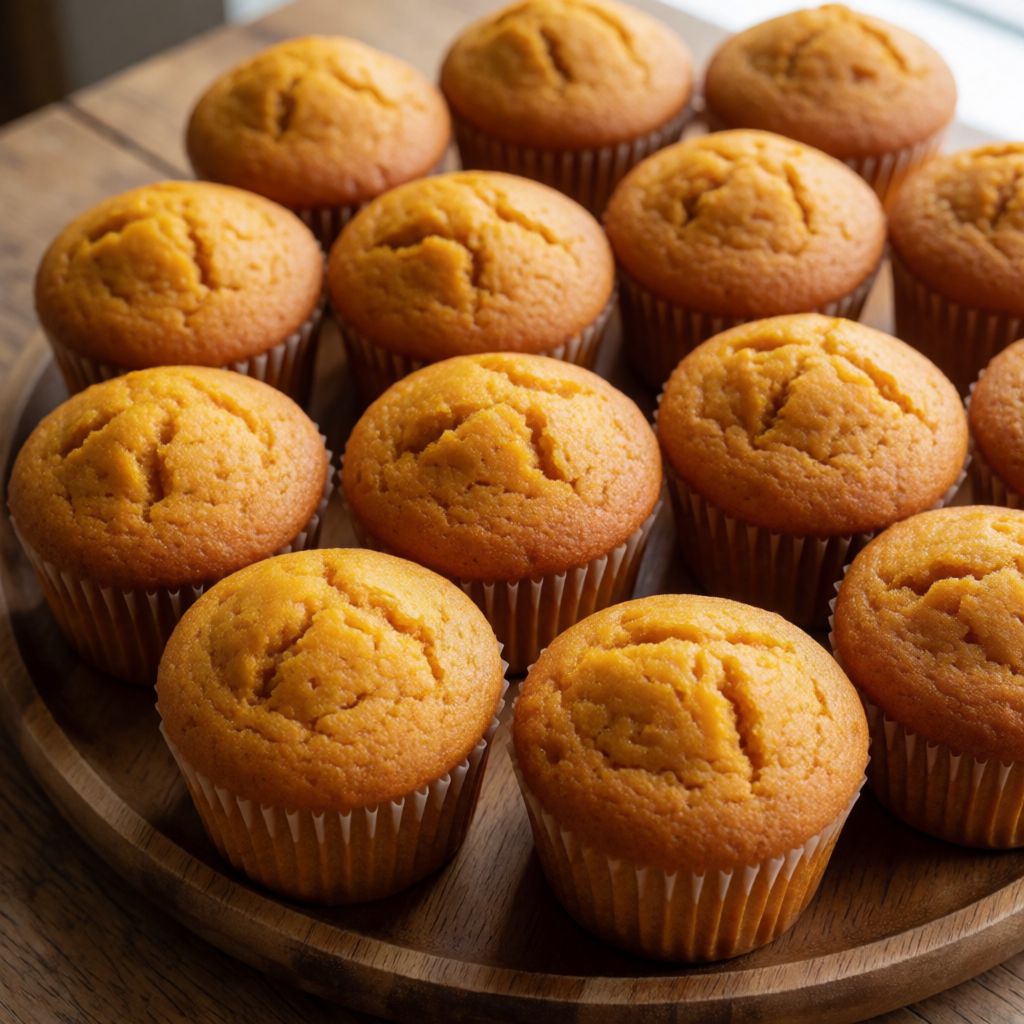
Pumpkin Cupcakes
Soft pumpkin cupcakes topped with a rich cream cheese frosting.
Labels are worked out automatically from the ingredients and can be wrong. Check the packaging if it matters to you.
Ingredients
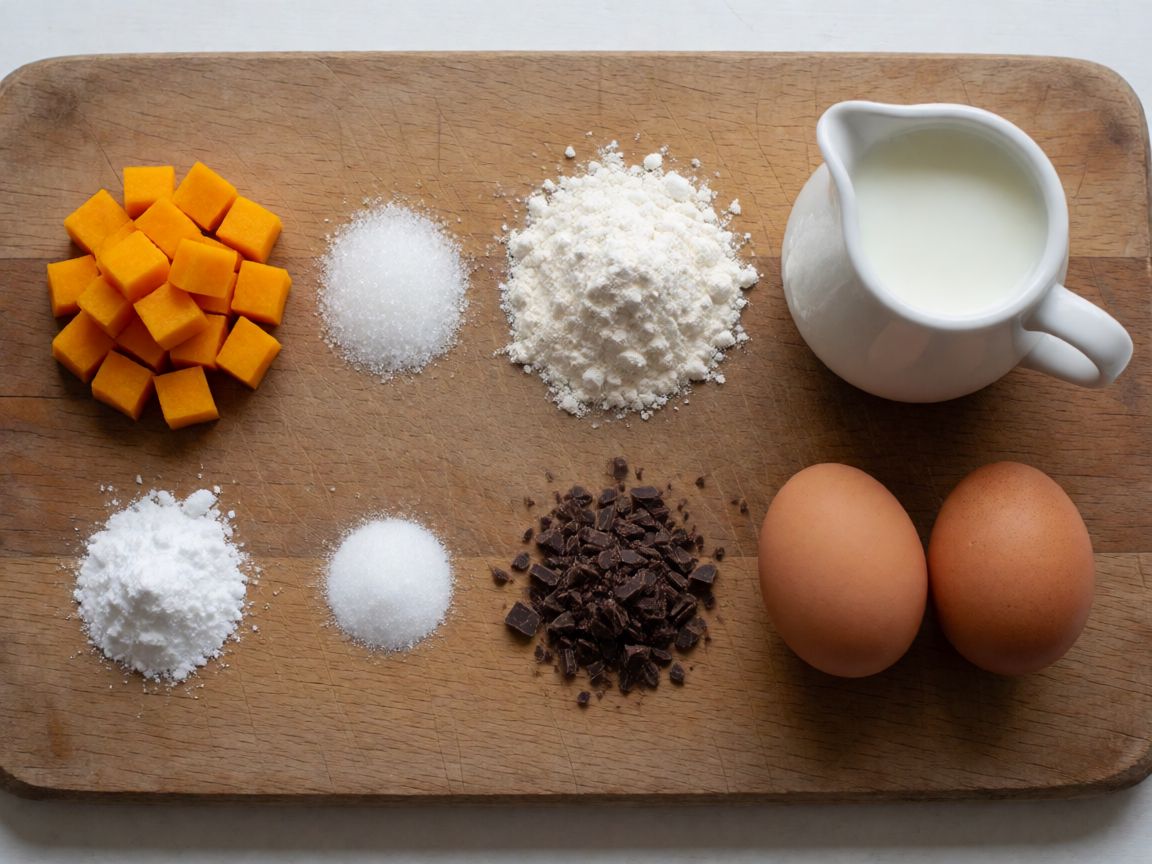
- 200 g Pumpkin
- 120 g Caster sugar
- 250 g Plain flour
- 120 ml Milk
- 80 ml Olive oil
- 2 pcs Eggs
- 1 pcs Baking powder
- 1 tsp Bicarbonate of soda
- Dark chocolate to taste








for the frosting
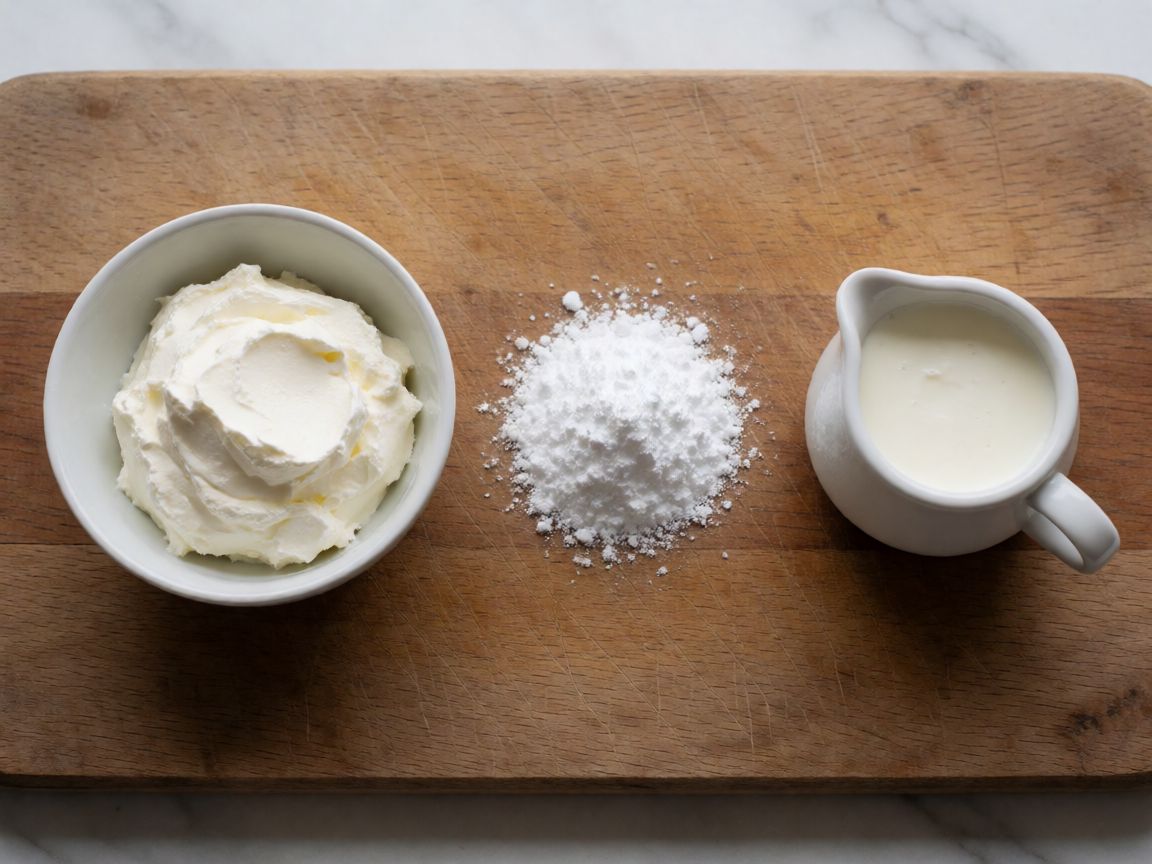
- 250 g Cream cheese
- 120 g Icing sugar
- 100 ml Double cream



Steps
Preheat the oven to 180°C.
Cut the whole pumpkin in half lengthways, remove the seeds, slice and peel.
Lay the pumpkin slices on a baking tray lined with baking paper and roast until soft.
Combine the flour, sugar, baking powder and bicarbonate of soda in one bowl and mix well.
In a second bowl, whisk the eggs with the milk and olive oil until smooth.
Pour the wet mixture into the dry one and stir until you have a smooth batter.
Blend the roasted pumpkin or mash it with a fork and add it to the batter.
If you like, add dark chocolate, chopped with a knife, to the batter.
Line a cupcake tin with paper cases and fill them about three-quarters full with the batter.
Bake in the middle of the oven for about 20-25 minutes, until the cupcakes are golden.
23 minBeat the room-temperature cream cheese with the icing sugar until creamy.
Separately whip the double cream until thick and gently fold it into the cream cheese mixture.
Take the cupcakes out of the oven and let them cool completely.
Fill a piping bag or syringe with the frosting, choosing a fairly wide nozzle.
Decorate each cupcake with the frosting and level the top if needed.
A pumpkin cupcake is a carrot cake in disguise — same logic, different vegetable. You roast rather than grate the pumpkin, and that one choice decides the whole texture. Grated raw pumpkin weeps water into the batter as it bakes and you get a gummy crumb near the bottom of the case. Roast it first and most of that water has already left as steam in the oven, so what goes into the batter is concentrated flesh, not a sponge full of liquid waiting to happen.
What makes or breaks this isn't the 180°C, it's whether you actually let the roasted pumpkin cool and reduce before it meets the batter — hot puree folded into cold eggs and milk will half-cook the egg at the edges and you lose the smoothness. The second thing that decides it is restraint with the mash: lumps are fine, pumpkin isn't banana, you don't need it silk-smooth, just no stringy fibres that'll sit raw-tasting in a bite.
The frosting is the other half of the argument. Cream cheese alone is too dense to pipe without tearing the paper case when you bite in; whipped cream alone won't hold a shape past the first cup of tea. Folding soft-whipped cream into beaten cream cheese gives you something that holds a peak but still yields under a spoon — lightness borrowed, not whipped into the cheese itself, which would turn it grainy.
Six cupcakes, one tray in a normal UK oven, no kazan needed here — this is as domestic as baking gets.
Pumpkin: 200 g sounds small against 250 g of flour, and that's deliberate — this isn't a pumpkin loaf, it's a cake that happens to have pumpkin in it for moisture and colour. Choose a dense, dry-fleshed variety if you can tell them apart in the shop — the ones sold for roasting, not the huge watery carving pumpkins that are mostly for show. If pumpkin's out of season or you can't be bothered peeling one, tinned pumpkin puree does the same job, already reduced for you — just don't use pie filling, that's pre-sweetened and spiced and will throw the sugar off.
Caster sugar over granulated for one plain reason: smaller crystals dissolve into the wet mix without sitting gritty, and in a batter this light you don't want sugar fighting the egg for moisture before it even reaches the oven.
Olive oil, not butter — oil-based sponges stay moist for days because oil is liquid at room temperature and butter isn't; a butter version firms up and dries slightly by day two, an oil one doesn't. Use any oil with no smell of its own — a light, not an extra-virgin olive oil, or a neutral vegetable or sunflower oil if that's what's in the cupboard. Save the peppery extra-virgin for a salad, not a cake, or you'll taste it under the pumpkin.
Baking powder and bicarbonate of soda both appear, and that's not a mistake to fix by picking one. Bicarb needs something acidic to react against — and there's enough natural acidity in the pumpkin and the buttermilk-adjacent tang of the batter to wake it up for lift and a slightly darker crumb; baking powder is self-contained and does the rest of the rising on its own. Drop one and the cupcakes come out flatter and paler — not wrong, just smaller than they should be.
Cream cheese: buy a block type meant for cooking, not the already-soft tub spread sold for toast — that one has more water worked into it and your frosting will slump rather than hold a swirl. Let it sit out until it's properly room temperature before beating; cold cream cheese beaten too hard turns lumpy, not smooth, because the fat hasn't softened enough to take in air evenly. That's patience as an ingredient — the fifteen minutes it sits on the counter saves you a frosting you have to fix.
Double cream whips because of its fat content — nothing under about 35% fat will hold a stable peak, so don't reach for single cream or the "lighter" pouring cream thinking it'll do the same job; it won't thicken past soup. Whip it to soft peaks, not stiff — stiff cream folded into cream cheese breaks down and weeps liquid under its own weight by the time you've piped the last cupcake.
On the roasting itself: some say pumpkin has to be steamed or boiled to go soft faster — no, because boiling adds water back in exactly where roasting is trying to take it out. You're after a knife going in with no resistance and the edges just starting to colour, not a precise number of minutes — ovens and slice thickness vary too much for a clock to be honest with you.
Dark chocolate is entirely optional and entirely yours to decide — chopped with a knife rather than using chips, because knife-cut pieces melt into uneven little pockets through the crumb instead of sitting as uniform dots; that unevenness is the texture you actually want here.