
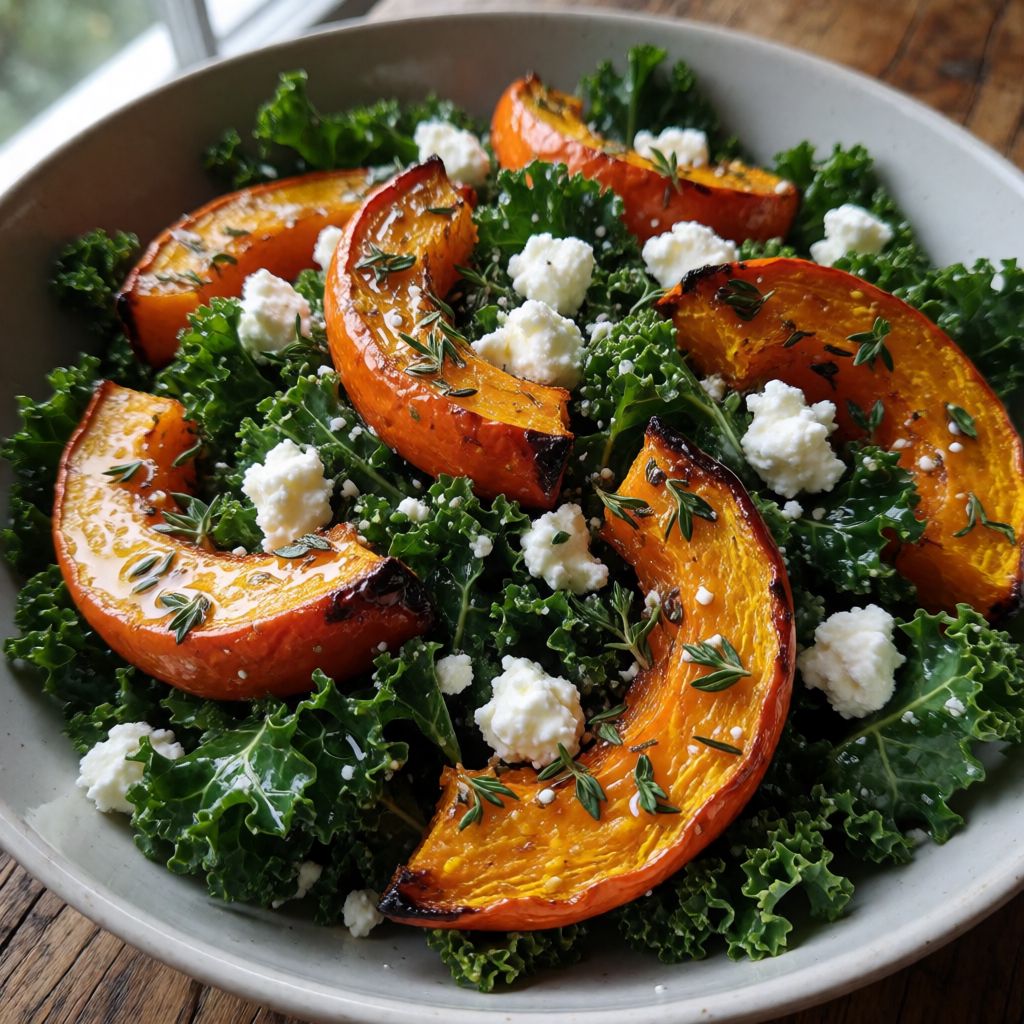
 AI photo
Pumpkin, Kale and Feta Salad
A warm salad of roasted pumpkin, crispy pumpkin seeds, kale and feta with a honey-ginger dressing.
Labels are worked out automatically from the ingredients and can be wrong. Check the packaging if it matters to you.
Ingredients
- 1 pcs Pumpkin cut into cubes
- 1 pcs Lemon finely grated zest
- 1 tbsp Thyme fresh
- 3 tbsp Olive oil
- 1 pinch Salt
- 1 pinch Black pepper freshly ground
- 100 ml Pumpkin seeds
- 1 tsp Chilli flakes
- 1 tbsp Olive oil
- 1 tsp Honey
- 1 pcs Lemon juice
- 1 tbsp Ginger fresh
- 1 tsp Dijon mustard
- 125 g Kale
- 2 bunch Mint finely chopped, fresh
- 100 g Feta crumbled













Steps
Toss the pumpkin cubes with olive oil, lemon zest, thyme, salt and pepper.
Roast the pumpkin in a fan oven preheated to 175°C for about 25 minutes.
25 minPlace the pumpkin seeds in a dry pan and toast, stirring, until crisp.
Lower the heat and toss the seeds with salt, olive oil, chilli flakes and lemon zest.
Mix the dressing ingredients: honey, lemon juice, ginger, Dijon mustard, olive oil, salt and pepper.
Toss the finely chopped kale with the dressing.
Arrange the kale on a platter with the pumpkin, pumpkin seeds, crumbled feta and fresh mint.
This is not a salad in the sense you learned the word — nothing limp, nothing wet, nothing resigned to being "healthy". It's a plate of contrasts: soft roasted pumpkin against stubborn raw kale, crumbled feta's salt against honey-mustard sweetness, and a scatter of toasted seeds for the one thing most salads forget — crunch that stays crunchy. What decides whether this works is not any single ingredient but timing: the pumpkin has to come out of the oven and sit until it's warm, not hot, before it meets the kale, otherwise the kale wilts and you've made soup with extra steps.
The pumpkin is roasted, not boiled or steamed, because dry heat is what turns starch into sugar on the surface — that faint caramel edge on the cubes is the whole point, and you lose it the second water gets involved. 175°C in a fan oven is enough to drive moisture out of the cut faces before the inside turns to mush; any hotter and the outside chars while the centre stays raw, any cooler and you steam the pumpkin in its own exhaled water instead of roasting it. Forget the clock — look for the edges going amber and a knife sliding in without resistance. Twenty-five minutes is where most pumpkins land, not a rule carved in stone.
Pumpkin seeds toasted dry, then dressed while the pan is still warm but off the heat — that sequence matters more than it looks. Toast dry first because oil in a hot pan burns before the seed inside has a chance to pop and crisp; you want the seed's own moisture driven off by direct contact with hot metal, not drowned in fat from the start. Only once they're audibly crackling and smelling nutty do you pull back the heat and add oil, chilli and zest — by then the seed is already crisp, and the oil's job is just to carry flavour onto the surface, not to cook anything further. Do this step in the wrong order and you get seeds that are either raw-tasting or scorched, nothing in between.
Kale: buy it as whole leaves if you can, strip the leaf off the central rib by hand — that rib is the part that stays woody no matter how long you dress it, and it's the main reason people decide they don't like kale. Any sturdy dark leafy green with some bitterness will do here in a pinch — cavolo nero, or even a robust spring green — the criterion is a leaf that can take an acid rub without collapsing into mush, not a specific variety.
Pumpkin: look for one that feels heavy for its size and sounds dull, not hollow, when you knock it — that's a sign the flesh is dense rather than fibrous and watery. Butternut squash is the honest substitute here, not a downgrade — in the UK it's often better value and more reliably sweet than a pumpkin bought for roasting rather than carving, and it was bred for exactly this.
Feta: the whole reason it works crumbled rather than melted is that it doesn't melt — it's a brined cheese, firm because of acid-set curd, and it holds its shape and its sharp salt punch against the sweetness of honey and roasted pumpkin. Any firm salty crumbling cheese stands in — a mild British crumbly like Wensleydale will do if feta isn't to hand, though you lose a little of that brine-sharp edge.
The dressing — honey, lemon, fresh ginger, mustard, oil — is built the way most working vinaigrettes are: acid and oil held together by an emulsifier, here the mustard, with honey and ginger doing the job of balancing bitterness against sweetness and giving a background heat. Use a fresh grate of ginger, not the jarred paste, if you want that heat to taste bright rather than stale — the volatile oils that make ginger "ginger" fade fast once it's processed and jarred.
Any oil with no smell of its own works for all three olive oil measures in this recipe — a plain light oil won't fight the thyme or the lemon zest the way a heavily peppery extra virgin sometimes does; use a mild olive oil if that's what's in the cupboard, and save the good peppery stuff for drizzling at the table if you want it.
Last thing, and it's not optional: build the platter once everything has cooled to warm, not hot, and once the kale has sat in its dressing for a few minutes, not seconds. That waiting is the ingredient nobody puts on the shopping list — patience here isn't virtue, it's what stops the feta going greasy and the kale going grey. Rushed, this dish is edible. Given its ten minutes to settle, it's a different plate entirely.