
 AI photo
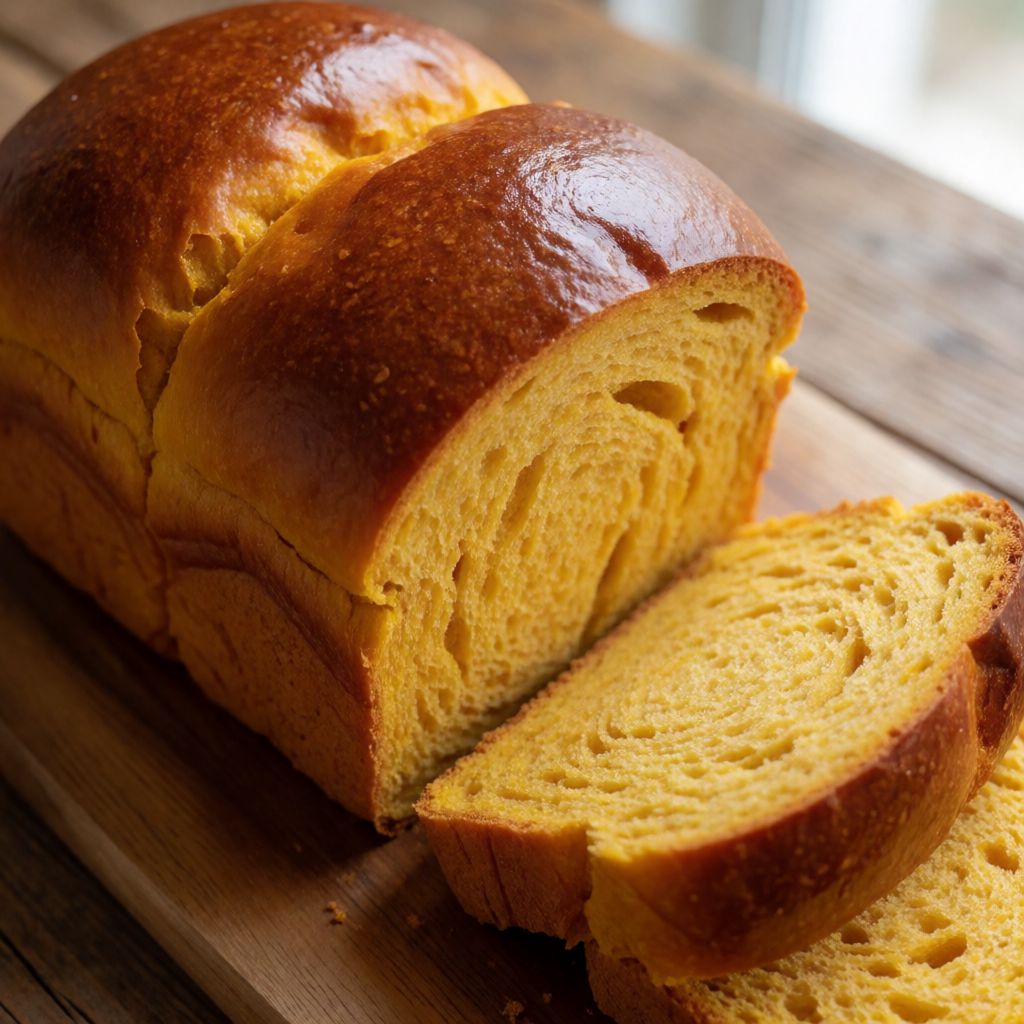
Pumpkin Brioche Loaf
A soft, lightly sweet pumpkin brioche loaf, perfect for breakfast or afternoon tea.
Labels are worked out automatically from the ingredients and can be wrong. Check the packaging if it matters to you.
Ingredients
- 300 g Strong white bread flour
- 200 g Plain flour
- 150 g Pumpkin purée
- 175 g Yogurt
- 40 g Caster sugar
- 10 g Fresh yeast
- 50 g Butter softened
- 1 pcs Egg for brushing
- 1 tsp Vanilla extract
- 1 pinch Salt









Steps
Peel and deseed the pumpkin, cut it into cubes, then roast or steam until soft. Blend to a smooth purée.
In a bowl, combine the strong bread flour and plain flour, then add the warm pumpkin purée, caster sugar, vanilla extract, crumbled fresh yeast and yogurt. Knead into a dough.
Add the salt and work in the softened butter a little at a time, letting the dough absorb each addition before adding more.
Shape the dough into a ball and place it in a covered bowl to rise until doubled in size.
180 minTurn the dough out onto a work surface, divide into 3 equal pieces and shape into smooth balls. Place them in the base of a loaf tin.
Cover and leave to rise for 1 hour, then brush with beaten egg.
60 minBake at 190°C for 30 minutes in a conventional (static) oven.
30 minRemove from the oven and let cool for at least 30 minutes before serving.
30 min
This is a brioche with a vegetable folded into it — not a pumpkin loaf that happens to be bread-shaped, but a classic French enriched dough where part of the liquid and part of the colour come from pumpkin purée instead of all from egg yolks. The mechanism underneath is the same as any brioche: butter worked into a gluten network that is already strong enough to hold it, so the crumb ends up soft and torn rather than crumbly like cake. If you think of this as a quick-bread with spice, you'll under-knead it and get a dense wet lump.
What decides whether it works has nothing to do with pumpkin and everything to do with timing of the fat. Butter blocks gluten strands from linking up — that's exactly why it makes bread tender — but add it too early or too fast and the dough never develops the elastic net needed to trap gas, and your loaf stays flat and heavy no matter how long you wait. That's why the butter goes in last, in small pieces, each one absorbed before the next. Patience here isn't a virtue word, it's the ingredient that turns butter from an enemy of rise into the reason for softness.
Two flours, not one, because strong bread flour alone would fight against butter and yogurt and give you a tough, chewy crumb more suited to a baguette, while plain flour alone has too little gluten to hold a risen, egg-and-butter-heavy dough up at all. The blend gives you enough structure to trap gas and enough softness to tear with your fingers. If you only have one flour in the cupboard, lean toward the stronger one and knead a touch longer, or toward the plainer one and accept a slightly flatter rise — either way works, neither is the "wrong" bread flour, just a different balance you compensate for by hand.
Pumpkin purée is doing two jobs: moisture and colour, not flavour — this isn't meant to taste strongly of pumpkin, any more than carrot cake tastes mainly of carrot. What matters when you make the purée yourself is getting rid of excess water after roasting or steaming, because a wet purée throws off the whole hydration and you'll be adding flour blind to compensate, which stiffens the crumb. Tinned pumpkin purée, well-drained, does the same job with less effort and less risk — nobody in this kitchen is going to mark you down for using it.
Yogurt brings acidity and a little extra fat, both useful: the acid relaxes gluten slightly, which is part of why this dough feels softer to work than a plain egg brioche, and the fat rounds out what butter alone would do. If you've only got milk, you lose that softening edge — not fatal, just a firmer crumb. Fresh yeast is traditional in bakeries because it's what was always on hand and cheap, not because it's magically superior; dried active yeast works the same chemistry, just use roughly a third of the fresh weight and dissolve it in a little of the warm purée first so it wakes up before it meets flour.
Salt goes in after the initial knead, once flour, liquid, sugar and yeast have already started forming gluten, and that's deliberate — salt tightens gluten fast, and adding it too early makes the first stages of kneading harder than they need to be, especially by hand. It's not about timing the yeast, as some will tell you, yeast tolerates salt fine at this concentration; it's about not fighting your own dough.
Butter should be soft, not melted — melted butter runs into the dough instead of folding through it, which is a different, greasier result. Any neutral butter will do; there's no mechanism here that calls for a particular brand, only for the fat being spreadable at room temperature, roughly like putty.
Egg for brushing and vanilla are both about the last five minutes of the story, not the structure: egg gives you the glossy, deep-brown crust through browning that happens on contact with a 190°C oven, which is a genuinely useful heat here because it's hot enough to set that crust before the inside overbakes, but it's a static domestic oven doing the work, not a bakery deck oven, so don't assume a fan setting will behave the same — if yours only does fan-assisted, drop the temperature a little and watch the crust rather than the dial. Vanilla is simply there for aroma against the pumpkin's slight vegetal edge; if you don't have it, a little orange zest does a similar warming job, just a different warmth.
Last point, and it's the one people skip because tea's getting cold and the loaf smells right: let it cool the full half hour before you cut it. The crumb is still setting as steam escapes — cut too soon and you tear what should pull apart cleanly, and you'll blame the recipe for what was really impatience.