
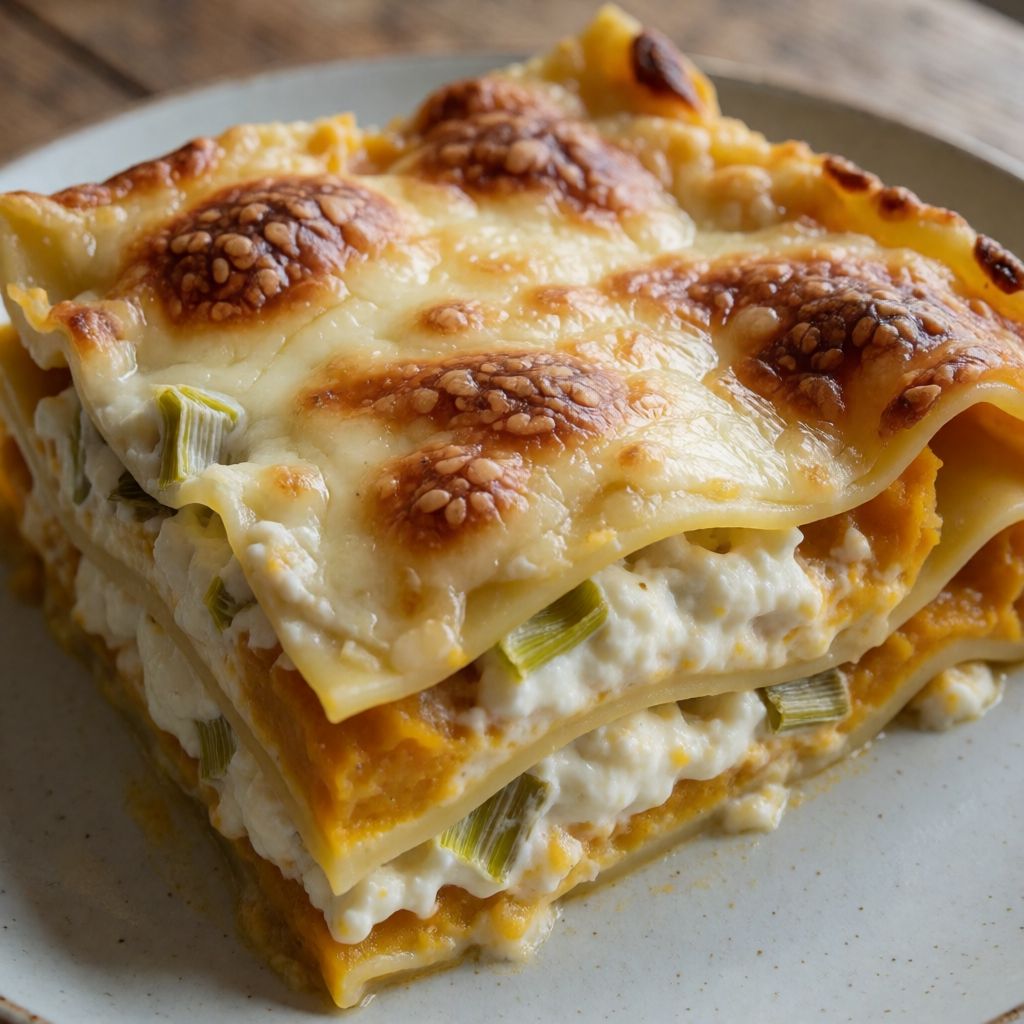
 AI photo
Pumpkin and Ricotta Lasagne
A comforting lasagne layered with pumpkin, ricotta and a creamy béchamel sauce.
Labels are worked out automatically from the ingredients and can be wrong. Check the packaging if it matters to you.
Ingredients












Steps
Finely chop the leek and place it in a pan with a little olive oil. Fry for a few minutes.
Add the pumpkin, cut into cubes, season with salt to taste and cook for about 20 minutes, stirring occasionally.
20 minTransfer the vegetables to a bowl to cool, then add the ricotta and provolone, cut into cubes, and mix everything together.
Bring the milk to the boil, and in a small pan melt the butter.
Once the butter has melted, add the flour and stir until the mixture thickens.
Transfer the mixture into the boiling milk, add the nutmeg and mix well until you get a smooth, creamy consistency.
Pour a little olive oil and a few spoonfuls of béchamel into a baking dish, spreading evenly over the bottom.
Lay down the first lasagne sheets, add a layer of filling, sprinkle with Parmesan and add more béchamel. Continue layer by layer.
Finish with béchamel and Parmesan, add a little more olive oil or a few knobs of butter.
Bake in an oven preheated to 200°C for about 20 minutes.
20 min
This is lasagne with the ragù swapped for pumpkin and leek, and the usual tomato acidity swapped for the sweetness of squash cut by two sharp cheeses. What decides whether it works isn't the oven at all — it's what happens in the pan before anything goes near a baking dish. The pumpkin has to collapse, and the béchamel has to be made properly, not rescued with extra flour when it goes lumpy.
Some say pumpkin is "watery" and will make a soggy lasagne — no, because the water only becomes a problem if you don't cook it down first. Twenty minutes in the pan with the leek isn't a timer you set and forget; it's the time it takes for the cubes to go from resisting a spoon to yielding to one, for the edges to start caramelising instead of just steaming. If you pull it too early, that moisture goes straight into your pasta layers during baking and you get a lasagne that weeps when you cut it. If you've got the time, let it run past 20 minutes rather than under — pumpkin forgives slow cooking, it doesn't forgive rushed cooking.
The filling itself is cold logic, not a recipe step: hot vegetables mixed with ricotta would just melt it into soup, so you cool the pumpkin first, then fold in the ricotta and the cubed provolone. Provolone in cubes, not grated, because you want pockets of pull when you cut into it, not a uniform paste — that's the texture difference between this and a plain vegetable bake.
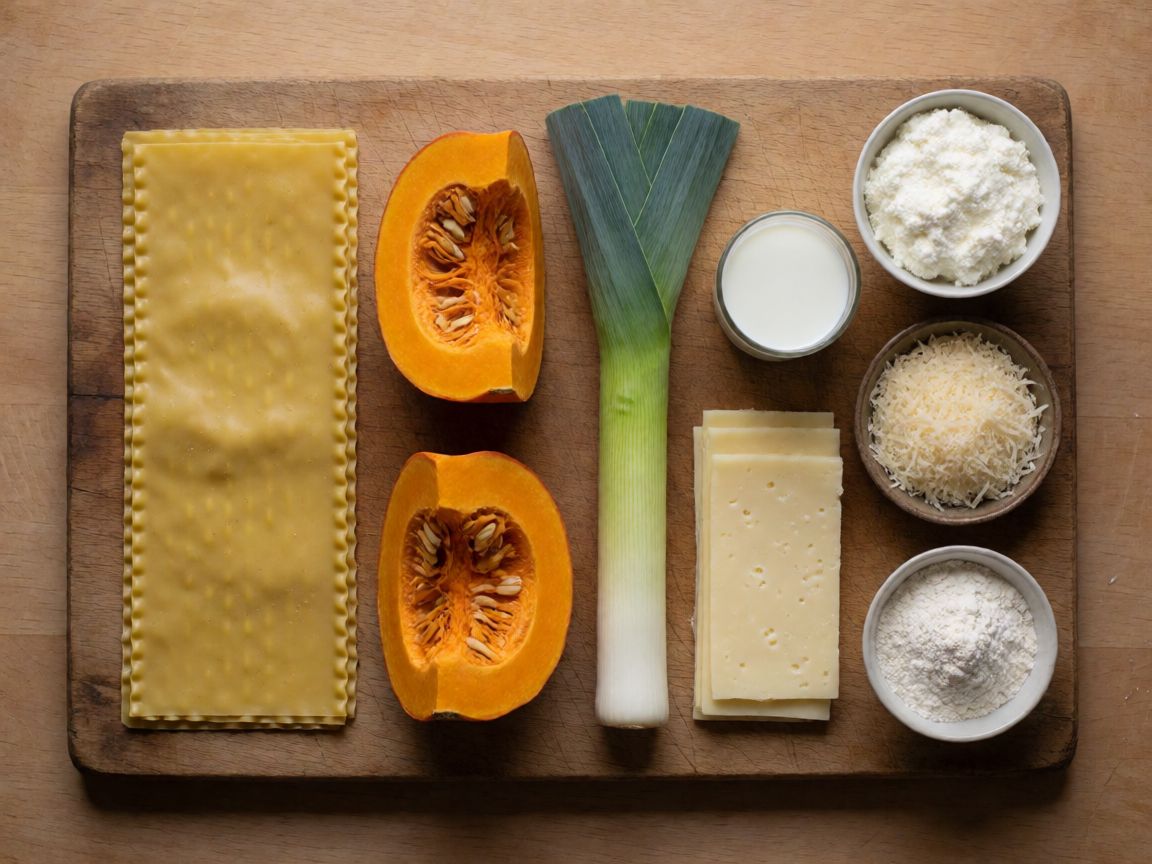
On ingredients: pumpkin, peeled and cubed, is doing the job tomato ragù does in a classic lasagne — body and moisture — so treat its cooking with the same seriousness. Any dense squash works on the same logic: butternut, crown prince, even a firm swede in a pinch, as long as it holds its shape in cubes rather than falling to mush before it's soft.
Leek stands in for onion, and it's the better choice here because it sweetens without the sharp bite raw onion would fight the pumpkin with — fry it gently first so it softens rather than browns, since it's a base note, not a flavour you want standing out.
Ricotta and provolone aren't interchangeable despite both being Italian and both white. Ricotta brings moisture and a mild, slightly grainy creaminess — any curd cheese drained of excess whey will do if you can't find it, though cottage cheese blitzed smooth is the honest substitute, not a lie about equivalence. Provolone, cut into cubes rather than grated, is there for the stretch and the saltiness that ricotta doesn't have; a mild cheddar or a young gouda will melt similarly, though you lose some of that stringy pull.
Parmesan on top isn't just garnish — it's what gives you the dry, slightly bitter crust that contrasts the soft béchamel beneath, and that contrast is the actual pleasure of baked pasta dishes, lasagne included. Any hard, aged cheese with a similar grain does the job; pre-grated supermarket "parmesan" in a tub won't, because it's cut with anti-caking agents and refuses to crisp the same way.
Butter and flour in equal weight is the roux ratio that gives you a béchamel thick enough to coat a spoon without sliding off — less flour and it runs thin between the layers during baking, which is the real cause of a lasagne that collapses into soup when you serve it, not "too much milk" as people tend to blame. Milk brought to the boil first means the roux hits a hot liquid and thickens almost immediately rather than sitting lukewarm and separating.
On lasagne sheets: dried ones need no pre-boiling if there's enough béchamel to cook them through in the oven — that's what the sauce between every layer is actually for, moisture insurance, not just flavour. If your sheets are the thick fresh type, they'll want a touch more milk worked in so they don't stay chalky in the middle.
Twenty minutes at 200°C is enough for the top to colour and the inside to come up to heat, because almost everything inside is already cooked — the oven here finishes and browns, it doesn't cook from raw, and that's worth knowing before you panic and leave it in for forty minutes waiting for something to happen that already has.