
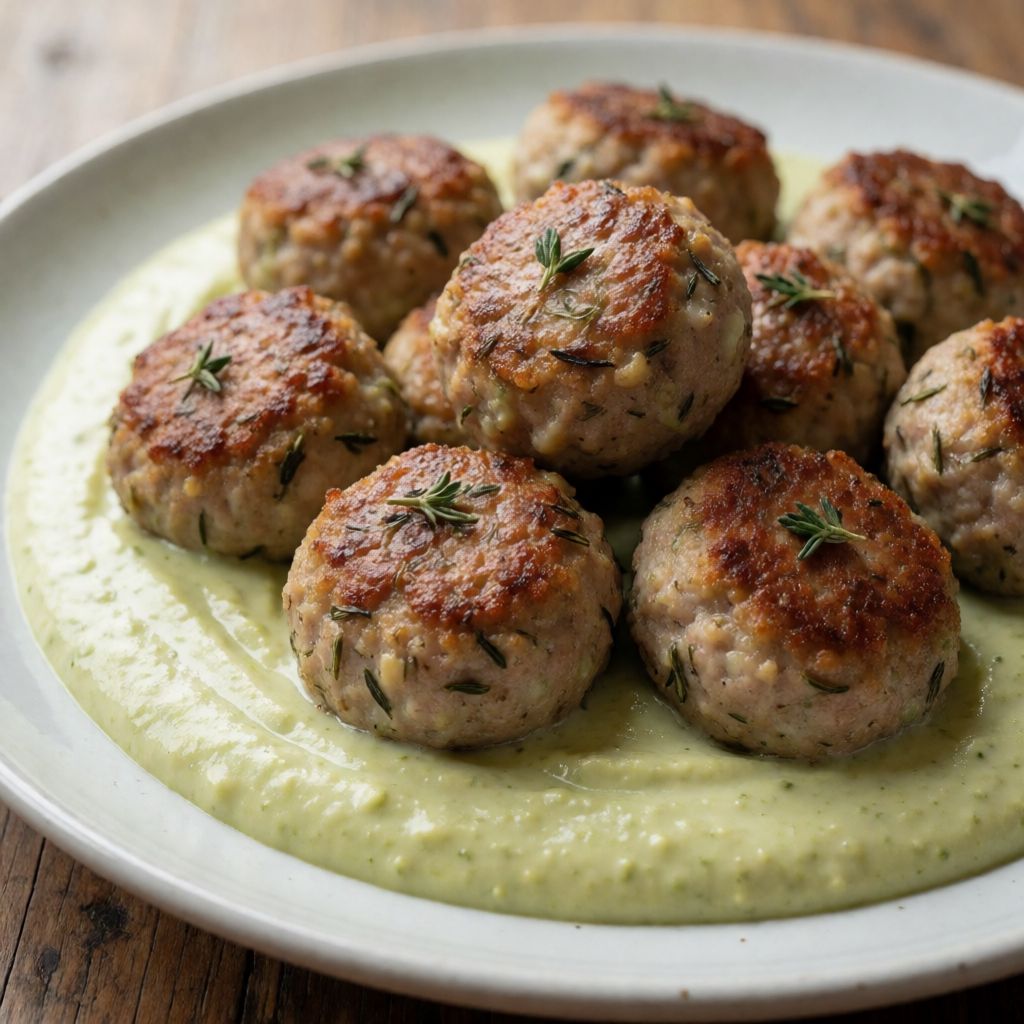
 AI photo
Rabbit Meatballs with Thyme on Asparagus Cream
Tender rabbit meatballs with thyme, served on a creamy asparagus purée.
Labels are worked out automatically from the ingredients and can be wrong. Check the packaging if it matters to you.
Ingredients
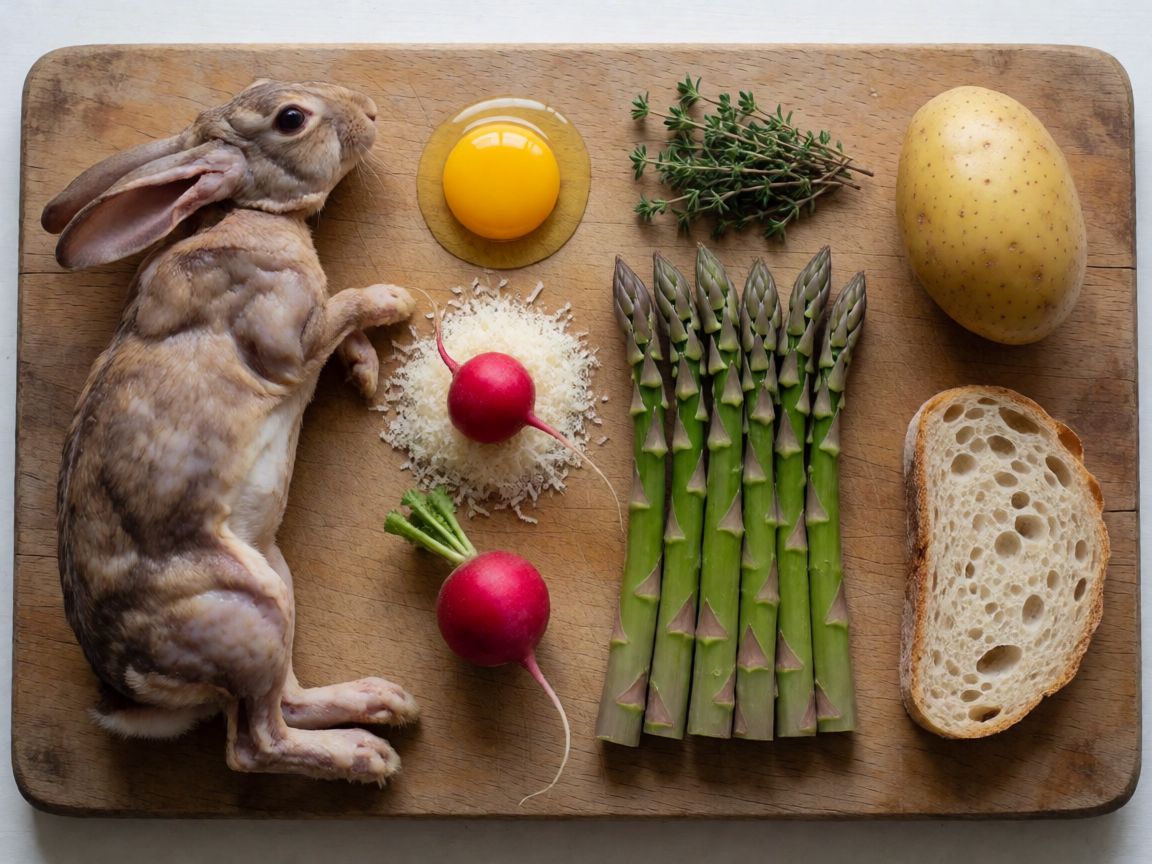
- 1 pcs Rabbit
- 1 pcs Egg yolk
- Salt to taste
- Black pepper to taste
- 2 pcs Radish
- 50 g Parmesan
- 5-6 pcs Asparagus
- 1 pcs Potato
- Thyme to taste
- Stale bread to taste
- Milk to taste
- Breadcrumbs to taste
- Vegetable oil to taste













Steps
Remove the meat from the rabbit thigh, separating it from the bone, and mince it.
Add the grated Parmesan, egg yolk, salt, pepper, bread soaked in milk and thyme leaves to the meat.
Mix the ingredients by hand until smooth.
Shape into meatballs, coat in breadcrumbs and place on a plate.
Dice the potato and asparagus, setting the asparagus tips aside.
Boil the vegetables in salted water.
Cool the vegetables in cold water.
Blend the vegetables with oil, salt, pepper and the cooking liquid into a cream.
Fry the meatballs in oil heated to 170°C.
Place the cooked meatballs on paper to drain excess fat, season with salt.
Slice the asparagus tips and radish thinly.
To serve: spoon the asparagus cream as a base, top with meatballs, and garnish with asparagus tips and radish.
Rabbit is a lean, almost fat-free meat — that's the whole problem this recipe solves. Mince a rabbit thigh on its own and fry it, and you get something dry and tight, the texture of an eraser. So you build fat and moisture back in by hand: Parmesan for savoury fat and salt, egg yolk to bind, bread soaked in milk to hold water inside the meatball while it cooks instead of letting it all steam out. This is the same logic as a Sunday roast's bread sauce or stuffing — bread as a moisture reservoir, a trick British kitchens already know, just applied to a meatball instead of a joint.
Underneath sits an asparagus cream, which is really just asparagus-and-potato soup pushed thick enough to hold its shape under a meatball. The potato isn't filler for bulk — it's starch, and starch is what turns a thin vegetable liquid into something with body, the way it thickens a leek-and-potato soup. Keep back some of the cooking water when you blend; too little and the cream seizes up gluey, too much and it runs off the plate.
What decides whether this works is restraint in two places: don't over-mix the meatball mixture (that's what makes mince go rubbery, not the rabbit itself), and don't overcook the asparagus tips meant for garnish — they go in raw-sliced at the end specifically so they keep their green snap against the soft cream and softer meatball. Two textures of the same vegetable on one plate, one cooked to mush, one barely touched.
On the rabbit: use thigh meat, as the recipe says, because it has some working muscle and connective tissue, unlike the loin, which is so lean it turns to sawdust once minced and fried. If you can't get rabbit — not every UK butcher stocks it, though more do now than a decade ago — chicken thigh mince is the honest substitute, for the same reason: dark meat with a bit of structure, not breast.
The egg yolk is doing one job only: binding fat and protein together so the meatball holds its shape in hot oil instead of falling apart at the first turn. You don't need the white — it just makes the mixture tighter and more rubbery, which is the opposite of what you want here.
Bread soaked in milk, pressed and crumbled in, is an old cook's trick for exactly this problem: lean minced meat loses moisture fast under heat, and bread swollen with milk releases that moisture slowly as it cooks, basting the meatball from the inside. Any soft white bread works; a crust-heavy sourdough won't soak evenly, so trim the crust or use a sandwich loaf.
Parmesan here isn't a garnish, it's a seasoning and a fat source doing the work that pork fat or lard would normally do in a rabbit meatball — rabbit has none to spare of its own. Use a hard, dry grating cheese; a soft one melts into a paste and won't distribute. Pecorino is the obvious swap if Parmesan's not in the fridge — sharper and saltier, so go lighter on added salt.
Frying at 170°C matters because below that the breadcrumb coating absorbs oil instead of sealing and crisping, and you get a greasy, soft shell. Above it, the crumbs scorch before the inside — already a lean, quick-cooking meat — is through. No thermometer, no problem: drop one breadcrumb in first; it should fizz and colour steadily, not instantly blacken.
Asparagus and potato for the cream: this is a pairing of convenience as much as flavour. Asparagus alone, blended, is thin and fibrous even cooked soft — it doesn't thicken, it just purées into a bright green liquid that runs everywhere. Potato brings the starch that gives the cream enough body to sit under a meatball without soaking into it. If you're out of potato, a small handful of any other starchy veg — even a spoon of cooked rice — does the same structural job, though potato is neutral enough not to fight the asparagus for flavour, which rice can.
One thing worth saying plainly: shaping and resting the meatballs before frying isn't optional corner-cutting room. A mixture that's just been hand-mixed is loose and warm; let it sit, even ten minutes on a cold plate, and it firms up enough to hold shape in the oil instead of spreading into a flat, sad disc. Patience here is cheap and the payoff is a round meatball instead of a patty you didn't mean to make.