
 AI photo
Japanese Ramen
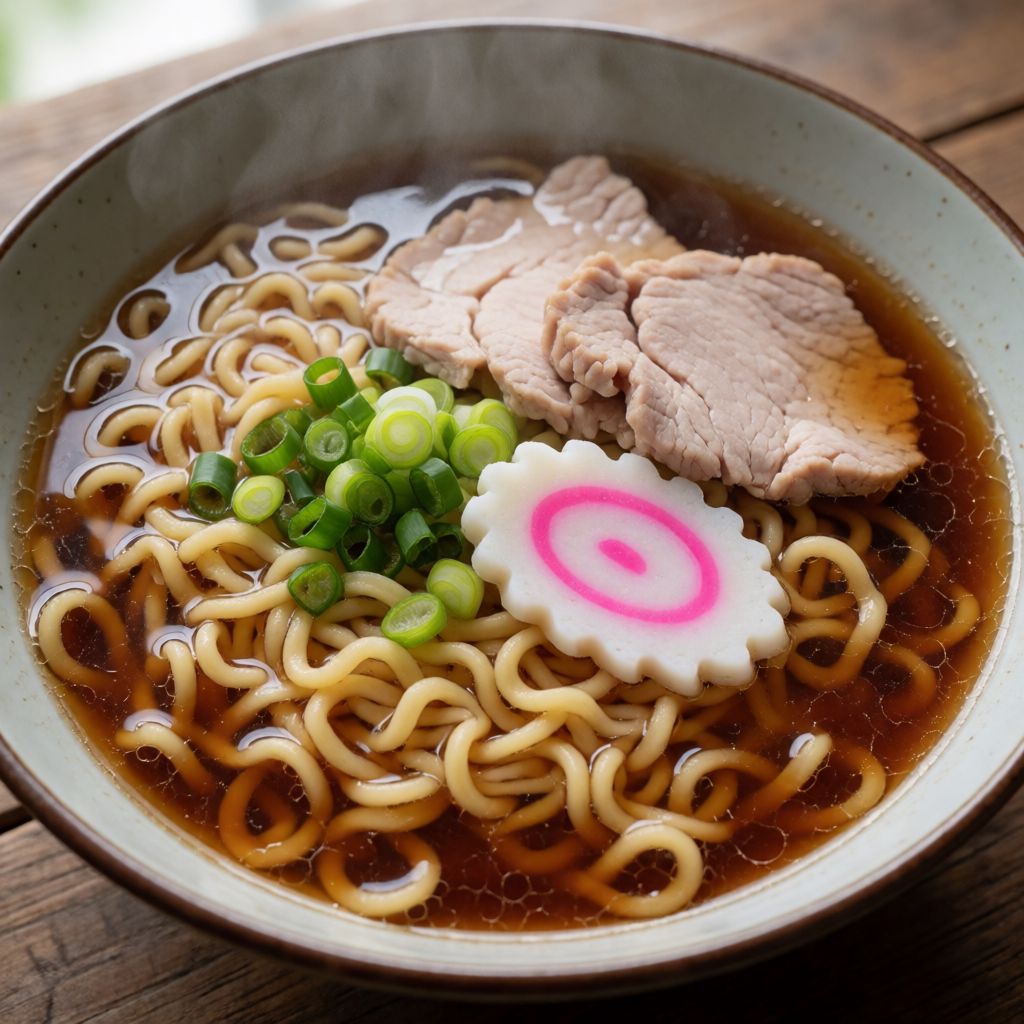
A warming bowl of Japanese ramen with pork loin, a seasoned broth, soft eggs and noodles.
Labels are worked out automatically from the ingredients and can be wrong. Check the packaging if it matters to you.
Ingredients
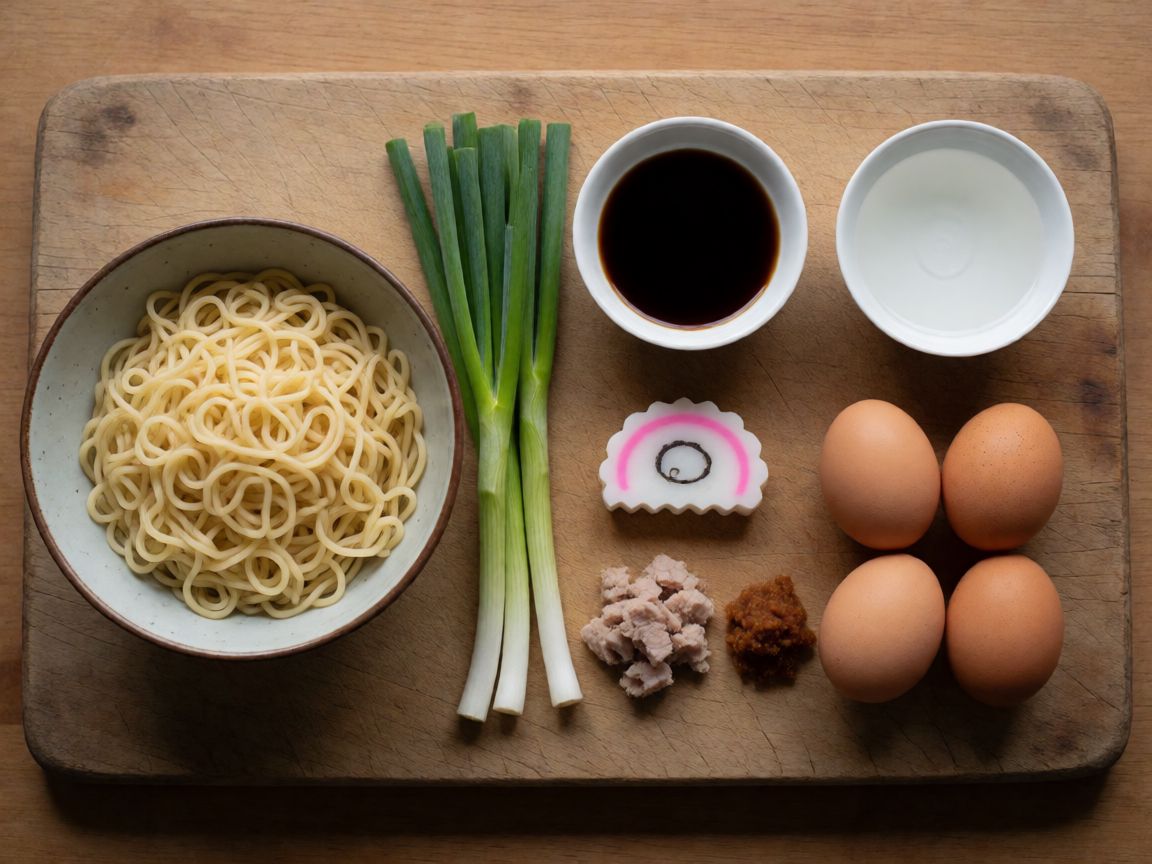
- 360 g Ramen noodles
- 6 pcs Spring onion
- 15 g Soy sauce
- 800 ml Water
- 1 pcs Naruto fish cake
- 250 g Pork loin
- 10 g Sake
- 15 g Miso
- 4 pcs Eggs
- 10 g Sesame oil
- 1 tsp Garlic powder
- Ginger to taste
- Salt to taste
- Olive oil to taste










Steps
Trim the fat from the pork loin, tie the meat, place it in an ovenproof dish with olive oil, season with salt and brown on the hob.
5 minPut the dish in the oven and cook at 170°C for 40 minutes until it reaches 70°C at the thickest point.
40 minTake the meat out of the oven once it reaches 70°C at the thickest point, let it cool and slice it.
Pour the water into a pan, add the ginger, sesame oil, garlic powder, sake, soy sauce and miso, and bring to the boil.
Strain the broth through a sieve and keep it warm.
Boil the eggs for 5 minutes from boiling point so they have a creamy texture.
5 minCool the eggs, peel and set aside.
Cook the noodles for 6 minutes and drain.
6 minPour the broth into a bowl, add the noodles, the halved egg, slices of pork loin, the sliced spring onion and the naruto.
Ramen looks like a soup. It isn't, really — it's three separate projects that happen to meet in the same bowl: a roast, a broth, and a bowl of noodles cooked at the last second. Treat it as one thing and you'll overcook the noodles waiting for the pork, or serve cold broth because you were busy peeling eggs. Treat it as three small jobs done in the right order, and it's almost relaxed.
What decides whether it works is timing backwards from the bowl, not forwards from the ingredients list. The pork goes in the oven first because it takes the longest and tolerates being a bit late — it's happy to sit, sliced, under foil, while you do everything else. The eggs and broth can wait warm. The noodles cannot wait at all: they go in last, dead last, because a noodle in hot liquid keeps cooking whether you're watching it or not, and "slightly firm" becomes "mush" in the time it takes to find the sesame oil.
The broth here isn't a twelve-hour bone stock — nobody simmering ramen for a Tuesday has a kazan of pork bones on the go, and that's fine. This is a quick aromatic broth: water carrying ginger, garlic, sake, soy and miso. It won't have the collagen-thick body of a shop ramen, and it isn't trying to. Some say ramen broth has to simmer all day or it's "not real ramen" — no, because the tonkotsu style you're thinking of is one regional answer to a question this recipe is answering differently and much faster. A quick broth, well seasoned, strained clean, is still a proper bowl.
Start with the pork, because it's the only part of this dish that genuinely needs the oven and genuinely needs watching for temperature, not time. Trim the fat first — not because fat is bad, but because a thick fat cap stops the surface from browning and insulates the meat from the pan, so you get grey meat with a flabby white edge instead of a browned crust. Tying the loin into a rough cylinder matters for the same reason meat always gets tied: an irregular lump cooks unevenly, with thin ends drying out before the thick middle is done. Browning it on the hob first isn't for flavour alone — it's the only point in the whole cook where that crust can form, because the oven at 170°C is gentle heat for finishing, not searing heat for colouring.
70°C at the thickest point is the number that actually matters, and it's worth having a probe thermometer for this one dish alone — "40 minutes" is a guess that depends on the thickness of your loin and how cold it was going in, where 70°C is the truth regardless. Below that and pork loin can still be pink in a way that unsettles people for good reason; push well past it and the muscle fibres squeeze out their own moisture and you get the dry, stringy slices nobody wants in their ramen. Letting it rest before slicing isn't tradition for its own sake — cut it hot and all that juice runs out onto the board instead of staying in the meat.
The broth ingredients are each doing one job, so you can swap freely as long as the new thing does the same job. Sesame oil gives a toasted, nutty background — there's no real substitute with the same smell, so if you don't have it, leave it out rather than reaching for a neutral oil that will add nothing. Miso is the backbone: salty, fermented, a bit funky, built from soybeans the way soy sauce is, but thicker and rounder. If you're out, more soy sauce plus a pinch of something savoury gets you closer than skipping it entirely, but it won't be the same bowl. Sake adds a little sweetness and lifts the aromatics — a dry sherry or just a splash more water with a pinch of sugar will get you through in a pinch, this isn't a dish where the alcohol does anything structural. Garlic powder over fresh garlic here is deliberate, not laziness: powder dissolves cleanly into a thin broth, where fresh garlic needs frying first or it just floats there raw and sharp.
Straining the broth is the step people skip and regret. Ginger and garlic powder leave grit and fibre behind; strain it and you get a clean, drinkable liquid instead of a broth with bits caught in your teeth. Keeping it warm rather than hot matters too — a boiling broth will go on cooking your noodles and egg the moment they land in the bowl, pushing the egg past that creamy centre and turning your springy noodles soft before anyone's picked up chopsticks.
Noodles get six minutes as a floor, not a fact — check a strand by biting it, not by the clock, because dried noodle thickness varies by brand and your flat's hob doesn't boil water at the same rate as a restaurant burner on full gas. Fresh ramen noodles, if you can get them, cook in a fraction of that time, so if you've swapped in fresh for dried, throw the six minutes out entirely and just watch. Drain them properly — noodles carrying boiling water into the bowl will overheat everything else sitting in there with them.
The naruto fish cake and spring onion are the easy part: they don't need cooking, just slicing, and they're there for colour, a bit of chew, and a clean oniony bite against all that savoury broth. If you can't get naruto, any thinly sliced fish cake or even a few slices of good ham will fill the same visual and textural gap — it's not load-bearing the way the pork or broth are.
Patience here isn't about long hours, it's about sequence. Everything that can be made ahead and rested — the pork, the eggs, the broth — should be sitting warm and ready before the noodles ever touch water, so the only thing happening in real time, right before the bowl is assembled, is six minutes with the pasta. Rush that order and you're not making ramen faster, you're just making cold broth with good pork in it.