
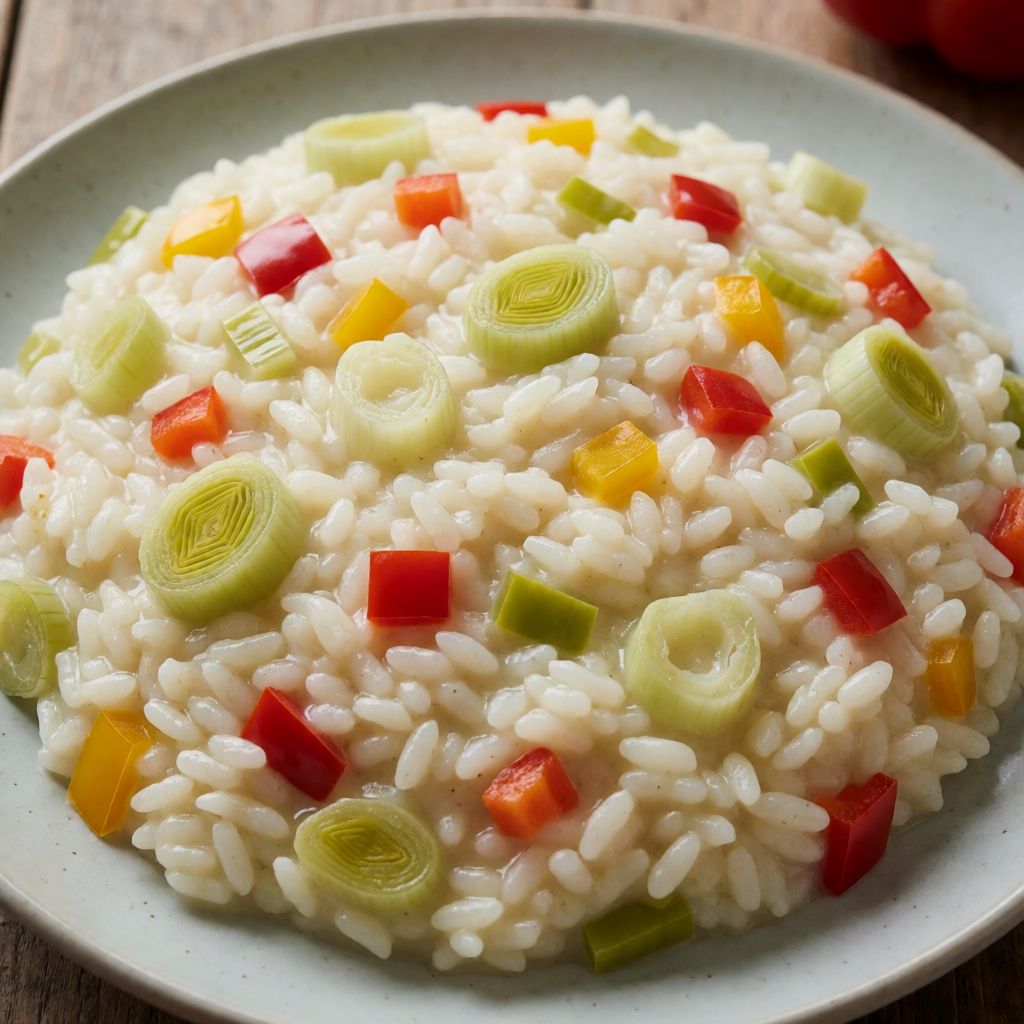
 AI photo
Risotto with Leek and Bell Pepper, Finished with Gorgonzola
A creamy risotto with leek and bell pepper, finished with sweet gorgonzola.
Labels are worked out automatically from the ingredients and can be wrong. Check the packaging if it matters to you.
Ingredients
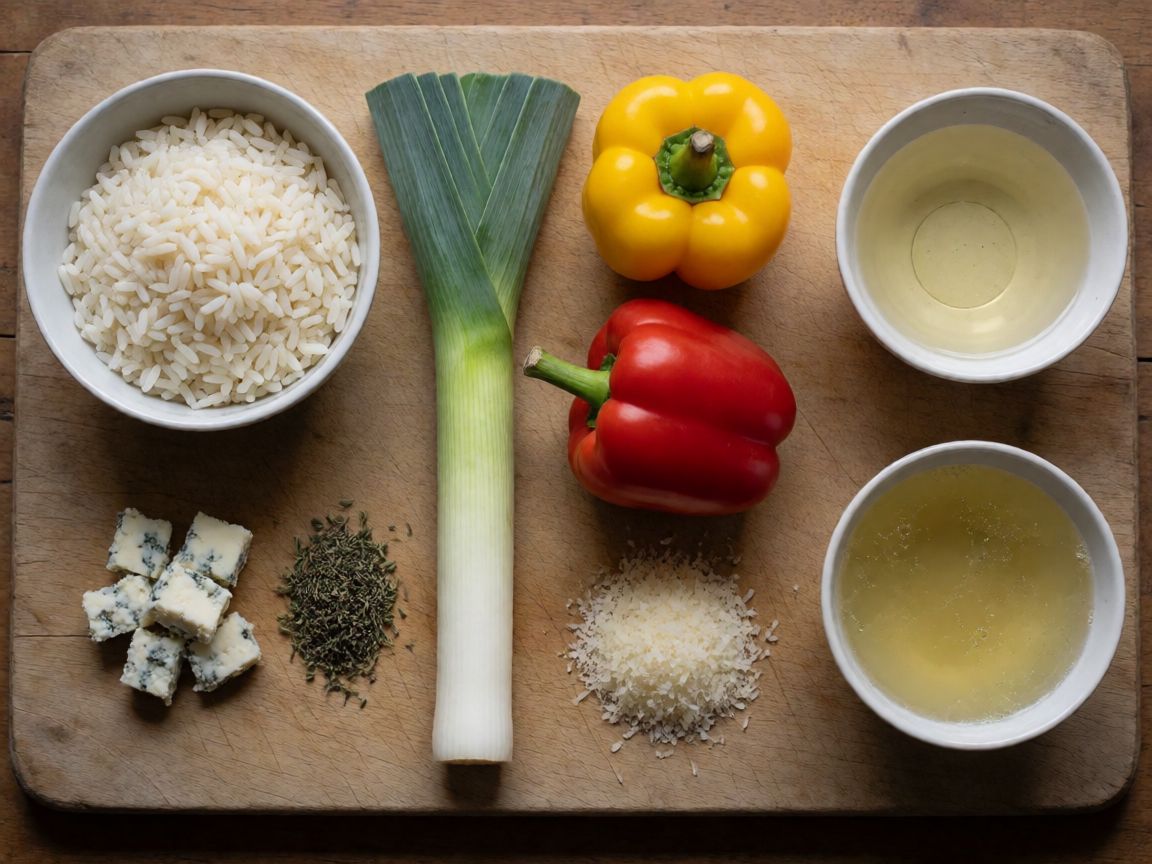
- 350 g Carnaroli rice
- 1 pcs Leek
- 2 pcs Bell pepper
- 250 ml White wine
- Vegetable stock as needed
- White pepper to taste
- Salt to taste
- 2 tbsp Olive oil to taste
- 80 g Gorgonzola dolce
- Dried thyme to taste
- Parmesan to taste











Steps
In a saucepan, soften the leek in 2 tbsp olive oil, adding a ladleful of vegetable stock.
Add the bell pepper, cut into pieces, and cook covered for a further 10 minutes.
10 minOnce the vegetables are soft, add the rice and toast it until translucent.
Pour in the white wine and let it evaporate completely.
Continue cooking the risotto, gradually adding vegetable stock.
Season with salt, white pepper, and stir in the gorgonzola dolce until creamy and well combined.
Sprinkle with dried thyme and parmesan to taste, then serve.
This is risotto by the vegetable method, not by the butter method — the leek and pepper are softened first, in oil and splashes of stock rather than a slab of butter, because they're the base of flavour, not a garnish thrown in at the end. What decides whether this dish works is almost entirely about the rice and your attention, not the gorgonzola. Carnaroli holds its shape and releases starch slowly, which is exactly what you want when you're going to stand there stirring for twenty-odd minutes — a softer rice like Arborio collapses faster and gives you porridge before the timing's right.
Some say risotto needs a kazan-wide pan and constant violent stirring or it's not "real" risotto. No — what you actually need is a pan wide enough that the rice sits in a shallow layer, so the stock you add evaporates and gets absorbed at roughly the same rate, instead of pooling underneath while the top stays dry. A domestic hob can't give you the even, gentle heat of a professional burner spread under a wide pan, so you compensate by adding stock in smaller amounts, more often, and by not walking away — this isn't a "stir by rule" dish, it's a "watch the grain" dish.
The wine evaporating completely before the first stock ladle matters because raw alcohol left in the pan turns bitter and fights with the creaminess you're building later — you're not rinsing the pan with wine, you're cooking it off and leaving behind only acidity, which is what cuts through the fat of the gorgonzola at the end.
Doneness here isn't a clock question. The rice is done when a grain, bitten, resists slightly at the centre — not chalky-hard, not mush — and the whole pan has the consistency of a dish that spreads itself out slowly on a flat plate rather than sitting in a stiff mound. Time in the recipe (45 minutes total) is your lower bound, the point before which it simply cannot be ready; after that, you taste, not count.
Leek: cut it fine and give it time in the oil with a splash of stock rather than trying to brown it — browning here would mean burning sugars at the edges while the inside stays raw, because leek has a lot of water locked in layers that needs gentle coaxing out first. If you can't get leek, a mild onion works, though you lose that faint sweetness leek gives without the sharpness onion carries — add it a touch earlier if you substitute, since onion needs longer to lose its bite.
Bell pepper goes in after the leek has softened, covered, because covering traps the steam and cooks the pepper's flesh through without needing extra fat or high heat — this is the step that stops you ending up with pepper that's charred outside and raw-crunchy inside. Any colour of pepper works; red and yellow bring more sugar, green stays grassier and sharper against the cheese.
Carnaroli is specified for a reason tied to its starch structure, not snobbery — it absorbs liquid and holds its outer structure longer than other short-grain rices, giving you a wider window to judge doneness by feel. Arborio is the common substitute and will work, but it goes from firm to soft faster, so taste earlier and more often. Any oil with no smell of its own does the job here — olive oil is traditional because it was what was on hand in rice-growing regions of northern Italy, not because other neutral oils fail chemically; a flavourless vegetable oil would do the softening fine, you'd just lose the faint grassy note olive oil adds under the cheese.
Toasting the rice until translucent (tostatura) seals the outside of the grain slightly before liquid floods in — skip it, and the rice can absorb stock unevenly from the very first ladle, cooking patchy. This is a small step but it's the one that most explains why some home risottos turn gluey: liquid added too fast, to a grain that hasn't been given that initial dry heat.
Stock added "as needed" rather than measured is honest cooking, not vagueness — rice varies by batch, pan width varies by kitchen, so the only reliable gauge is: the pan looks almost dry, add another ladle, wait, taste again. Patience is the real ingredient in this dish; rushing the stock in all at once gives you boiled rice in sauce, not risotto, because the starch never gets the slow release that makes the dish creamy on its own, before the cheese arrives.
Gorgonzola dolce, the young, soft, mild version rather than the aged piccante, is chosen because it melts into the rice rather than fighting it with sharp funk — if you only have piccante, use less, since it's stronger and saltier gram for gram. Parmesan and thyme on top are seasoning, not structure — adjust freely, they don't change whether the dish worked or didn't.