
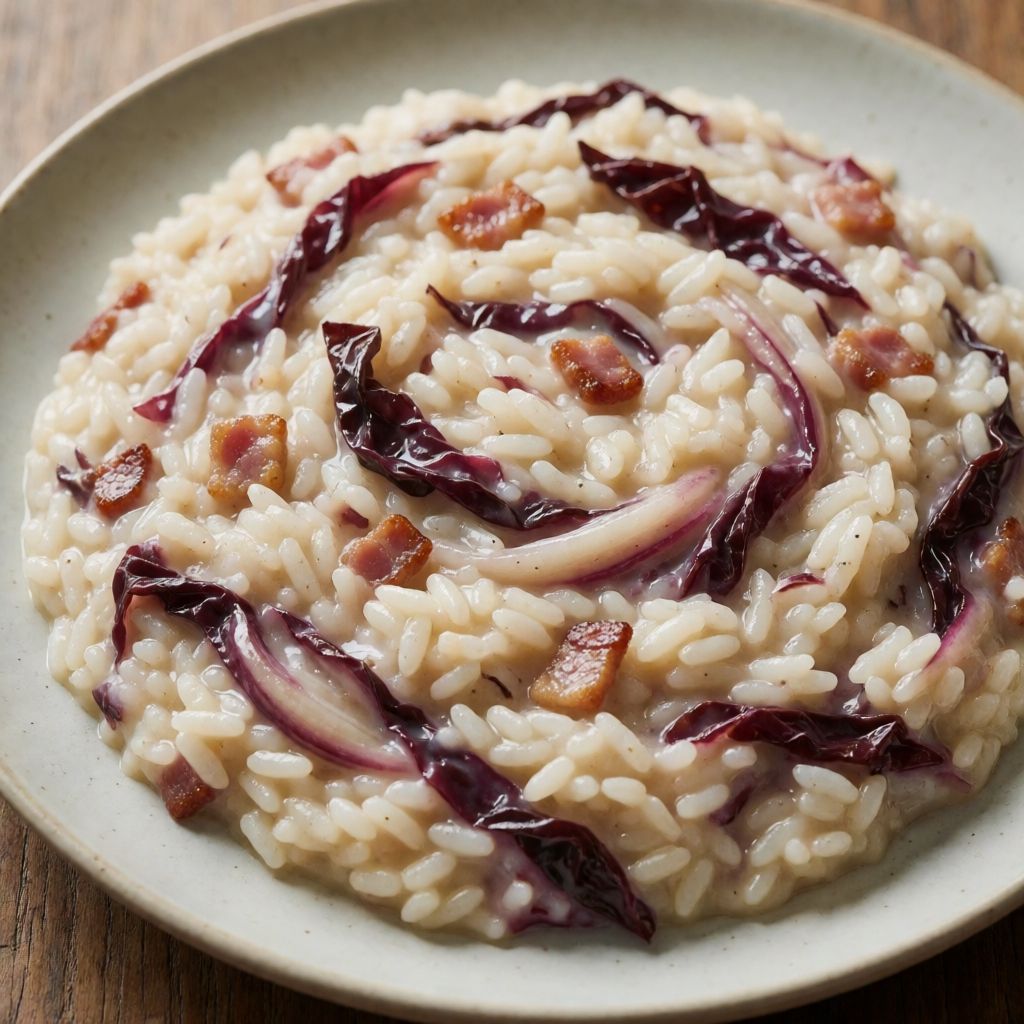
 AI photo
Risotto with bacon and radicchio in red wine
A creamy risotto with crisp bacon and bitter radicchio, simmered with red wine.
Labels are worked out automatically from the ingredients and can be wrong. Check the packaging if it matters to you.
Ingredients
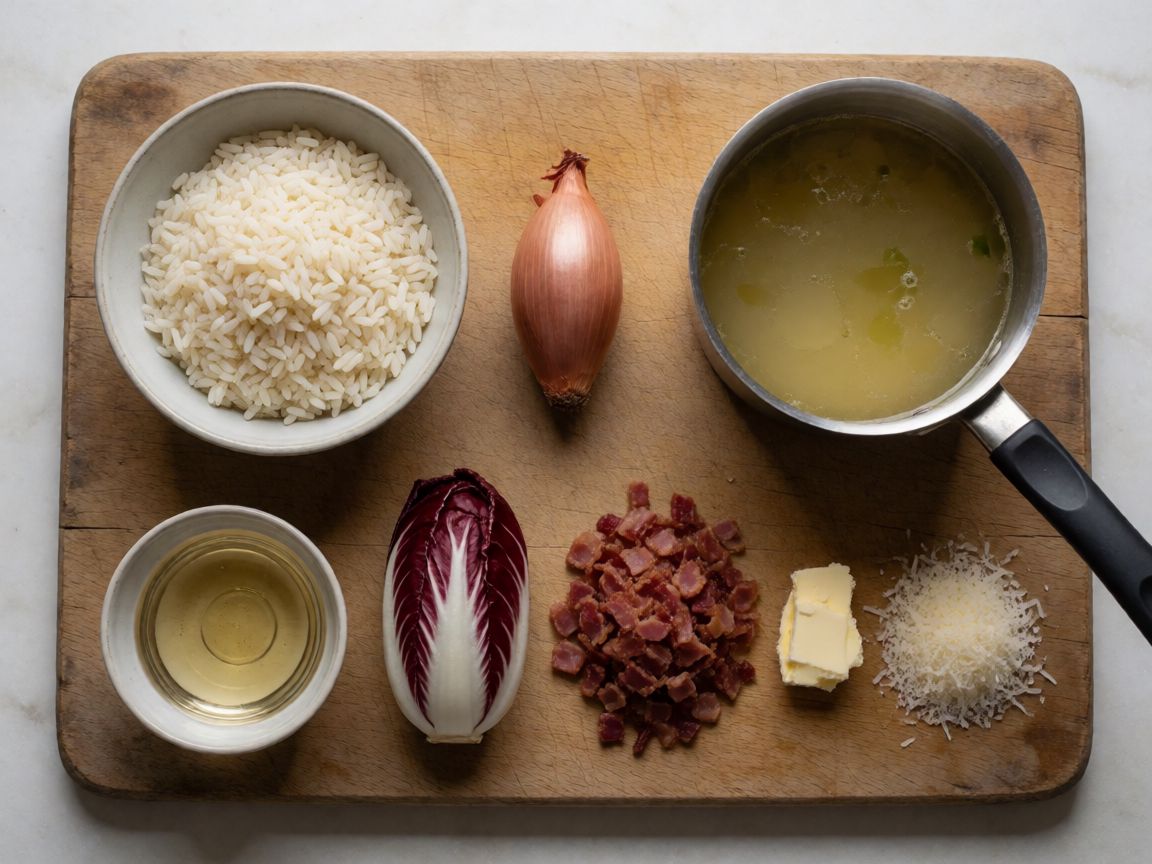
- 350 g Carnaroli rice
- 1 pcs Shallot
- 2 tbsp Olive oil
- vegetable stock as needed
- Salt to taste
- Black pepper ground, to taste
- 240 ml red wine
- 1 pcs radicchio
- 120 g Bacon
- 30 g Butter
- 1 tbsp Parmesan grated










Steps
In a saucepan, fry the shallot in olive oil
Add the bacon and quickly fry it
Add the radicchio and cook, pouring in vegetable stock as needed
Add the rice and toast until the grains turn translucent
Pour in the red wine and let it evaporate completely
Finish cooking the risotto, gradually adding vegetable stock in small amounts
Season with salt and pepper, stir in the butter and Parmesan
Serve immediately, sprinkling extra Parmesan on top if desired
Risotto is not a rice dish — it's a starch-release dish. The rice is just the delivery vehicle. What decides whether this works is whether you keep the pan at a bare, confident bubble and add stock in increments the rice can actually absorb before the next pour, scraping the sides so nothing dries out and catches. Carnaroli holds that line better than most rice because its grain is fatter and more resistant — it goes from toasted to creamy without a soft, collapsing middle phase where other rices turn to porridge.
The red wine here isn't a flavour splash, it's a deglaze. When you toast the rice you're frying off a thin crust of starch and bacon fat on the pan base — the wine lifts that crust back into the dish instead of leaving it stuck and bitter underneath. That's why it has to evaporate fully before you move on: wine that hasn't cooked off brings raw alcohol sourness into a dish that should taste of toasted grain, smoke and bitterness, not fermentation.
Radicchio's whole job is bitterness that survives cooking — it's one of the few vegetables that doesn't just go sweet and disappear into stock. Cook it with the bacon fat early and it softens its edge without losing its point; the dish needs that edge, because bacon and butter and Parmesan are three fats stacked on top of each other, and without something bitter cutting through, it tips into heaviness rather than richness.
Carnaroli is the rice to use, not out of loyalty but because of what's inside the grain: a high proportion of amylose starch that resists full breakdown, so the outside goes creamy while the centre keeps a slight resistance — what the Italians call "all'onda", wave-like, not stiff and not slop. Arborio will do if that's what's on the shelf; it's softer and more forgiving but releases starch faster, so you'll need to watch it more closely near the end or it slides past done into sticky. Pudding rice, risotto rice's cheap cousin by appearance only, hasn't got the structure for this — it collapses, no wave, just paste.
Shallot rather than onion is really a question of sweetness without bulk — it cooks down fast, doesn't dominate, and won't fight the radicchio's bitterness for space. A small onion, finely chopped, is a fair substitute; you'll just want it in longer before the bacon goes in, since it's coarser and slower to soften.
The bacon brings salt, smoke and — crucially — fat you're going to cook the radicchio and later the rice in. Streaky bacon, chopped small, renders more fat than back bacon; that fat is doing real work here, carrying flavour into every grain as the rice toasts in it. If you've only got pancetta or lardons from the supermarket, that's the same idea, just Italian rather than British — use it the same way.
Red wine: pick something dry and not sweet, because sweetness has nowhere to go once it's reduced — it just gets more concentrated and odd against the bitterness of the radicchio. You don't need an expensive bottle; you need one you'd be willing to drink a glass of, because a wine that's unpleasant at the glass is unpleasant concentrated into a sauce. If you've no red wine open, a dry white works as a different but valid deglaze — you lose the colour and some depth, gain brightness instead.
Vegetable stock is the drip-feed that lets starch release slowly instead of all at once — this is why the quantity in the recipe is "as needed" rather than a fixed number: a domestic hob runs hotter or cooler than a restaurant burner, your pan is wider or narrower, your rice absorbs faster or slower depending on age and batch. Keep it hot in a separate pan nearby, not cold from the tap — cold stock each time you add it stops the cooking dead and makes the rice fight to come back up to a simmer, which is exactly the uneven cooking that gives risotto a bad name among people who've only had it gluey.
Butter and Parmesan go in off the heat, right at the end, and that timing matters more than the ingredients themselves: added while the pan's still hard-bubbling, butter just melts into oil and separates, Parmesan just turns grainy and clumps. Off the heat, with the rice's own warmth and residual stock around it, they emulsify into the creaminess people mistake for extra cream having been used — there's no cream in risotto, done properly; the creaminess is starch, butter and cheese binding together, which is also why it needs eating straight away. It doesn't wait for you; it sets and tightens the longer it sits, so have the bowls warm and the people at the table before you finish the last addition of stock.