
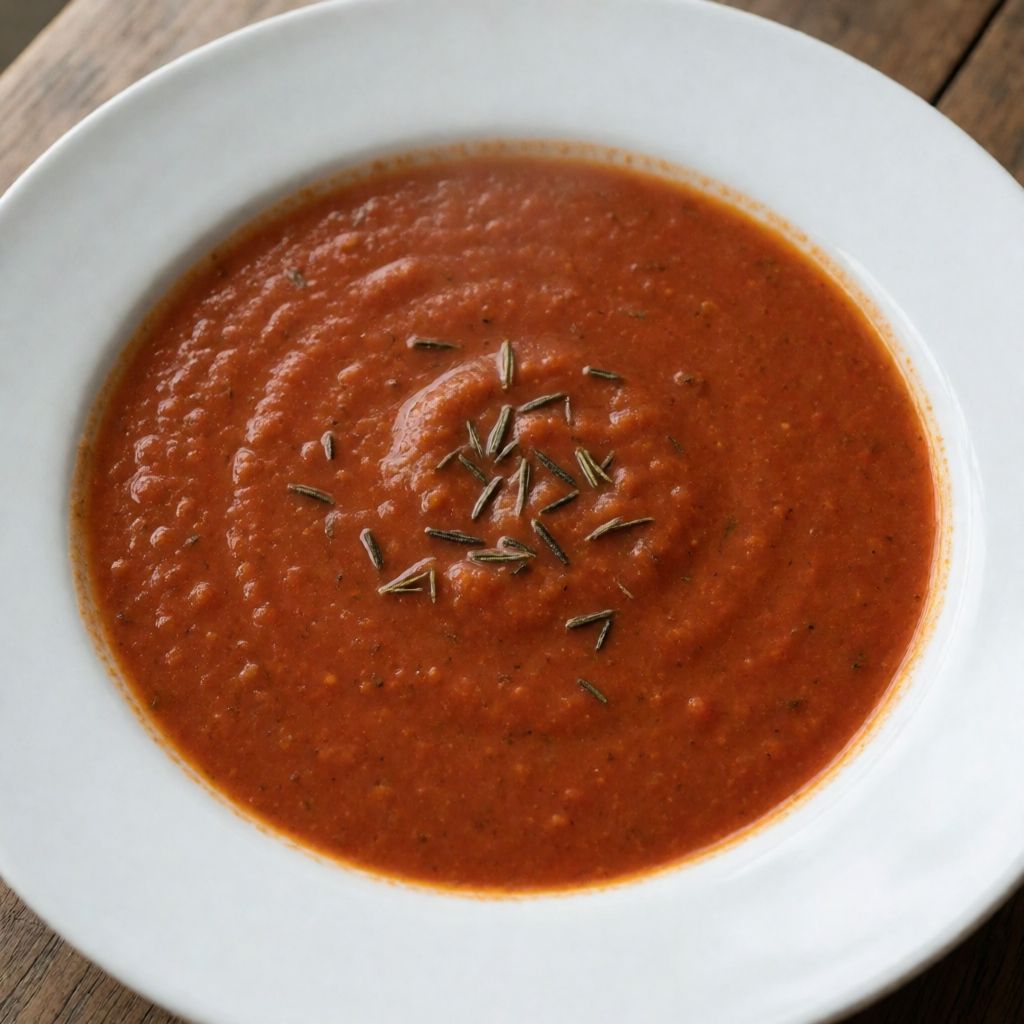
 AI photo
Roasted Tomato Soup
A rich roasted tomato soup, baked until caramelised then blended smooth with stock and finished with crème fraîche and basil.
Labels are worked out automatically from the ingredients and can be wrong. Check the packaging if it matters to you.
Ingredients
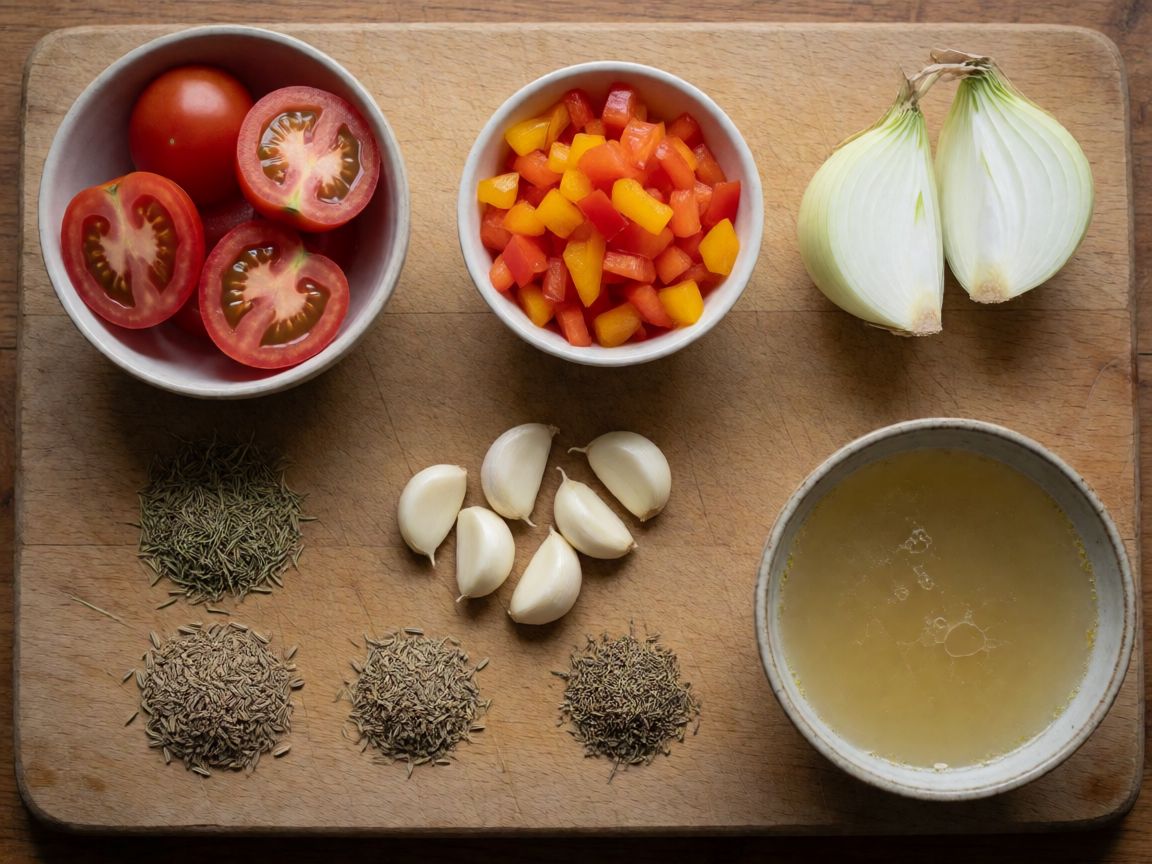
- 1 kg Tomatoes halved
- 1 pcs Bell pepper cut into large cubes
- 2 pcs Onion quartered
- 4 clove Garlic
- 0.5 tsp Dried rosemary
- 0.5 tsp Fennel seeds
- 2 tsp Dried thyme
- 400 ml Stock
- 0.5 pcs Lemon zest and juice
- 3 tbsp Olive oil
- Salt
- Black pepper freshly ground
- 100 ml Crème fraîche
- 1 bunch Basil fresh
- 4 pcs Bread toasted slices











Steps
Place the tomatoes, pepper, onion and garlic in a greased ovenproof dish and drizzle with olive oil.
Sprinkle with thyme, rosemary, fennel seeds, salt and freshly ground black pepper.
Roast in an oven preheated to 175°C (fan) for 30–40 minutes.
35 minTip the roasted vegetables into a blender with the stock and blitz until smooth and creamy.
Season to taste with finely grated lemon zest, a little lemon juice, salt and pepper.
Serve with basil and crème fraîche.
This is a tomato soup that never touches a hob until it hits the blender. The whole flavour of it comes from roasting, not simmering — and that's the mechanism worth understanding before you touch the oven dial.
A raw tomato is mostly water locked inside cells, with sugar and acid dissolved in that water and not much else going on. Boil it and you just dilute it — more water from the pot gets in, the sugars don't concentrate, and you end up with something thin that tastes of "red" rather than of tomato. Roast it instead, and the dry heat pulls moisture out through the skin, the sugars left behind start caramelising at the surface, and the acid mellows because some of it evaporates off too. That's the entire difference between a soup that tastes like a tin and one that tastes like August.
Whether this works is decided at the roasting stage, not the blending stage. You're watching for the vegetables to collapse and darken at the edges — tomato skins splitting and curling back, onion going soft enough to fall apart at a fork, a bit of char showing on the pepper. Colour and softness, not the clock. Thirty-odd minutes is your floor, because that's roughly how long it takes a 175°C fan oven to drive that much water out of a kilo of tomatoes — but ovens vary, trays vary, so look before you pull it out.
Start with the tomatoes themselves, because they're doing almost all the work here. You want ones that are properly ripe — slightly soft when you press them, smelling of something even through the skin — not the pale, firm, travel-friendly ones sold mainly for looking tidy in a bowl. Underripe tomatoes have less sugar to caramelise and more raw acidity, and roasting won't fix that; it'll just give you a hot version of the same problem. If it's winter and the supermarket tomatoes taste of nothing, don't fight it — a tin of good whole plum tomatoes, drained a little and roasted anyway for twenty minutes just to dry them out and pick up a bit of colour, will outperform a sad fresh one every time. That's not cheating, that's just knowing what you're working with.
The onion and garlic aren't there for bulk — they're there for the savoury backbone that tomato alone doesn't have. Tomato gives you sweetness and sharpness; onion roasted until it goes from white to a soft amber gives you the rounded, slightly sulphurous depth that makes soup taste like it's been thought about. Garlic left whole in its roasting tray (skin on or off, either works, the cloves just need to steam-soften inside their own moisture) turns mellow and almost sweet instead of sharp — roasting is doing to garlic exactly what a Sunday roast does to a whole bulb tucked beside the joint, and for the same reason: low, dry heat over time breaks down the compound that makes raw garlic bite.
The pepper is mostly there for a different kind of sweetness and for colour — it roasts to a slight char at the edges, which, if you've ever skinned a pepper for romesco or ajvar, you'll know is where a lot of its flavour actually lives. Don't skin it here; it's going in the blender, char and all, and that bitterness-with-sweetness is part of the point.
The dried herbs — thyme, rosemary, fennel seeds — go on before roasting, not after, because dried herbs need heat and a bit of oil to actually release anything. Sprinkled onto a finished soup they just sit there tasting of dust. Roasted with the vegetables, the oil carries their aromatic oils, and the heat coaxes them out properly. Fennel seed in particular is worth not skipping if you can help it — it brings a faint anise sweetness that plays against the tomato acid; if you genuinely have none, a pinch of ground coriander seed gets you some of that same lift, though it's not identical.
The olive oil should be something with no very strong character of its own at this stage — plain, not the expensive peppery extra virgin you'd save for drizzling raw at the end. Its job here is just to help the vegetables roast rather than steam, and to carry the herb oils into the flesh. Any neutral-ish oil that can take oven heat without smoking does the job; a basic olive oil, a light rapeseed oil, whatever's in the cupboard that doesn't taste of much.
Stock, blended in, thins the roasted vegetables back down to soup consistency without adding the raw water a simmer would have — a weak vegetable stock or even a good stock cube dissolved in hot water is perfectly fine, since by this point the tomatoes have done the heavy flavour lifting and the stock's only job is to carry it.
Lemon at the end is seasoning, not flavour — a squeeze of juice and a little zest lift the whole thing the way salt does, by sharpening what's already there rather than adding something new. Add it after blending, off the heat, because citrus zest loses its oils fast once it's warm.
Crème fraîche and basil on top aren't decoration — the crème fraîche cuts the acidity with fat and cools the soup slightly where it sits, and basil, torn rather than chopped (chopping with a knife bruises it and it goes dark and bitter at the cut edges), gives you a cold green note against a hot red one. The toast is there for the same reason bread's always been served with tomato soup in this country — it's cheap, it's filling, and it gives you something to drag through the last of the bowl, which is frankly the best bit.
If your oven dish doesn't have a lid and you're worried about the vegetables drying out rather than roasting — don't be. You want the moisture to leave. A lid would just trap steam and you'd be back to simmering, dressed up in a different pan. Patience is the actual ingredient missing from most rushed versions of this — give the vegetables the full roasting time even if they look done at twenty-five minutes, because the last stretch is where the sugars really turn.