
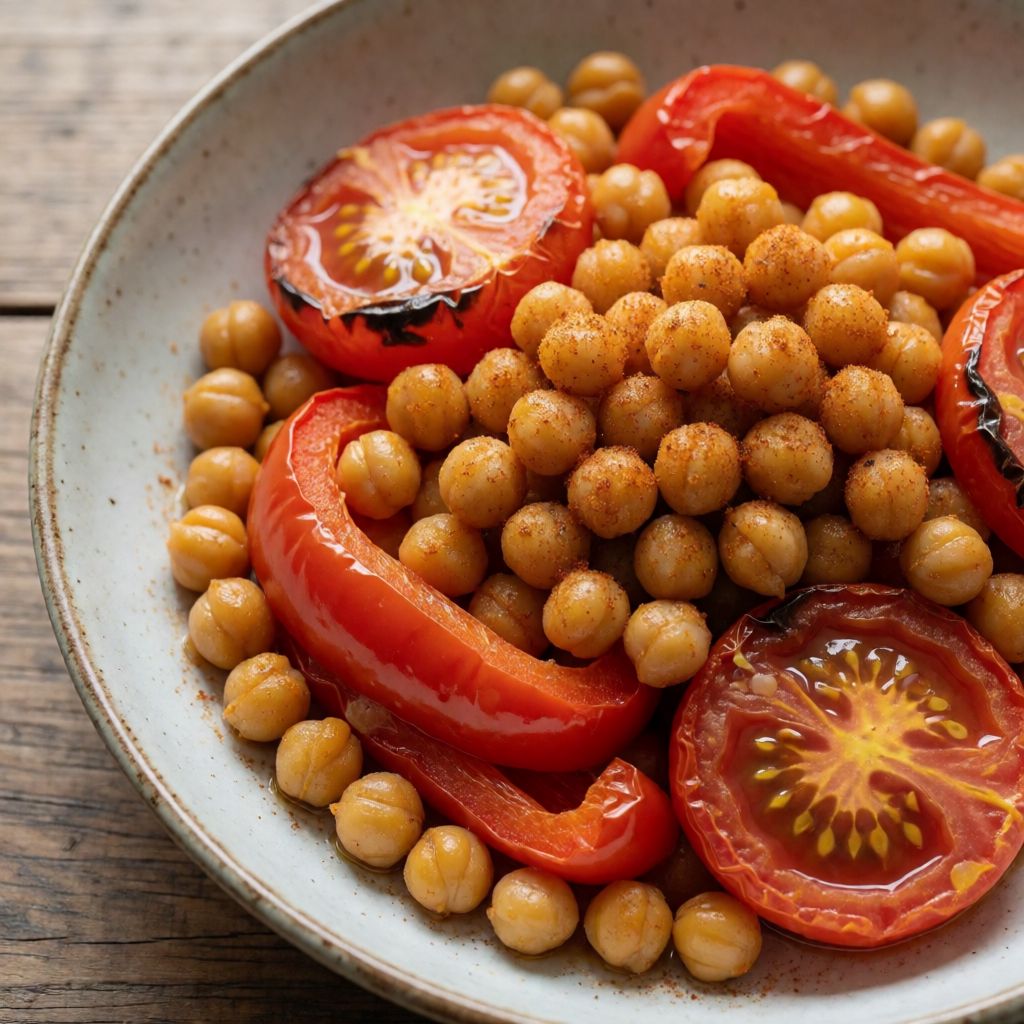
 AI photo
Roasted Vegetable Bowl with Garlic and Chickpeas
A hearty bowl of roasted vegetables, crispy spiced chickpeas, lemon rice and a garlicky yoghurt sauce.
Labels are worked out automatically from the ingredients and can be wrong. Check the packaging if it matters to you.
Ingredients
- 20 pcs Tomatoes
- 2 pcs Bell pepper cut into large cubes
- 100 g Spinach
- 1 pcs Courgette cut into large cubes
- 3 clove Garlic crushed
- 1 tsp Rosemary finely chopped
- 2 tbsp Olive oil
- Salt
- Black pepper
- ½ bunch Parsley finely chopped










Crispy Chickpeas
- 2 can Chickpeas drained and rinsed
- 1 tsp Smoked paprika
- 1 tbsp Olive oil
- 1 tsp Salt


Lemon Rice
- 300 ml Basmati rice
- 500 ml Water
- ½ bunch Parsley finely chopped
- ½ pcs Lemon zest, finely grated
- ½ tsp Salt



Garlic Yoghurt
- 3 clove Garlic crushed
- 150 ml Yoghurt
- Salt
- Black pepper

Steps
Rinse the chickpeas and pat dry with a clean towel. Toss the chickpeas with the oil, then with the spices, until well coated.
5 minSpread the chickpeas on a baking tray lined with parchment paper and roast at 175°C (fan) for 20-25 minutes, stirring once or twice.
23 minToss the tomatoes, pepper, spinach and courgette with the olive oil, salt, garlic and rosemary, until the vegetables are well coated in oil.
5 minSpread the vegetables on a baking tray lined with parchment paper and roast at 175°C (fan) for 20 minutes.
20 minPut the water, basmati rice and salt in a saucepan, stir well, cover with a lid and bring slowly to the boil.
8 minCook the rice covered over a low heat for 10 minutes.
10 minRemove the saucepan from the heat and let the rice rest, covered, for a further 10 minutes.
10 minStir the rice with the grated lemon zest and finely chopped parsley, until evenly distributed.
2 minCrush the garlic and mash it with a fork in a small bowl. Add the yoghurt, mix well, and season with salt and pepper.
3 minSpoon the rice, spinach, roasted vegetables and chickpeas into deep bowls. Drizzle with a little garlic yoghurt and sprinkle with parsley.
2 min
This is a bowl built from three separate jobs — roasting, simmering, mixing cold — that only meet at the very end, in the dish, not in the pan. That's the whole mechanism: nothing is cooked together, because nothing here wants the same heat for the same length of time. Chickpeas want dry, aggressive heat to crisp their skins. Tomatoes and courgette want enough heat to collapse and caramelise without turning to mush. Rice wants gentle, closed, patient heat, and garlic yoghurt wants no heat at all. Treat it as one dish from the start and you'll either undercook the rice or turn your chickpeas to rubber waiting for the veg.
What decides whether it works is dryness before heat, twice. The chickpeas get patted dry with a towel before the oil goes anywhere near them — because a tin chickpea arrives wet, and wet chickpea meeting hot oil steams instead of crisping. Steam is the enemy of crunch; it keeps the surface soft no matter how long you leave the tray in. Some say roasted chickpeas "just don't go crispy in a home oven" — no, they do, you just skipped the towel.
On your hob, both trays won't fit in the oven at the same oven at a useful shelf height at once if your oven is the usual UK domestic size — one shelf runs hotter near the top, one runs cooler lower down. Don't panic about this; just know the chickpeas near the top will finish first and may want pulling a couple of minutes before the vegetables below them. Stir both trays once or twice not for even colour as decoration, but because contact with hot metal is what actually roasts — a chickpea sitting still on one side chars that side and steams the rest.
Chickpeas, tinned, are the right call here and not a shortcut you should feel guilty about. Dried chickpeas soaked and boiled give you a firmer bite, but for roasting-till-crisp the tinned ones are already cooked through, so the oven's only job is drying and browning the outside — which is exactly what you want and exactly why the pat-dry step matters so much. If you've only got dried, cook and drain them properly first, then dry them just as hard before they see oil.
Smoked paprika is doing a job oil and salt can't — it's giving you a savoury, faintly woodsmoke note standing in for the actual embers a kazan or a real grill would give you. Any oil with no smell of its own works for the tossing — a flavourless vegetable or light olive oil, not a dark, bitter cold-pressed one that'll fight the paprika rather than carry it.
The vegetable mix — tomatoes, pepper, spinach, courgette — is really two things pretending to be one. Spinach doesn't roast with the rest; it goes in raw-ish right at serving, wilting slightly under the heat of everything else on the plate. If you tip raw spinach onto a hot tray with the others it collapses into a green puddle in minutes and tastes of nothing but water. Crushed garlic and rosemary go straight onto raw vegetables before roasting rather than being fried first, because here the oven is the frying pan — slow, even heat cooks the garlic through without the thirty-second window of a hot pan where it goes from fragrant to bitter and burnt.
Basmati is chosen for the same reason it's chosen for a pilau — it holds its shape and separates into individual grains instead of clumping, because it has less of the starch that makes risotto rice sticky. A short-grain or pudding rice here would turn the dish gluey. Measure rice and water by volume as the ingredients list does — 300ml rice to 500ml water is roughly 1 to 1.6, which is the ratio basmati actually needs to cook through without drying out or turning to porridge; weighing it in grams, as is the British habit, works too as long as you keep that same ratio by volume or weight consistently, don't switch mid-recipe.
The garlic yoghurt is the one element with no heat and no timing at all, and that's deliberate — it's there to be cool and sharp against hot roasted vegetables and warm rice, the contrast doing the work that a sauce usually does by flavour alone. Raw crushed garlic is far more aggressive than cooked garlic, so a full three cloves raw is not a typo; it's meant to cut through. If raw garlic is too much for you, a smaller amount crushed, then left to sit in the yoghurt for ten minutes before serving, mellows it slightly without cooking it. Plain, thick yoghurt is what you want — a thin, watery one will just run off everything instead of sitting on top.