
 AI photo
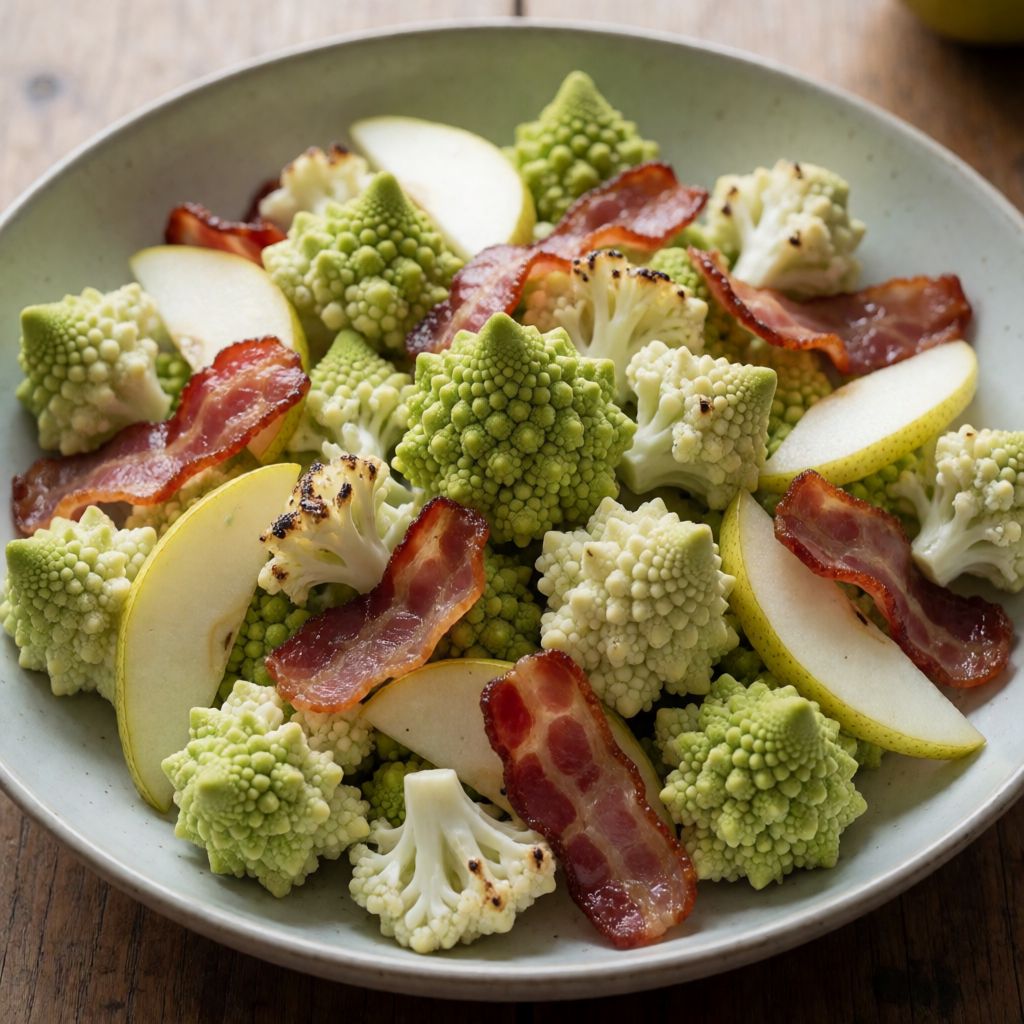
Romanesco Salad with Pear, Bacon and a Delicious Dressing
A fresh salad of steamed romanesco, crispy bacon and pear, finished with a lemony crème fraîche dressing.
Labels are worked out automatically from the ingredients and can be wrong. Check the packaging if it matters to you.
Ingredients
- 1 pcs Romanesco
- 3 pcs Bacon rashers, fried until crispy
- 1 pcs Pear diced
- ½ pcs Lemon zest only
- 0.5 tsp Rosemary finely chopped, fresh
- Salt
- Black pepper freshly ground







For the dressing
- 100 ml Crème fraîche 18% natural
- Yogurt
- ½ pcs Lemon 2 tbsp juice
- Salt
- Black pepper freshly ground
- 0.5 tsp Sugar



Steps
Cut the romanesco florets off the stalk.
Bring a pot of water to the boil and steam the romanesco florets in a sieve under a lid.
1 minRemove the pot from the heat and arrange the romanesco on a serving dish.
Scatter the diced pear and bacon over the salad.
Mix all the dressing ingredients together and adjust to taste.
Drizzle the dressing over the salad, sprinkle with rosemary and lemon zest, and serve.
Romanesco is the showoff of the cabbage family — those fractal spires look like they belong in a maths textbook, not a steamer — and that's exactly why this salad works as well raw-ish as it does cooked. One minute of steam is not a cooking time, it's a mercy: just enough to knock the rawness off the floret's edge without collapsing its structure. Bite into it and you want a faint squeak of resistance, not the grey mush that overboiled cauliflower cousins are famous for. If it goes soft and translucent at the stalk, you've gone past the point — pull it off heat a beat earlier next time, because romanesco keeps cooking in its own heat for a few seconds after the pot's off the flame too.
What decides the dish isn't the vegetable, though — it's the contrast you build around it. Cold crisp floret, warm crumbled bacon, sweet-wet pear, a dressing that's tart and a little rich at once. Get any one of those wrong — bacon gone limp instead of crackling, pear gone mushy and brown, dressing too thin — and the whole thing reads as "chopped vegetables with cream," which is not the point.
Romanesco itself: look for tight, firm cone clusters, no yellowing at the tips, no softness when you press the base of the head. If you can't get it — and outside a few greengrocers in the UK, you often can't — a firm cauliflower does the same structural job, though you lose the geometry and some of the nuttiness. Don't swap in broccoli; it's wetter and sweeter and throws the whole balance toward vegetal instead of nutty.
The bacon wants to be genuinely crisp, not just cooked — crumble it only once it shatters rather than bends. This isn't fussiness: limp bacon on a cold salad turns rubbery and chewy within minutes as it cools, so you fry it hard, let it rest a moment on paper towel to shed grease, then crumble at the last second before serving. Any streaky or back bacon works; pancetta is the nearest substitute if you want a drier, more concentrated saltiness.
Pear should be ripe but not mushy-ripe — firm enough to dice without collapsing into paste, sweet enough to answer the bacon's salt. A slightly underripe pear is actually safer here than an overripe one; it holds its cube shape and its bite. No pear in the house? A crisp apple does the sweet-crunch job, though it's sharper and less perfumed — add a touch more sugar to the dressing if you go that way.
The dressing is where people default to just mayonnaise or plain yogurt, and that's the myth worth breaking: plain yogurt alone is often too thin and sour, mayonnaise alone too flat and fatty. Crème fraîche brings body and a clean tang without the heaviness of mayo, and yogurt loosens it so it coats rather than sits in a dollop. Lemon juice sharpens, sugar rounds the sharpness off — not to make it sweet, but so the acid doesn't just sting. Taste as you mix; "adjust to taste" in the recipe isn't a cop-out, it's the honest admission that your lemon, your crème fraîche, your pear will never be identical twice.
Zest and rosemary go on last, dry, uncooked, because their job is scent, not substance — heat or moisture would just dull them. Finely chop the rosemary properly; whole needles are unpleasant to bite into and taste medicinal rather than herby. This a dish for four as a starter or a light lunch alongside your usual Sunday roast leftovers — not a replacement for the roast, a relief from it, something cold and bright after a week of gravy.