
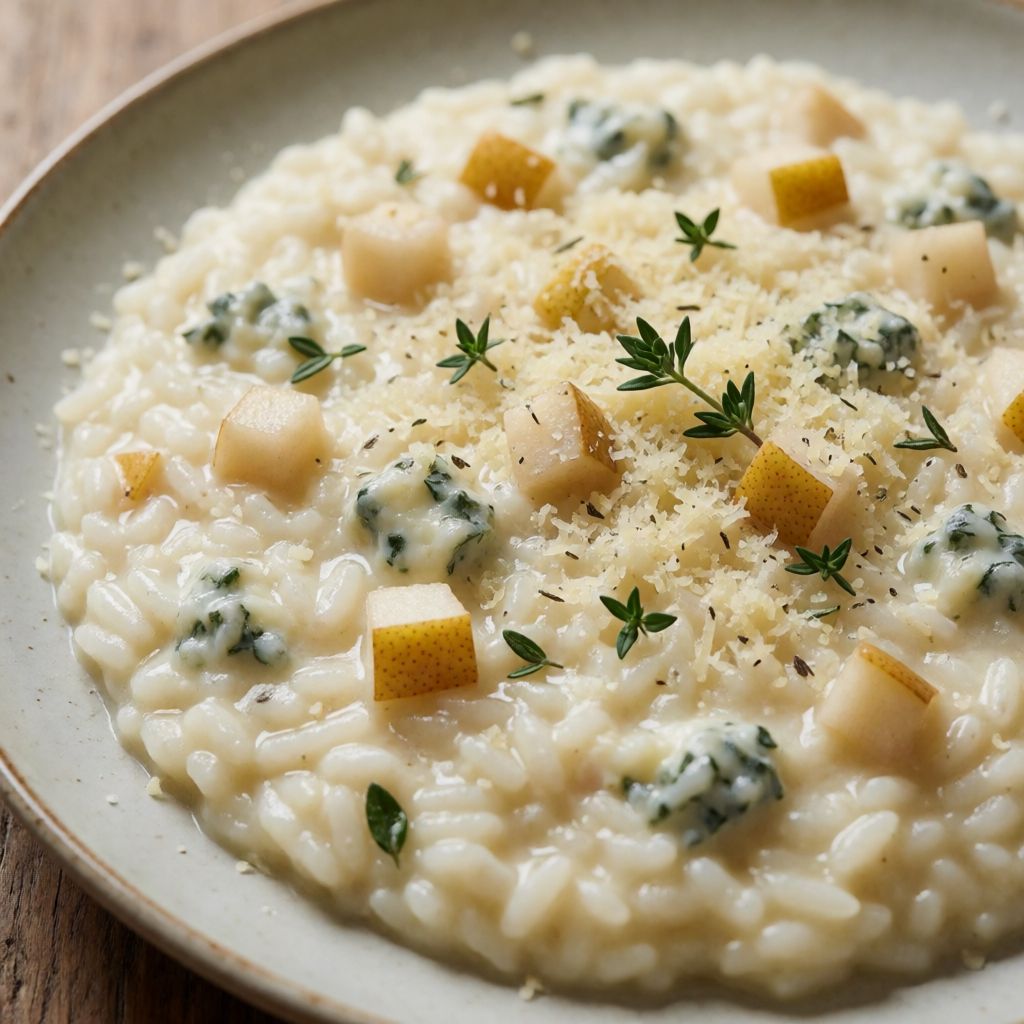
 AI photo
Pear, Gorgonzola and Thyme Risotto
A creamy risotto combining sweet pear, melted gorgonzola and fragrant thyme.
Labels are worked out automatically from the ingredients and can be wrong. Check the packaging if it matters to you.
Ingredients
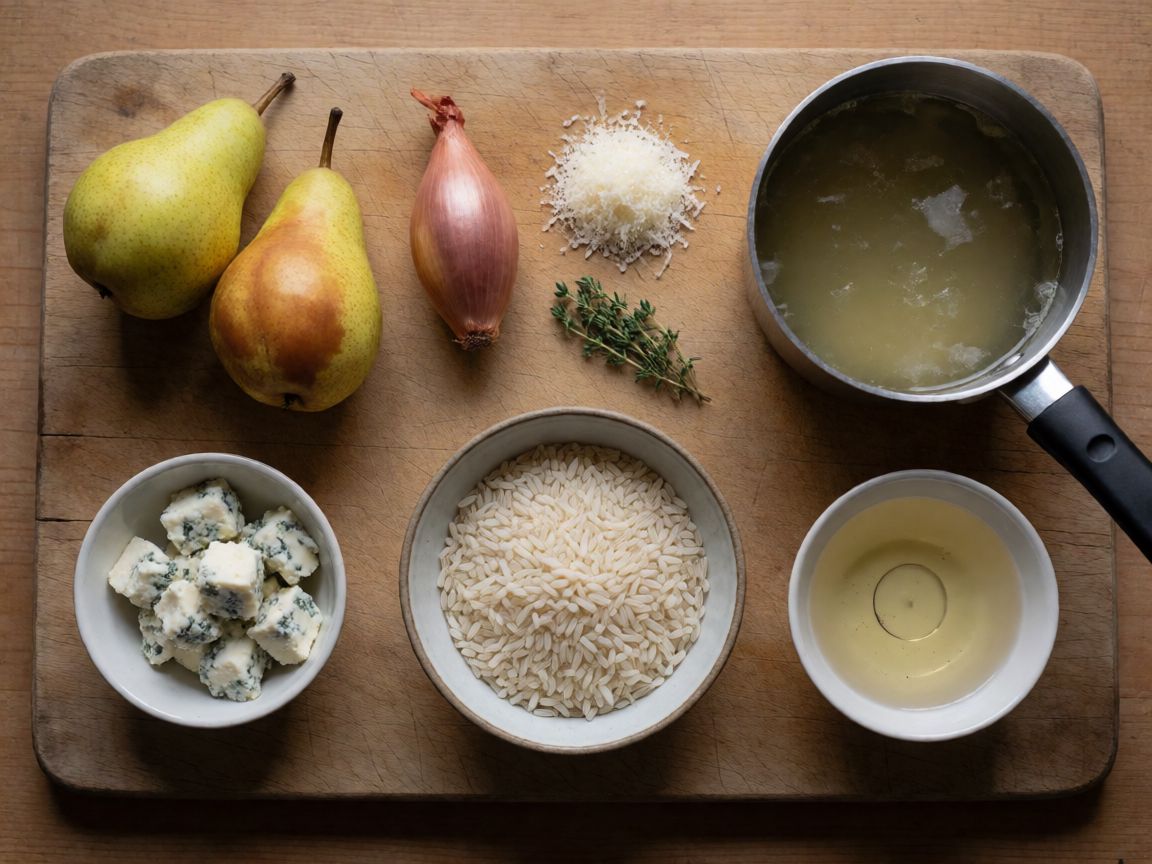
- 2 pcs Pear
- 1 pcs Shallot
- 120 g Gorgonzola Dolce
- 1 tbsp Parmesan grated
- 2 tbsp Olive Oil
- Salt to taste
- Black Pepper to taste
- pinch Thyme
- 350 g Risotto Rice
- 1 l Vegetable Stock hot
- 125 ml White Wine










Steps
Heat the olive oil in a pan and fry the shallot until soft.
Add the rice and cook, stirring, until the grains turn translucent.
Pour in the white wine and let it evaporate completely.
Gradually add the hot vegetable stock, continuing to cook the risotto.
5 minutes before it's ready, add the diced pear, pieces of gorgonzola, salt, pepper and a pinch of thyme.
5 minServe sprinkled with grated parmesan.
Risotto is not a rice dish, it's a starch extraction. The grain is almost a vessel for amylopectin, and your job for twenty minutes is to coax that starch out slowly enough that it dissolves into the liquid around it rather than collapsing to mush. Do that right and you get a dish that moves like lava across the plate — the Italians call it all'onda, "with a wave" — not a stiff mound you could build a sandcastle with. Do it wrong, by dumping all the stock in at once and walking away, and you get boiled rice in soup.
Pear and gorgonzola riff on the oldest trick in the Italian pantry: something sweet against something sharp and salty. The classic risotto alla milanese uses saffron and marrow for depth; here a ripe-but-firm pear brings sugar and a bit of acid, the blue cheese brings salt and that faint ammonia bite that stops the whole thing being saccharine. Thyme is the hinge between the two — it doesn't taste of much on its own, but it keeps the fruit from reading as dessert.
What decides whether this works is timing, twice over. First: the stock goes in a ladle at a time, and you wait for the pan to go almost dry before the next ladle, because that's what forces the rice to release starch into a small amount of liquid instead of just sitting in a lake of it. Second: the pear and cheese go in with five minutes left, not before — any earlier and the pear turns to jam and the cheese, if it boils hard, splits into grease and curd instead of melting into the sauce.
Start with the rice. "Risotto rice" isn't a flavour, it's a starch profile — short or medium grain, high in amylopectin, the branched starch that swells and turns gluey when it cooks, as opposed to the straight-chain amylose that makes basmati or long-grain rice stay separate and fluffy. Arborio is the one supermarkets stock, carnaroli holds its bite a little longer if you can find it, vialone nano is the one restaurant cooks reach for when they want a looser, wetter finish. Any of them works here; what won't work is a bag of long-grain or basmati, because it simply hasn't got the starch to give. Don't rinse it, whatever habit tells you to do with rice — rinsing is exactly how you wash away the thing you're trying to extract.
The shallot goes in soft, not browned — you're after sweetness, not colour, and a hard brown edge on an allium turns slightly bitter and fights the delicate pear-and-cheese balance later. An onion will do if that's what's in the fridge; it's blunter and a touch more pungent raw, but once it's sweated down the difference is small. The oil wants no character of its own — a mild olive oil, or any neutral vegetable oil, because its job is to carry heat evenly to the shallot, not to announce itself in the finished dish.
The wine does two jobs: its acidity cuts through the richness of the cheese later, and letting it evaporate properly — you'll know by the smell changing, no sharp alcohol vapour left, just a faint winey trace — cooks off the raw harshness before you start building the dish in earnest. If you've no wine open, a splash of dry vermouth does the same work, or a squeeze of lemon juice stirred into a little of the stock; you're really just after acid, not specifically grapes.
The stock has to stay hot on the side, at a gentle simmer, not off the boil in a cold jug. Pour cold stock into the pan and you drop the temperature of everything in it; the rice stops cooking for a stretch while it all comes back up, and you end up with grains cooked unevenly — some soft, some still chalky in the centre. A domestic hob, gas or electric, holds a simmer well enough for this; you don't need a kazan or a restaurant burner, just a wide, heavy-based pan so the heat doesn't concentrate in one spot and catch the rice at the bottom.
Pear: choose one that's ripe enough to smell pear-like but still firm enough to hold a knife-edge when diced — a Conference or Comice from any British greengrocer is right for this, not one that's gone soft and grainy in the fruit bowl, because that one will dissolve into the risotto before the five minutes are up and you'll lose the texture contrast that's the whole point of putting fruit in a savoury dish.
Gorgonzola Dolce is the creamy, young, mild end of the blue-cheese family — as opposed to Gorgonzola Piccante, which is firmer, sharper, and crumbles rather than melts. You want the dolce here precisely because it collapses into the hot risotto rather than sitting in lumps. If you can't find it, a soft, young stilton or a cambozola will behave the same way; a hard, aged blue will just sit there stubbornly and you'll be fishing out chunks of it at the table. The parmesan at the end is a different job entirely — it's salt and savoury crust on top, not meant to melt in, which is why it goes on the finished plate rather than into the pan.
Last thing, and it isn't really an ingredient on the list but it should be: patience. There's no shortcut that gets you the same wave-like texture in less time or with less stirring. You stand at the pan, ladle by ladle, for the better part of twenty minutes. That's not wasted time, that's the recipe.