
 AI photo
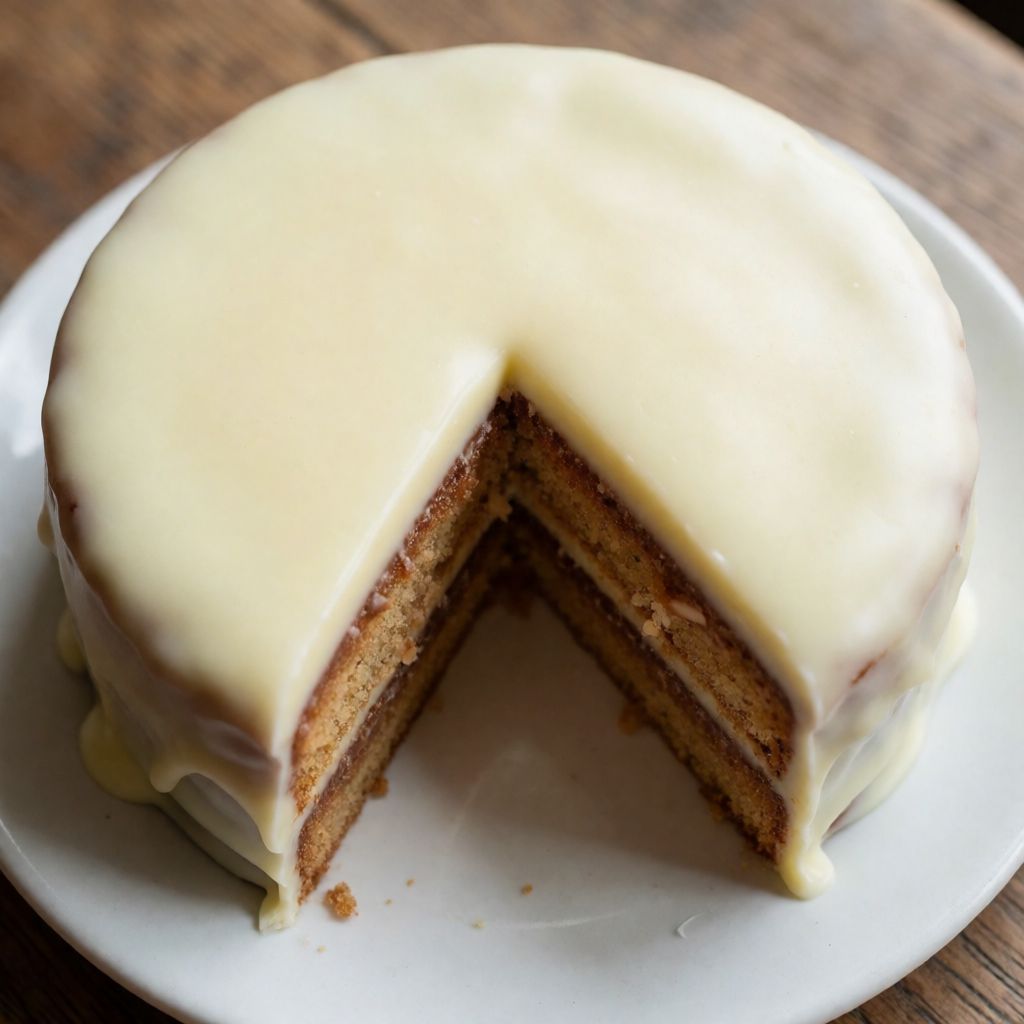
Sacher Cake with White Chocolate
A white chocolate twist on the classic Sacher cake, layered with strawberry jam and glazed in white chocolate.
Labels are worked out automatically from the ingredients and can be wrong. Check the packaging if it matters to you.
Ingredients
- 60 g Ground almonds
- 100 g Plain flour
- 5 pcs Eggs
- 130 g Caster sugar
- 120 g Butter
- 150 g White chocolate
- 400 g Strawberry jam
- 300 ml Double cream
- 500 g White chocolate
- 40 g Glucose syrup
- Desiccated coconut to taste







Steps
In a bowl, using an electric mixer, beat the room-temperature butter with 30 g of the caster sugar.
Add the egg yolks one at a time, beating continuously.
Add the melted white chocolate and mix with a spatula until smooth.
In a separate bowl, whisk the egg whites with the remaining sugar (100 g) into a stiff foam.
Gently fold the egg whites into the main batter, using an under-and-over motion.
Sift in the plain flour and ground almonds, folding carefully into the batter.
Pour the batter into a 22 cm tin and bake at 170°C (fan) for 30-35 minutes.
35 minRemove the sponge from the tin and let it cool completely at room temperature.
In a saucepan, mix the double cream with the glucose syrup and bring to the boil.
Add the chopped white chocolate, leave to stand for a few minutes, then stir until smooth.
Leave the glaze to cool.
Slice the sponge horizontally into three layers and fill with two generous layers of strawberry jam.
Place the cake on a wire rack and pour over half of the white chocolate glaze.
Chill the cake for about 20 minutes to let the glaze set.
20 minCoat the sides of the cake with desiccated coconut.
Whisk the remaining glaze with an electric mixer and transfer it to a piping bag.
This is Sacher's logic borrowed and bent: a dense almond sponge, split and glued with jam, drowned in a white chocolate glaze instead of dark. The Viennese original leans on the bitterness of dark chocolate to cut the sweetness of apricot jam — pull that out and put in white chocolate, which is basically cocoa butter, sugar and milk solids with almost no bitterness of its own, and you've removed the one thing holding the sweetness in check. The whole cake now has to find its balance somewhere else. That somewhere else is the strawberry jam: it needs real acidity, not just sugar, or the cake tips over into cloying. And it's the almonds: ground almonds in the sponge aren't a texture gimmick, they're fat and protein that blunt the flour's gluten, so the crumb stays dense and moist rather than turning into a dry vanilla sponge standing in for the real thing.
What decides whether it works is the egg whites and how you treat them. This sponge has almost no raising agent beyond air — you whip whites to a stiff foam and fold them in. "Stiff" here isn't a throwaway word: stop short and the foam collapses as soon as flour weight meets it, your eventual cake sits low and dense in a bad way, not the deliberate density Sacher wants. Fold with an under-and-over motion, scraping from the bottom of the bowl up over the top, because stirring in circles just beats the air straight back out — you've spent ten minutes whisking it in for nothing.
Ground almonds: buy them pre-ground if your kitchen doesn't have a food processor that'll do fine, dry grinding without turning them to almond butter — any oily nut ground too long turns into paste, and paste won't fold into batter evenly. If you're out, any finely ground nut with a neutral-to-sweet flavour works on the same principle — the job is fat and body, not almond flavour specifically, though hazelnuts will say so loudly.
Butter: room temperature means soft enough to take air when beaten with sugar, not melted — melted butter can't hold air pockets, and those pockets are part of what keeps this already-heavy batter from turning into a brick. Pull it out of the fridge an hour before, or if you forgot, a very short spell near (not on) a warm radiator does the same job without cooking it.
White chocolate, twice over — once melted into the batter, once as the glaze. For the batter, cheap white chocolate with vegetable fat instead of cocoa butter will still melt and still sweeten, but it won't set as cleanly in the glaze later, so if you're splitting a bar between the two uses, give the better one to the glaze, where its behaviour actually shows. For the glaze specifically, it needs to be chocolate that's mostly cocoa butter — that's what lets it melt smooth in hot cream and then set with a proper shine rather than staying greasy.
Strawberry jam: the acidity is the whole point, not a flavour note. A jam that's mostly sugar with a whisper of fruit will vanish under the white chocolate glaze and leave you a cake that tastes like one long sweet note with no edge. Use something with real fruit content — homemade, or a jam labelled with a high fruit percentage — and if strawberry isn't to hand, raspberry or sour cherry do the same structural job, sharpness against sweetness, better even, since they lean tarter.
Double cream and glucose syrup: double cream for fat content, which is what gives the set ganache body rather than a thin chocolate sauce. Glucose syrup you can leave out if you must — the cake will still work — but the glaze will be a touch less glossy and slightly more prone to going sugary if it sits a day or two. A spoon of liquid honey does something similar, though it'll bring its own flavour along, which isn't nothing in a cake this sweet already.
Some say Sacher cake has to have apricot jam and dark chocolate or it isn't Sacher — no, because the name travelled a lot further than the original recipe did, and what made it famous in Vienna was never a locked formula, it was a hotel's name on a cake good enough to be worth copying badly for a century. What you're making here keeps the construction — sponge, cut, jam, pour, set — and swaps the flavour register from bitter-and-sharp to sweet-and-sharp. That's a different cake wearing the same coat, and there's nothing wrong with that; just don't expect the Hotel Sacher to send flowers.
On patience: let the sponge cool fully before you slice it, not warm-ish, fully — a warm sponge is still setting its crumb, and a knife through it drags and tears instead of cutting clean layers. The same goes for the glaze sitting in the fridge for those twenty minutes: that's not downtime, that's the glaze actually becoming the texture you want instead of a liquid pretending to be one. In a domestic kitchen without a blast chiller, time at a steady cold is the only tool you have for that — don't rush it by cranking the freezer, because an uneven fast chill can crack a thin glaze shell rather than set it evenly.