
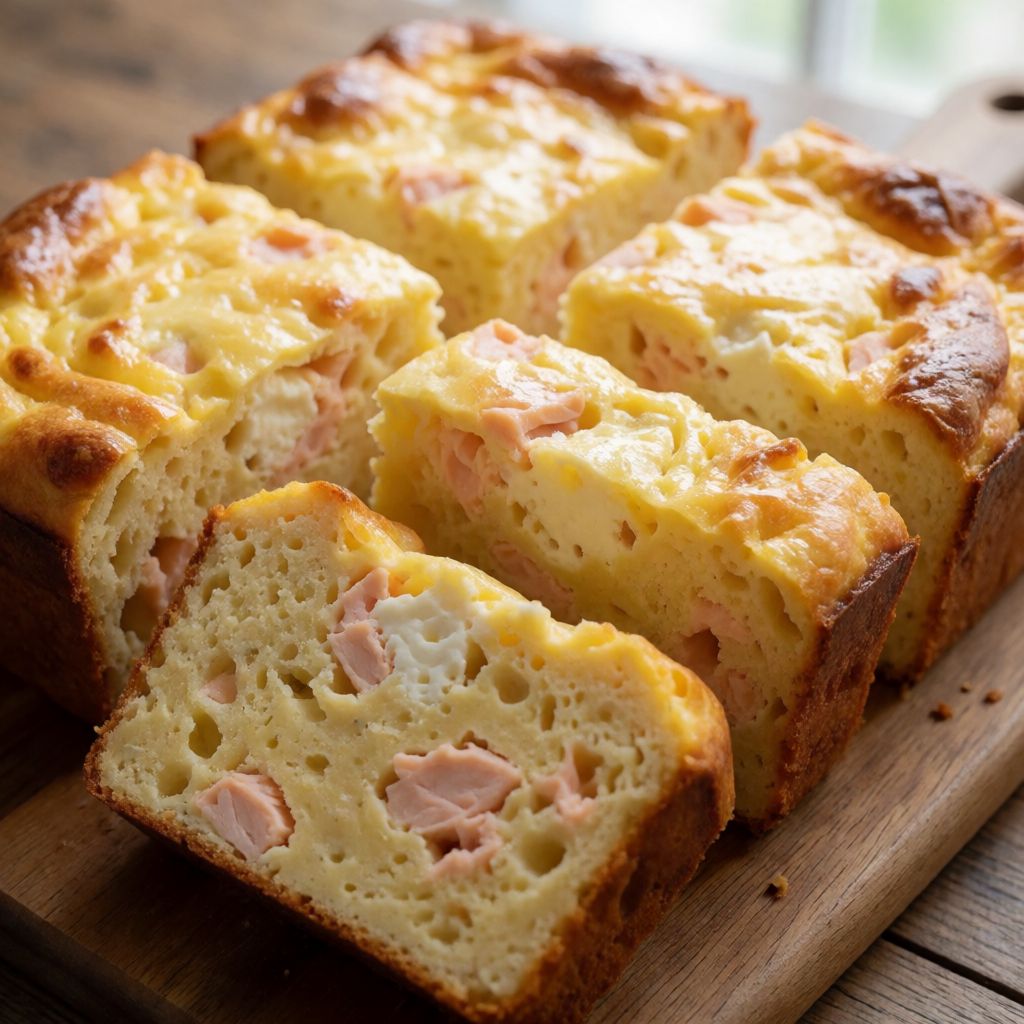
 AI photo
Soft Salmon and Cream Cheese Savoury Cake
A soft savoury cake topped with cream cheese, smoked salmon, rocket and black olives.
Labels are worked out automatically from the ingredients and can be wrong. Check the packaging if it matters to you.
Ingredients
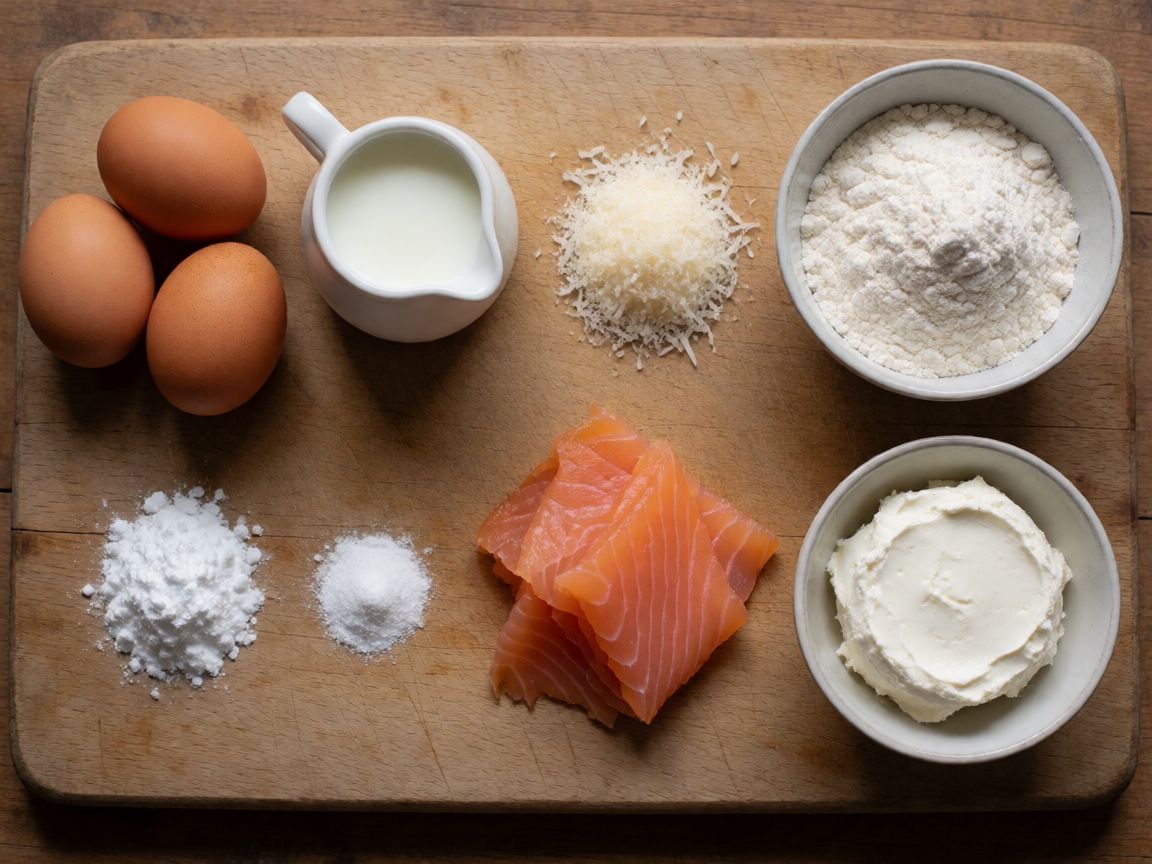
- 3 pcs Eggs
- 120 g Olive Oil
- 100 g Milk
- 80 g Parmesan
- 200 g Plain Flour
- 30 g Potato Starch
- 10 g Baking Powder
- 1 pinch Salt to taste
- 1 pinch Black Pepper to taste
- 100 g Smoked Salmon
- 200 g Cream Cheese
- 1 bunch Rocket to taste
- 1 pcs Black Olives to taste












Steps
Whisk the eggs with a mixer in a large bowl, gradually adding the olive oil, milk and Parmesan.
Sift in the plain flour, potato starch and baking powder, add to the egg mixture and mix until smooth.
Pour the batter into a greased 26-28 cm tin and smooth it out with a spatula.
Bake in a fan oven, preheated to 180°C.
28 minLet the base cool, remove it from the tin and turn it out onto a plate.
Spread with the cream cheese seasoned with salt and pepper, then top with the salmon, rocket and black olives.
This is the French "cake salé" turned savoury — a loaf-shaped Parmesan sponge baked plain, then dressed cold with cream cheese, smoked salmon and rocket, like an open sandwich built on cake instead of bread. It's a picnic and buffet thing, not a dinner thing: it slices into neat rounds, holds its shape at room temperature, and doesn't need a fork. That's the whole design brief.
What decides whether it works is the crumb of the base, and the crumb is decided by one thing: how much you let the egg-oil-milk mixture emulsify before the flour goes in. Olive oil and milk don't want to mix — they're oil and water at heart — and the eggs are the only thing holding them together. Whisk properly and you get a batter that's thick, pale and uniform, which bakes into a tight, moist crumb that won't crumble when you slice it cold. Rush it and the oil pools, the batter bakes patchy and greasy in spots, dry in others — the cake falls apart under its own topping.
The potato starch alongside the flour isn't decoration. Starch without gluten gives structure without toughness — it's why the slice stays tender instead of going bready, which matters a lot once this cake is eaten cold, days after baking, when gluten networks tend to firm up and turn chewy.
Some say a savoury cake is just a quiche without the pastry. No — a quiche sets by egg custard baked with its filling; this is a risen sponge, baked empty, dressed afterwards. The logic is completely different, and so is the texture you're aiming for: quiche is soft and wobbly inside, this is cakey and sliceable.
The eggs are the emulsifier and the leavening partner both — their proteins trap the air you beat in and hold the oil in suspension. Use them at room temperature if you can; cold eggs resist taking up oil smoothly, and that's one more way to end up with a greasy, uneven batter. Three eggs for this amount of flour is enough; don't be tempted to add a fourth "for richness" — it'll loosen the crumb past the point of holding its shape under the topping.
Olive oil is the fat, and here it needs to be a fairly neutral one — a shouting, bitter extra-virgin will fight with the salmon and Parmesan rather than support them. Any oil with no strong flavour of its own will do the structural job: a light olive oil, a plain vegetable or sunflower oil, even melted and cooled unsalted butter if you want more of a buttery edge, though butter will firm the crumb slightly once cold.
Parmesan here isn't a garnish, it's a seasoning built into the structure — its glutamates do the savoury work that would otherwise need a lot more salt, and its slight dryness soaks into the batter rather than pooling. Any other hard, well-aged grating cheese works on the same principle — Grana Padano, a mature Cheddar, even a strong Pecorino if you don't mind more bite — the test is "finely gratable and intensely flavoured for its weight", not "Italian".
Potato starch stands in for a bit of the flour to keep the structure light without gluten — cornflour does the same job if that's what's in your cupboard. The baking powder is doing real lifting work against a dense, oily batter, so don't eyeball it down — under-raised, this sits heavy and wet in the middle.
The tin size matters more than the oven dial here. A 26–28cm tin spreads the batter thin enough to bake through evenly in a domestic fan oven; go smaller and the middle will still be gluey when the edges are set, because heat has further to travel to the centre. 180°C fan is a moderate oven — gentle enough that the outside doesn't catch before the middle sets, which is the real risk with a batter this oil-heavy. Twenty-eight minutes is a lower bound, not a deadline: look for a cake that's pulled slightly from the tin's edge and springs back when you press it, rather than clock-watching. A skewer coming out clean is the honest test if you're unsure, and better than guessing by colour alone — Parmesan browns the top faster than the inside actually cooks.
Let it cool properly before you turn it out and before you dress it — this is patience as an ingredient, not an optional pause. Warm cake plus cream cheese means the cheese slides and melts into the crumb instead of sitting on top as a distinct layer, and you lose the whole point of the thing, which is contrast: dense cool cake, cold rich cheese, salty cured fish, bitter leaf. Smoked salmon can be swapped for any cold-smoked or cured fish you can get easily in the UK — smoked trout works well and is often cheaper. Cream cheese wants to be full-fat and plain — low-fat versions split and weep once seasoned and left to sit. Rocket brings the bitterness that stops the whole plate tasting one-note rich; watercress is the closest substitute if rocket isn't to hand.