
 AI photo
Smoked Salmon Roll-ups
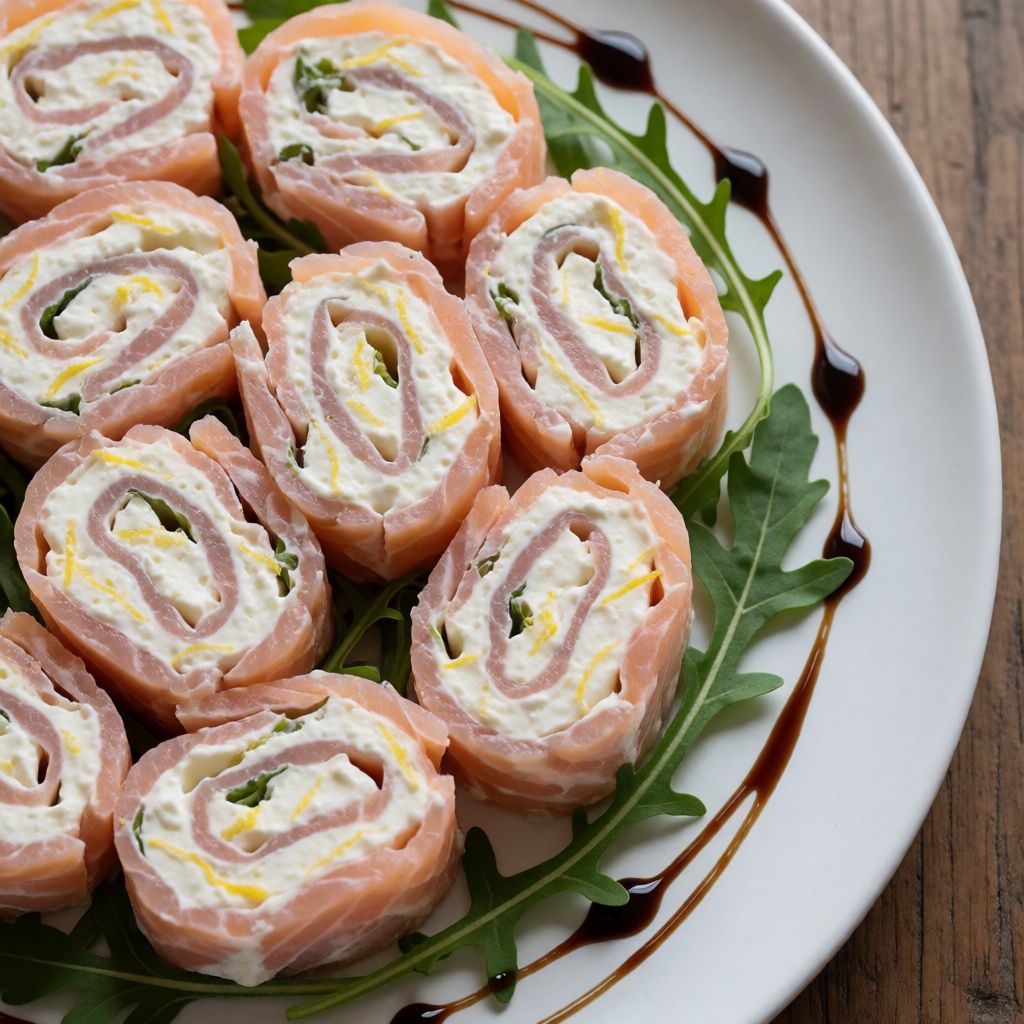
Smoked salmon rolled with lemon cream cheese in soft white bread, served with a balsamic-dressed rocket salad.
Labels are worked out automatically from the ingredients and can be wrong. Check the packaging if it matters to you.
Ingredients
- 100 g Smoked salmon
- 1 pcs Lemon zest
- 200 g Cream cheese
- White bread, thin-sliced to taste
- Rocket to taste
- Balsamic vinegar to taste
- Olive oil to taste
- Salt to taste
- Honey to taste









Steps
In a bowl, mix the cream cheese with the lemon zest until smooth.
Roll the slices of white bread slightly with a rolling pin to make them thinner.
Spread the bread with the cheese-lemon mixture and place a slice of smoked salmon on top.
Trim off any excess salmon with a knife and roll the bread up tightly.
Wrap the roll-ups in cling film and chill in the fridge for at least 30 minutes.
30 minMix the balsamic vinegar, olive oil, a pinch of salt and a little honey, and dress the rocket with it.
Take out the roll-ups, slice them into rounds or wedges, and arrange them on a bed of rocket.
This isn't cooking, it's construction. Cook time is zero, because nothing here meets heat — you're building a cold roll that has to hold its shape on its own, and everything in the method exists to make that happen. Three things decide whether it works: bread that bends instead of cracking, cheese that sets firm in the fridge, and a knife that cuts clean through something properly chilled.
The rolling pin isn't decoration. Fresh sliced white bread still has its gluten soft and intact — flatten it a bit and it goes pliable, like dough that's been given a rest. Skip that step and the bread fights you: it springs back, cracks at the fold, and your roll falls open on the plate instead of staying shut. Some people think any bread will do here, crusty or not — no, because crust doesn't bend, it snaps, and a snapped roll is just a sandwich that gave up.
The thirty minutes in the fridge is the real cooking step, even without heat. Cream cheese is mostly fat and water held in suspension — warm, it's a spread; cold, the fat firms and the whole thing behaves like glue. That's what lets you slice rounds instead of squeezing out a mess. The cling film isn't for hygiene, it's for shape: it keeps the roll tight while the cold does its structural work, the same job a kazan lid does for steam, except here the job is pressure, not heat.
Smoked salmon is the expensive line on this list, and everything else in the recipe exists partly to make 100g of it stretch across two people's worth of starter. That's not a trick, it's economics — cream cheese and bread are cheap, salmon isn't, so you wrap a little of the costly thing around a lot of the cheap thing and call it an antipasto. Buy cold-smoked salmon specifically — the thin, pliable, almost translucent slices, not hot-smoked, which is cooked through and flakes apart instead of rolling. If a slice tears when you lift it, it's too dry or too thin cut; ask for it cut slightly thicker and it'll behave.
Cream cheese needs to taste of nothing but itself — full-fat, plain, no added herbs or garlic fighting the salmon for attention. Philadelphia-style is the safe choice; mascarpone works too but it's richer and sweeter, so cut back any honey later if you use it. The lemon zest isn't for sourness, it's for the oil in the zest cutting through the fat of both the cheese and the smoke on the salmon — without it the whole roll tastes flat and one-note after the second bite. Use a fine grater and only the zest, no pith, or you get bitterness you didn't ask for.
The bread is a sandwich loaf, nothing fancier — any soft, closed-crumb white bread sold pre-sliced will do, which in a British kitchen means reaching for whatever's already in the bread bin. Day-old bread has started to dry and will crack under the rolling pin instead of yielding; if that's all you've got, a light spray of water before rolling buys it back some flexibility.
Rocket is there for bitterness against all that fat and smoke — watercress does the same job if that's what's in the fridge. The dressing is a small vinaigrette: oil with no smell of its own (a mild olive oil, not an aggressive extra virgin that argues with the lemon), balsamic for acid and a little sweetness, honey to round the sharp edge off the vinegar, salt to lift it all. If you're out of balsamic, lemon juice with a pinch of sugar gets you the same acid-sweet balance, just brighter and less syrupy.
None of this needs a hob, which is worth saying plainly: this is a make-ahead dish for a flat kitchen with limited space and one fridge shelf, built while you're doing something else — roasting on a Sunday, say — and ready when you want it, because the only clock running is the one in the fridge.