
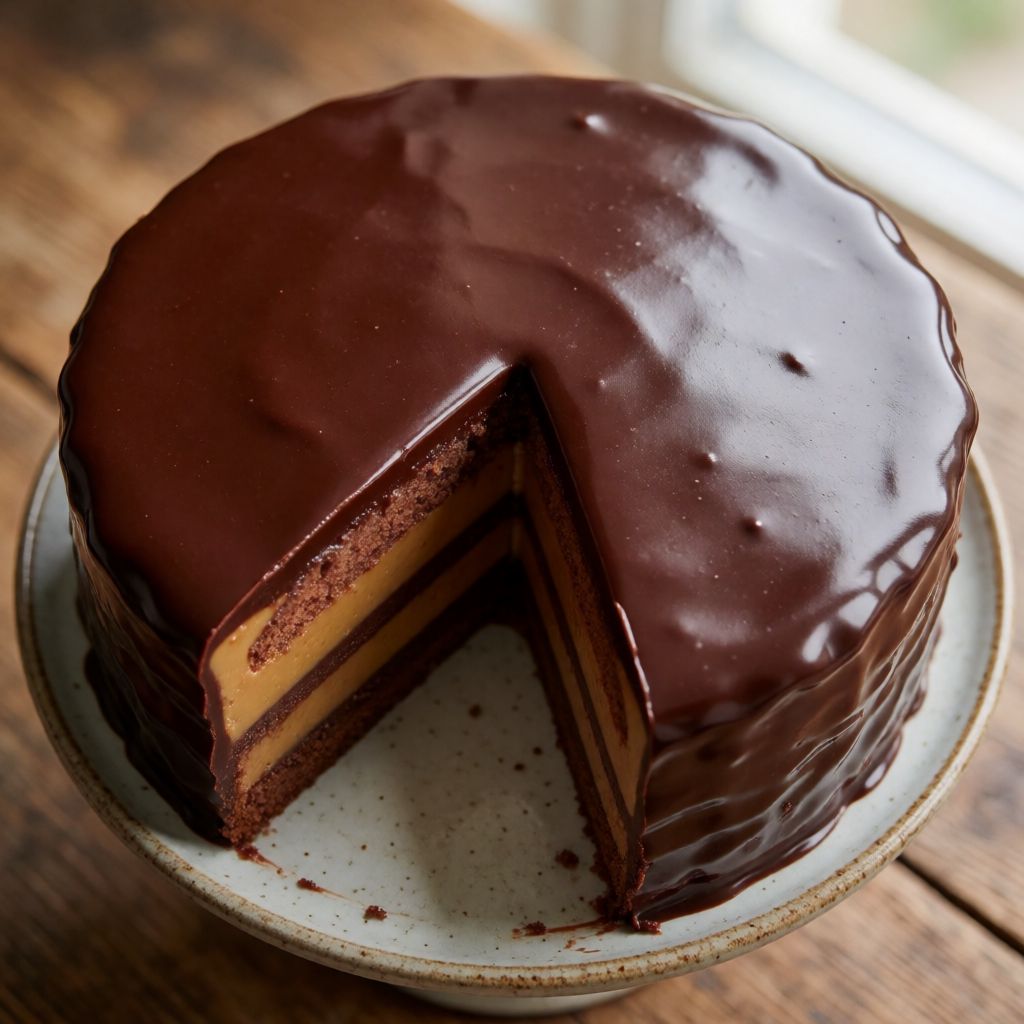
 AI photo
Snickers Cake
A rich chocolate sponge cake with salted peanuts, caramel and chocolate ganache, inspired by the flavours of a Snickers bar.
Labels are worked out automatically from the ingredients and can be wrong. Check the packaging if it matters to you.
Ingredients
- 130 g Caster sugar
- 130 g Double cream
- 150 g Butter
- 150 g Dark chocolate finely chopped
- 3 pcs Eggs
- 150 g Caster sugar
- 100 g Plain flour
- 1.5 tsp Baking powder
- 1 pinch Salt
- 50 g Peanuts salted
- 150 g Double cream
- 200 g Dark chocolate
- 25 g Peanuts whole and roughly chopped, salted
- 1 pinch Edible gold dust







Steps
Slowly melt the sugar in a heavy-bottomed pan over a low heat, being patient — this can take a little while. Once half the sugar has melted, add a few spoonfuls of the cream, stir, then pour in the rest of the cream.
7 minCook the caramel until it reaches 106°C on a sugar thermometer.
Put the pan of caramel in the fridge.
20 minMelt the butter in a pan over a low heat. Remove from the heat and stir in the chocolate until the mixture is completely smooth.
5 minSeparate the egg yolks from the whites into two bowls. Whisk the yolks with the sugar until thick and airy, then fold in the chocolate-butter mixture.
3 minMix the flour, baking powder and salt, sift into the batter and stir well.
2 minWhisk the egg whites to stiff, glossy peaks. Gently fold them into the batter with upward strokes to keep the air in.
4 minLine the base of a 20cm springform tin with baking paper, grease the sides with butter and pour the batter into the tin.
Sprinkle the batter with peanuts and bake in a preheated fan oven at 170°C for about 30 minutes. The centre should remain slightly underbaked.
30 minLeave the sponge to cool completely in the tin.
25 minCombine the cream and chocolate in a bowl over a bain-marie and heat, stirring, until the chocolate has melted and the mixture is smooth.
5 minChill the ganache in the fridge until it reaches a spreadable consistency.
15 minPour the caramel sauce evenly over the top of the cooled sponge, then spread the ganache over the cake.
5 minRoll a few peanuts in the gold dust and decorate the cake with chopped peanuts and the golden peanuts.
3 min
This is a brownie pretending to be innocent, with a caramel lid and a chocolate roof, built to taste like the bar it's named after but behave like a cake. Three layers, three different jobs: a dense, barely-set chocolate sponge underneath, a sheet of soft caramel in the middle, and a ganache that sets firm enough to cut clean slices. Nobody is pretending this is light.
What actually decides whether it works is restraint in two places: how far you cook the caramel, and how far you cook the sponge. Push either one five minutes too far and you get something that tastes burnt-sweet on top and dry underneath — the opposite of a Snickers, which lives on contrast between soft and chewy, not on crunch.
The peanuts aren't decoration, whatever the gold dust at the end suggests. Salted peanuts against sweet caramel is the entire point of a Snickers bar — salt is there to stop the sweetness from becoming one flat note. Leave them out and you've made a chocolate caramel cake, which is a perfectly good thing, just not this thing.
Start with the caramel, because it's the one place a thermometer earns its keep — guessing by colour here is how people end up with caramel that's grainy or bitter. Sugar melted dry, slowly, patient — rush the heat and it scorches at the edges before the centre has even gone liquid, which is the real cause of that bitter burnt-sugar taste people blame on "bad sugar." Cream goes in gradually because cold cream hitting hot sugar all at once makes it seize and spit — a few spoonfuls first calm it down, then the rest follows without drama. 106°C is past soft-ball but well short of hard-crack, which is exactly why this caramel stays pourable and soft once cooled rather than turning into toffee you could break a tooth on. Some say you need a copper pan for caramel — no, because what copper actually gives you is faster, more even heat transfer; any heavy-bottomed pan does the job, it just asks a little more patience of you.
The butter and chocolate melted together, off the heat, is what gives the sponge its fudgy density rather than a dry crumb — this isn't a cake that rises and holds shape through structure, it's one held together by fat and egg. That's why the yolks get whisked with sugar until pale and thick first: that's where the air comes from, since the small amount of flour and baking powder here isn't doing much lifting. The egg whites do the rest of the work, and folding them in with upward strokes rather than stirring is there to protect that air — stir hard and you knock it straight back out, and the sponge bakes heavy instead of just dense. Any dark chocolate with a cocoa percentage you actually like eating on its own will work; the cheap stuff with vegetable fat substituted in won't melt the same way and leaves a waxy feel.
Baking it underdone in the centre isn't a mistake to fix — a Snickers-style cake wants that fudgy give in the middle, and a springform tin means you can get the sides fully set and crisp-edged while the middle stays soft, because the heat reaches the thin edge of batter against metal faster than it reaches the centre. Push it until a skewer comes out clean and you've traded the soft bite for something closer to an ordinary chocolate cake, which rather defeats the point.
The ganache is simple chemistry, not a trick: chocolate melted gently with cream over a bain-marie rather than direct heat, because direct heat on chocolate alone seizes it into a grainy mess long before it's properly melted — the water bath keeps the temperature low enough that the fat in the chocolate stays emulsified with the cream instead of splitting. Chilling it afterwards isn't optional either; poured warm straight onto the cake it runs off the sides rather than sitting as a layer, so give it the fifteen minutes to firm up to something you can actually spread, like soft butter rather than pouring custard.
On substitutions: double cream is there for its fat content holding the caramel and ganache together, so anything below about 35% fat will be thinner and more likely to split — if that's all you have, go lighter on heat and watch it more closely rather than trusting the clock. Salted peanuts aren't really swappable for unsalted ones without adding a pinch of salt yourself, since the salt is doing a job, not a flavour. The gold dust is pure theatre and entirely skippable — a cake that tastes right doesn't need glitter to prove it.
Feeds ten as a proper slice, more if people have just come from a Sunday roast and are only after a taste. Make the caramel and ganache a day ahead if it suits your evening better — both keep well chilled, and the cake only wants assembling once the sponge has had its full cool-down in the tin, which you shouldn't rush any more than the caramel. Patience, twice over, is the actual ingredient holding this whole thing together.