
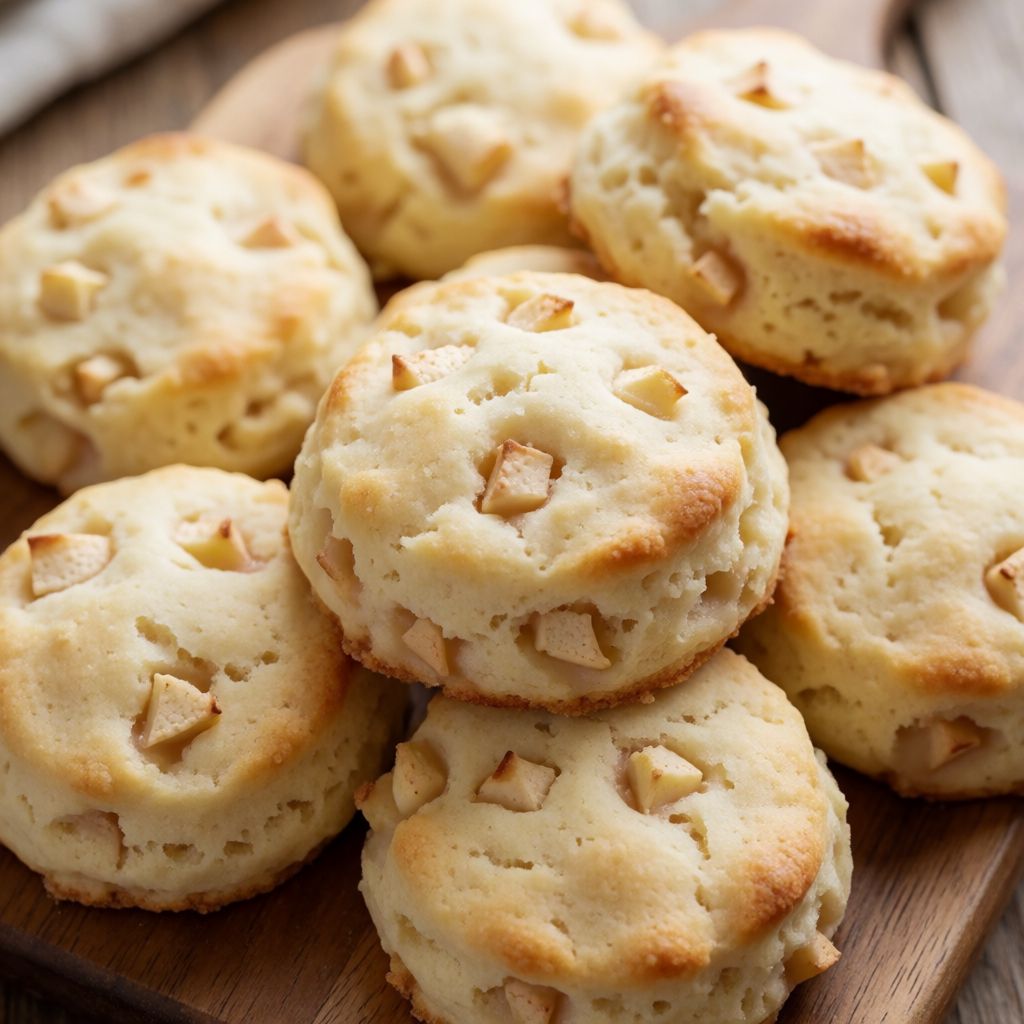
 AI photo
Soft Apple Biscuits
Soft little biscuits with chunks of apple, rolled in brown sugar and icing sugar before baking.
Labels are worked out automatically from the ingredients and can be wrong. Check the packaging if it matters to you.
Ingredients
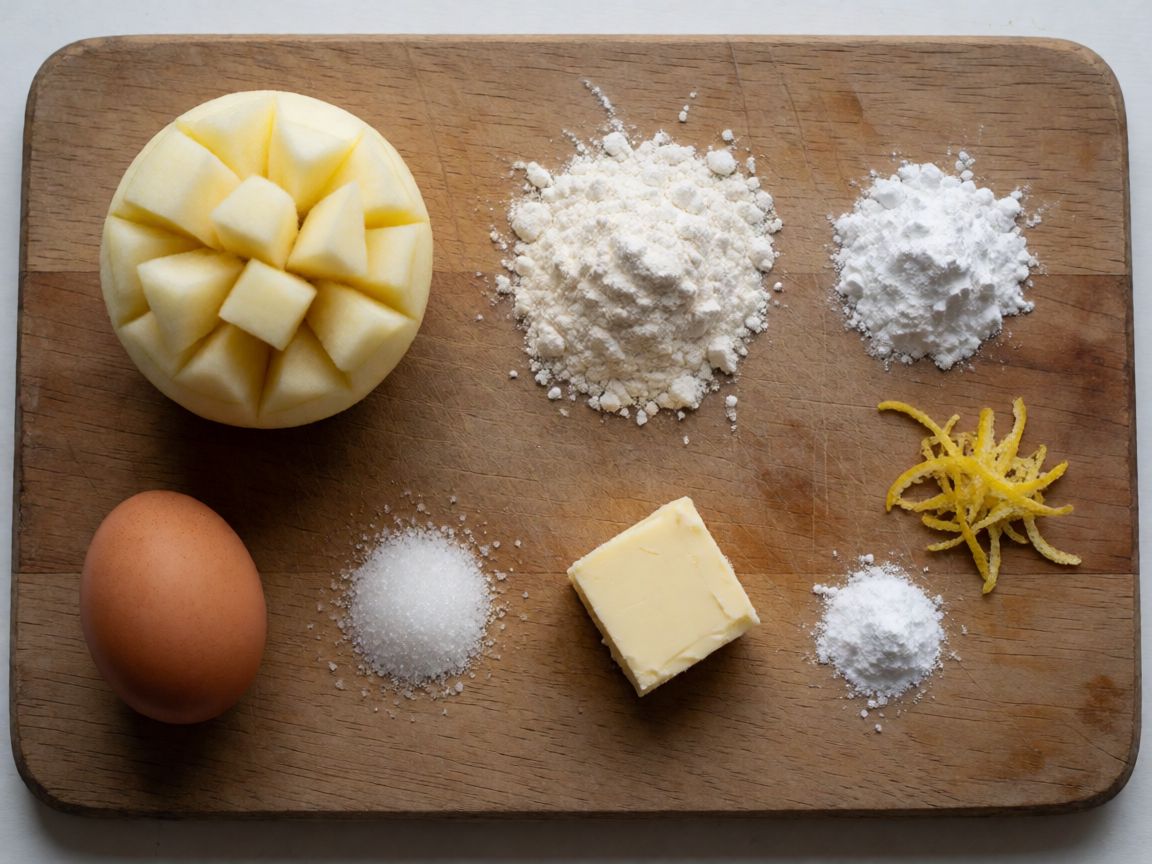
- 1 pcs Apple peeled and cut into small cubes
- 250 g Plain Flour
- 50 g Potato Starch
- 1 pcs Egg
- 100 g Sugar
- 120 g Butter
- 1 pcs Lemon Zest
- 8 g Baking Powder
- 2 tbsp Brown Sugar for coating
- 2 tbsp Icing Sugar for coating










Steps
Put 100 g sugar into a bowl and add 120 g butter, cut into cubes. Beat with a mixer until smooth.
Add the egg and lemon zest and mix well.
Add 50 g potato starch and the baking powder, then add 250 g flour in two or three batches. Mix first with the mixer, then with a spatula.
Add the apple, peeled and cut into small cubes, and knead the dough by hand.
Cover the bowl with cling film and chill in the fridge for 1 hour.
60 minTake out the dough and shape small portions into balls, a little bigger than a hazelnut.
Roll each ball first in brown sugar, then in icing sugar.
Place the biscuits on a baking tray lined with baking paper and bake in a fan oven preheated to 180°C for 15-20 minutes.
18 minLet the biscuits cool slightly before serving.
This is a cookie that argues with itself. Butter and sugar beaten smooth want to spread flat in the oven — that's what creaming does, it traps air and softens structure so the fat can run. Potato starch and a lump of raw apple want the opposite: starch cuts the flour's gluten short, and the apple throws in a shot of water and moisture mid-bake. The result sits between a shortbread and a little cake — crisp-edged where the sugar coating caramelises, soft and almost damp inside where the apple sat.
What decides whether it works is how small you cut that apple and how cold the dough is when you shape it. Big apple cubes don't cook through in eighteen minutes at fan 180°C — they stay wet and raw-tasting, and they can split the biscuit as it bakes, because trapped moisture has to go somewhere. Small cubes, the size of a baby pea, release their juice fast enough to vanish into the crumb instead of sitting in it as a pocket.
Some say chilling dough before baking is just "to make it easier to handle." No — the hour in the fridge is what stops these spreading into puddles. Butter beaten warm and soft is liquid at room temperature; if you shape and bake it straight away, it melts before the flour and starch have set a structure around it, and you get thin, greasy discs instead of rounded biscuits. Cold butter needs real oven heat to start moving, by which point the outside has already begun to firm.
Flour here is just flour — nothing fancy, plain British flour at 250 g is already low enough in protein not to fight you. Potato starch is doing the real engineering: at 50 g against 250 g flour, it's roughly one part in six, enough to shorten the gluten and give that sandy, soft bite rather than a chewy one. If you have none, cornflour does the same job — it's starch without protein either way, so the substitution is exact, not approximate. Don't reach for self-raising flour instead of plain-plus-baking-powder; you'd lose control of how much lift you're actually getting, and 8 g here is a measured amount, not a guess.
Butter at 120 g needs no pedigree, just no strong flavour of its own beyond butter — salted or unsalted both work, salted just needs you to go a little easier mentally on any salt you'd otherwise add (there isn't any in this recipe, so don't worry). The one rule for the creaming step: butter should be soft enough to dent with a finger, not soft enough to look shiny or oily. Oily butter has started to split, and a split fat creams into bubbles instead of a smooth paste — your biscuits come out denser and greasier for it.
The egg binds and the lemon zest is the only perfume in the whole dough — apple alone, cooked, tastes surprisingly flat and sweet-nothing, and zest is what makes it smell like apple rather than just taste vaguely of fruit. Use the zest only, not the juice; juice adds acid and water you haven't accounted for in the starch ratio, and the dough will behave differently.
On the apple itself: any firm, not-too-juicy apple works, because a watery one — a very ripe eating apple, for instance — will bleed more liquid into the dough and you'll feel it, the dough will be stickier and harder to roll into balls. A slightly tart, firmer apple, something like a Bramley cooking apple cut small rather than a soft Gala, holds its shape and its water better. Peeling isn't about tradition, it's about texture — the skin doesn't soften in eighteen minutes at that heat, so it stays as a small tough thread through an otherwise soft bite.
On your hob reality: a UK fan oven at 180°C is the right heat for this — hot enough to set the sugar crust before the butter fully melts, but not so hot it colours the outside before the inside's done. If your oven runs hot or has no fan, drop it 10 degrees as a rule of thumb and trust the biscuits, not the clock: they're done when the tops have gone from wet-pale to a dry, slightly cracked matte, and the underside has turned the colour of golden syrup, not wet sand. Fifteen to twenty minutes is the window, not the instruction — the first time you make these, check at fifteen and decide from there, because every oven and every apple's water content shifts that number.
The hour of chilling is patience you're not allowed to skip. You can extend it — dough can sit overnight, covered, and will shape even more cleanly cold — but you can't shorten it without the butter taking its revenge in the oven. If you're impatient, ten minutes in the freezer gets you most of the way, but the fridge hour is also giving the starch and flour time to properly hydrate, which affects how the dough rolls as much as how it bakes.