
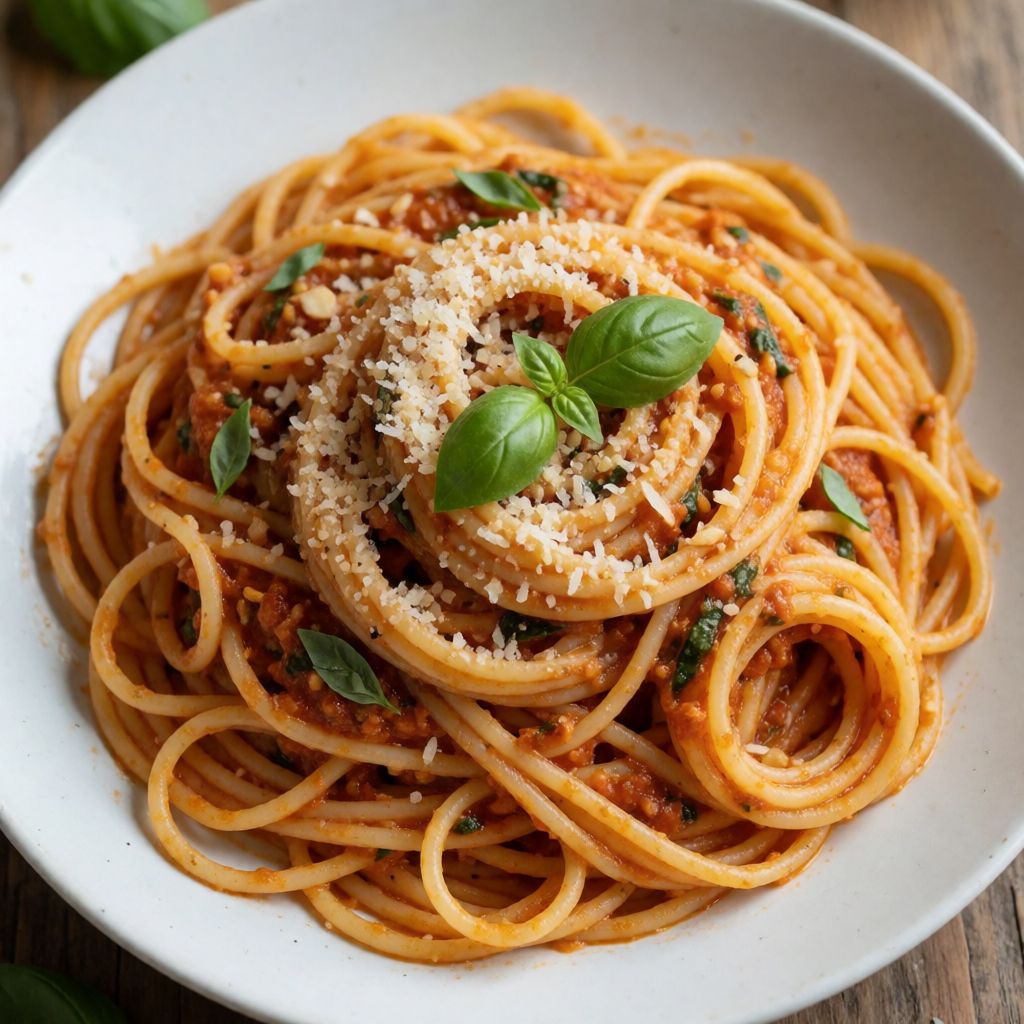
 AI photo
Spaghetti with Trapanese Pesto
A simple raw pesto from Trapani, Sicily, made with almonds, tomatoes, basil and garlic, tossed with spaghetti.
Labels are worked out automatically from the ingredients and can be wrong. Check the packaging if it matters to you.
Ingredients
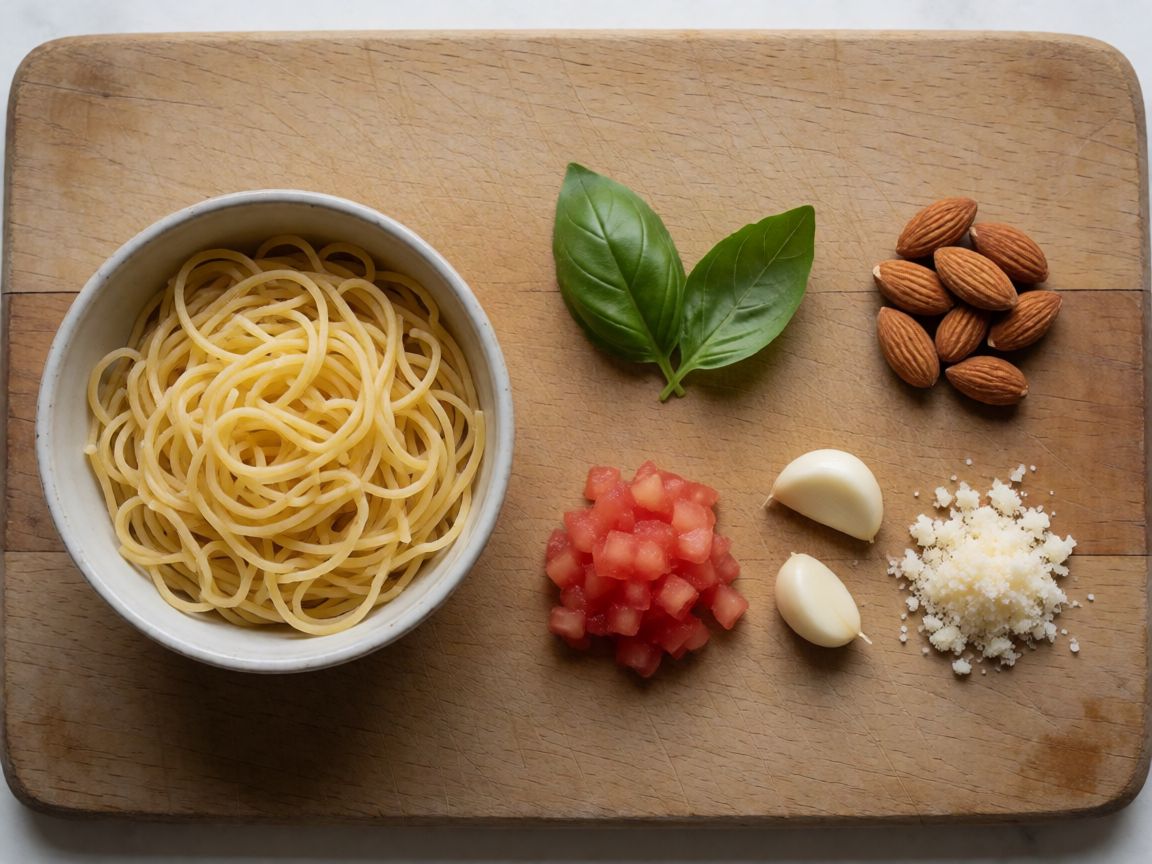
- 350 g Spaghetti
- 2 pcs Basil
- 100 g Almonds
- 150 g Cherry tomatoes
- 2 clove Garlic
- 75 g Pecorino Romano
- Olive oil to taste
- Salt to taste
- Black pepper to taste









Steps
Pound or blitz the basil, garlic and almonds in a mortar or blender.
5 minBlanch the cherry tomatoes for a few minutes, then peel and deseed them.
5 minTransfer all the ingredients to a blender, add the Pecorino Romano, olive oil, salt and black pepper.
3 minBlend until smooth and creamy.
2 minBring a large pot of salted water to the boil and cook the spaghetti until al dente.
10 minPour the sauce over the spaghetti and toss, adding a little of the pasta cooking water.
2 minIf you like, add extra Pecorino Romano and chopped almonds.
1 minServe the spaghetti with pesto, garnished with a fresh basil leaf.
1 min
This is pesto without Liguria's address. Basil, garlic, nuts, hard cheese, oil, salt — same skeleton as the Genoese sauce everyone knows, but built where pine trees don't grow and tomatoes do. Trapani sits on the western tip of Sicily, closer to Tunis than to Rome by sea; almonds came north from Arab orchards centuries before pesto was fashionable anywhere, and tomatoes travelled the same water routes later. What you get is pesto rewritten in a different larder, not a variation for fun.
What decides whether it works isn't the blender, it's a kind of temperature control you don't usually think of as cooking: nothing in this sauce meets a flame except the tomatoes for a few seconds and the pasta. The basil has to stay cool and green the whole time. Blend it too long, too fast, hot from blade friction, and the chlorophyll breaks down — the sauce slides from bright to muddy olive and picks up a faint bitterness, like wilted spinach water left standing. That's not a seasoning fault you fix with more salt. That's heat you put in by accident.
Some say pesto needs a mortar, a blender ruins it. No — because a mortar is just a way of limiting how much heat and air go into the leaf, and a food processor pulsed in short bursts does the same job faster. What actually ruins pesto is running the motor continuously until the blade warms and the basil goes from bruised to half-cooked. Pulse, stop, scrape, pulse again. The mortar never had magic hands, it had patience — a machine can borrow that too, if you give it in doses.
Basil — two decent handfuls, not two supermarket packets already gone soft. Rub a leaf between your fingers: it should smell sharp and peppery, not flat and grassy. That smell is the whole of this sauce's aroma, since nothing cooks long enough here to build flavour the slow way. Tired basil gets a minute in ice water before blending, the same trick that revives limp lettuce — worth doing rather than blending bruised leaves and blaming the recipe.
Almonds — not a lesser pine nut, a different economy. Liguria had pine forests on its hills; Trapani had almond orchards planted a thousand years earlier by Arab settlers, so almonds were the cheap local nut and pine nuts would have been an import nobody there needed. Use blanched, skinned almonds — the brown skin carries tannin, which turns the sauce grey instead of pale jade and adds a bitterness nobody asked for. Skin them yourself if that's all you've got: a minute in boiling water and the skins slip off between finger and thumb. Walnuts or hazelnuts can stand in if that's the cupboard you've got, but at that point you're cooking a cousin, not this dish — no harm in it, just know what you're eating.
Cherry tomatoes carry the only sugar and acid in the whole bowl. Blanching isn't about cooking them, it's shocking the skin loose from the flesh so it peels in one piece instead of you fighting it with a knife and losing half the fruit. Deseeding matters because the seeds and the jelly round them hold water and a slight bitterness — leave them in and the sauce turns thin and watery the moment it meets hot pasta, and no extra cheese rescues a sauce that's drowning. UK cherry tomatoes are often picked for shelf life over ripeness; press one gently at the stem end, and if it gives a little and smells faintly sweet there, that's a usable batch. Rock-hard and odourless means more sugar than this sauce can ever coax out of it.
Garlic — two cloves, raw, and that's deliberate, not laziness. Nothing here simmers long enough to soften garlic's bite the way a ragù does, so the sharpness stays in the finished sauce on purpose. If raw garlic is genuinely too much, blanch the cloves in their skins alongside the tomatoes for a minute — it takes the aggressive edge off without losing the flavour. But that's a compromise, not an improvement: this sauce is meant to carry one sharp note somewhere, the way a good vinaigrette needs acid you can actually taste, not acid you've smoothed away.
Pecorino Romano is a hard, aged sheep's cheese, salty enough to be doing seasoning work as much as flavour work. Sheep's milk runs higher in fat and sharper in tang than cow's, which is why Parmesan works as a texture substitute but a quieter one — swap it and taste before adding salt, because you'll likely need less, not more. Buy it as a block and grate it yourself; the pre-grated cheese sold in tubs has usually dried out enough to taste chalky, and chalky cheese makes a chalky sauce that oil can't fix afterwards.
Olive oil needs to taste of something because nothing cooked gives this sauce flavour by heat — the oil is one of maybe four flavours in the bowl and has to carry real weight, which is why a neutral vegetable oil would flatten the whole thing. Use something you'd eat on bread. And don't skip the splash of pasta cooking water at the end: this sauce is fat and solids with almost no liquid of its own, and tossed straight onto dry-ish spaghetti it clumps instead of coating, because there's nothing to carry the oil onto the starch on the strand's surface. The starchy, salty water does that binding job — add it gradually, tossing as you go, and you'll see the exact moment the pasta turns from matte to glossy. That moment is doneness for the sauce, the way the carrot bending is doneness for the carrot.