
 AI photo
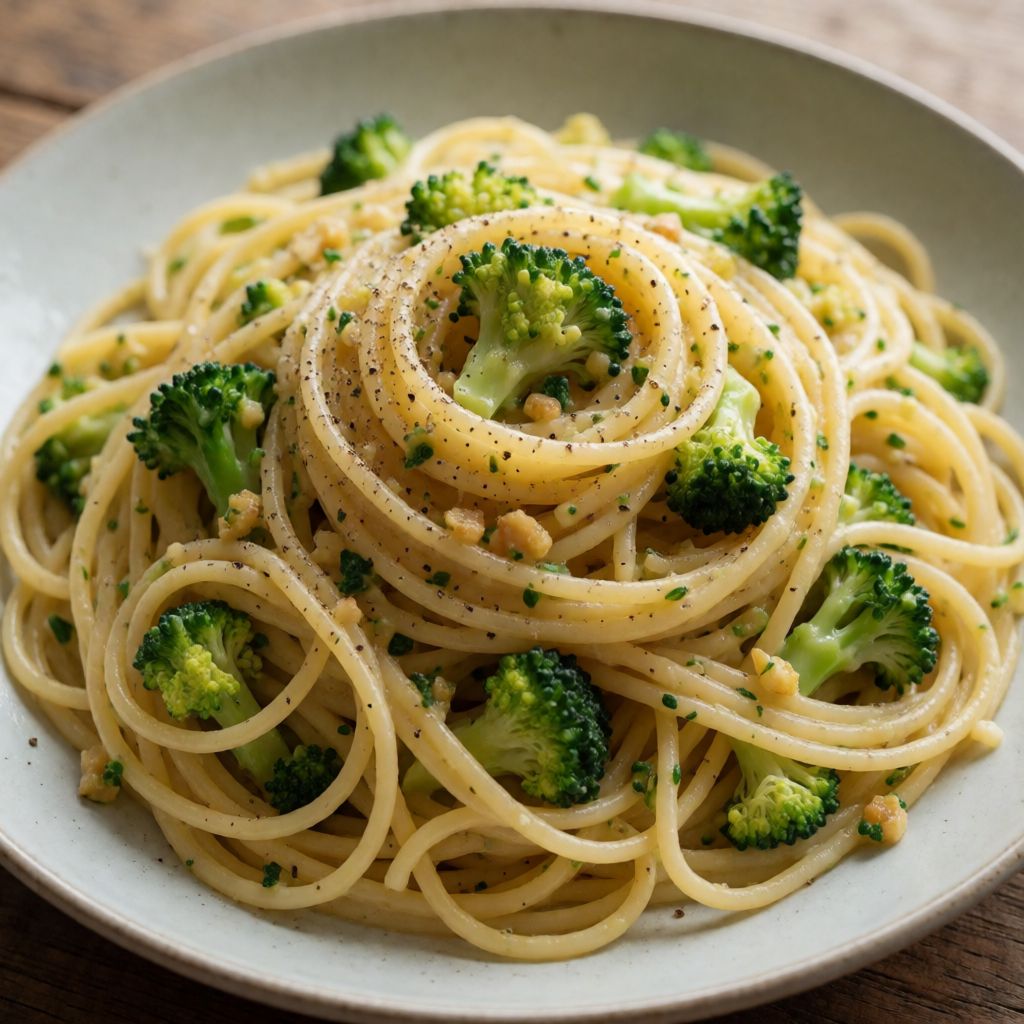
Spaghetti Carbonara with Broccoli
A creamy spaghetti carbonara brightened with broccoli, tossed together with eggs, parmesan and pecorino romano.
Labels are worked out automatically from the ingredients and can be wrong. Check the packaging if it matters to you.
Ingredients
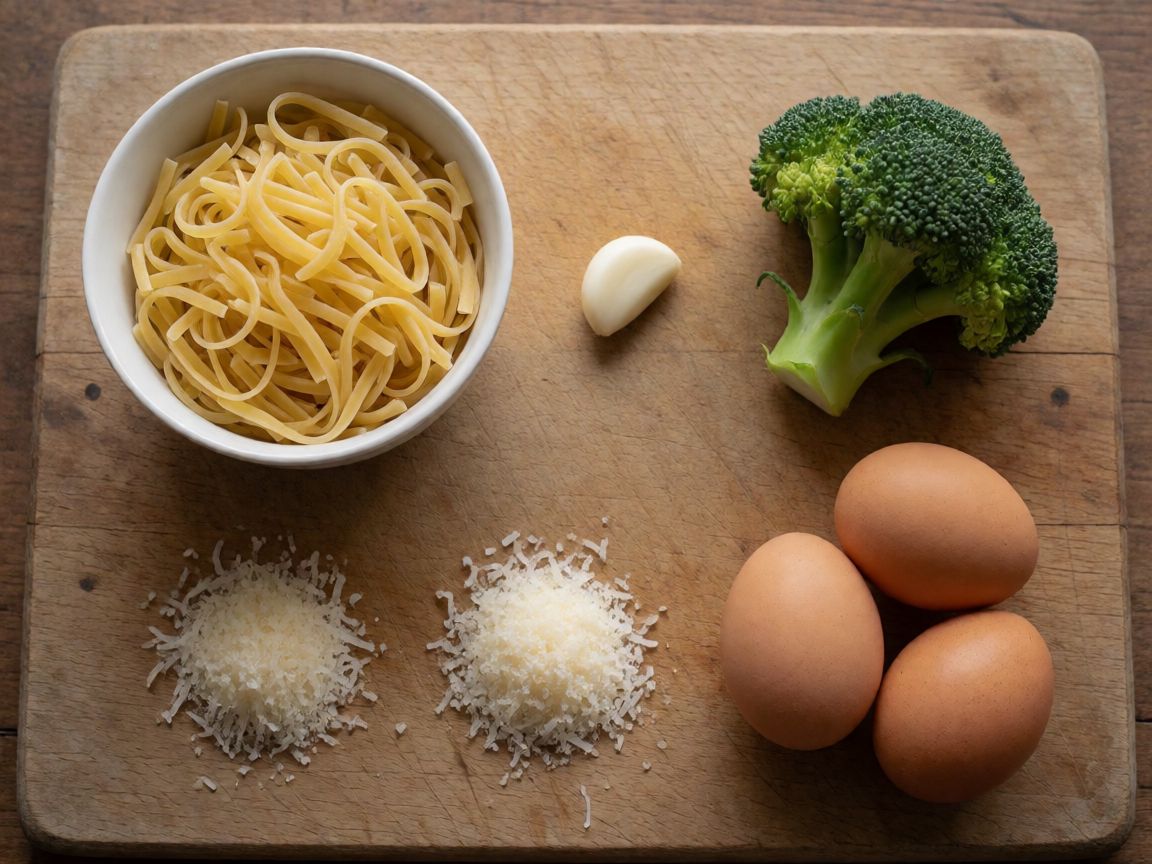
- 400 g Spaghetti
- 1 clove Garlic
- 1 pcs Broccoli
- Olive oil to taste
- Black pepper to taste
- White pepper to taste
- 3 pcs Eggs
- 1 tbsp Parmesan
- 1 tbsp Pecorino Romano
- Salt to taste










Steps
Cut the broccoli into florets and boil until just tender.
Sauté the broccoli in a pan with olive oil and garlic, then remove the garlic.
Cook the spaghetti in plenty of salted boiling water.
In a bowl, whisk the eggs with a spoonful of water, then stir in the parmesan, pecorino romano, salt and black pepper.
Drain the spaghetti al dente, tip into the bowl with the egg mixture, add the broccoli and toss together.
Serve sprinkled with grated pecorino romano.
Call this what it is: carbonara technique wearing a green vegetable instead of its usual pork jacket. The real backbone of carbonara — guanciale or pancetta, rendered slowly until it leaves fat and crisp bits in the pan — is gone here. Olive oil and garlic do the job of releasing flavour into the fat, but they can't replace the salt-cured richness that normally carries the egg sauce. Know that going in, and judge the dish on its own terms, not against a plate of spaghetti alla carbonara from Rome.
What decides whether this works has nothing to do with the broccoli and everything to do with the eggs. You're not making a sauce you pour — you're making an emulsion that sets around hot pasta using only the heat already stored in the strands and the pan. Too much heat and the egg clots into scrambled flecks: a texture fault, not a seasoning one. Too little and you get wet, raw-tasting egg sliding off the noodles. The right result looks glossy, clings, and has no visible curd.
Some say carbonara needs cream to be silky — no, because the silk comes from egg, cheese fat and the starchy water the pasta leaves behind, whipped together while everything cools from boiling to just-hot. Cream is a safety net for people afraid of their eggs splitting, or a shortcut invented by kitchens with no time to manage the emulsion by hand. You don't need the net if you control the heat.
Spaghetti: pick a pasta that holds its bite past the al dente point, because it sits in a bowl with hot egg for a moment before serving and keeps cooking a little from residual heat. Thin, soft noodles turn to paste under that extra warmth; a sturdier durum spaghetti doesn't. Before you drain it, take a mugful of the cloudy cooking water out — that starch is not waste going down the sink, it's the thing that loosens the egg-cheese mixture into a sauce instead of a paste. Skip that step and you'll be adding tap water later, which does nothing but dilute.
Eggs: three whole eggs for 400g of pasta is a lean ratio — this isn't a custard, it's a light coating. Use the freshest eggs you have, because a fresh egg holds together better as it warms and is less likely to separate into watery white and tight yolk. The trick that actually prevents the dreaded scramble isn't a magic ratio, it's where you do the mixing: off the heat entirely, pan away from the burner, pasta tipped in warm but not screaming hot, and the egg stirred through rather than dumped and left still. If your pan is still radiating heat from the stove, give it thirty seconds resting on a cold part of the hob or a trivet first — a British kitchen rarely has a kazan's gentle, even warmth, so a direct-flame domestic ring overshoots fast and that's usually where the curdling comes from, not the eggs themselves.
Parmesan and pecorino together, not one or the other: pecorino is sheep's milk, sharper and saltier with more fat, parmesan is milder and nuttier. Together they balance so neither the salt nor the richness runs away with the dish. Any hard, aged cheese that melts without turning stringy will stand in for either — avoid anything high in moisture like mozzarella, which goes elastic rather than silky when it meets heat.
Garlic goes in to flavour the oil, then comes straight back out. Leave it in and it keeps cooking in residual heat after you've stopped paying attention, and cooked-too-long garlic turns bitter and sharp rather than sweet — that bitterness transfers straight into the oil and from there into everything else. Pulling it out is not fussiness, it's the one move that stops the whole pan tasting of burnt garlic skin.
Broccoli: cut the florets roughly the same size so they finish blanching together — an odd one left half-raw while the rest is tender is a cutting-board problem, not a stove problem. Don't throw the stalk away out of habit; peel the tough outer layer and slice the pale core thin, and it cooks in the same pan just as happily — cheap, and it's most of the vegetable by weight.
Olive oil, black and white pepper: the oil here is doing flavour work, not just heat-transfer work, so use one you'd be happy to taste on its own — save the good bottle for a last drizzle at the table rather than burning its character off in the pan. Black and white pepper aren't interchangeable for the same reason wine and vinegar aren't — white pepper is fermented and dried differently, giving a rounder, more floral heat with no dark flecks in a pale sauce, which is a cosmetic choice some cooks make for a sauce that's meant to stay creamy-looking rather than speckled. Use whichever pepper you have; the dish doesn't live or die on it. Patience, on the other hand, does — rush the final toss over too much heat and you've made scrambled eggs with pasta in them; take your time off the burner and you've made something closer to what the technique was meant to be.