
 AI photo
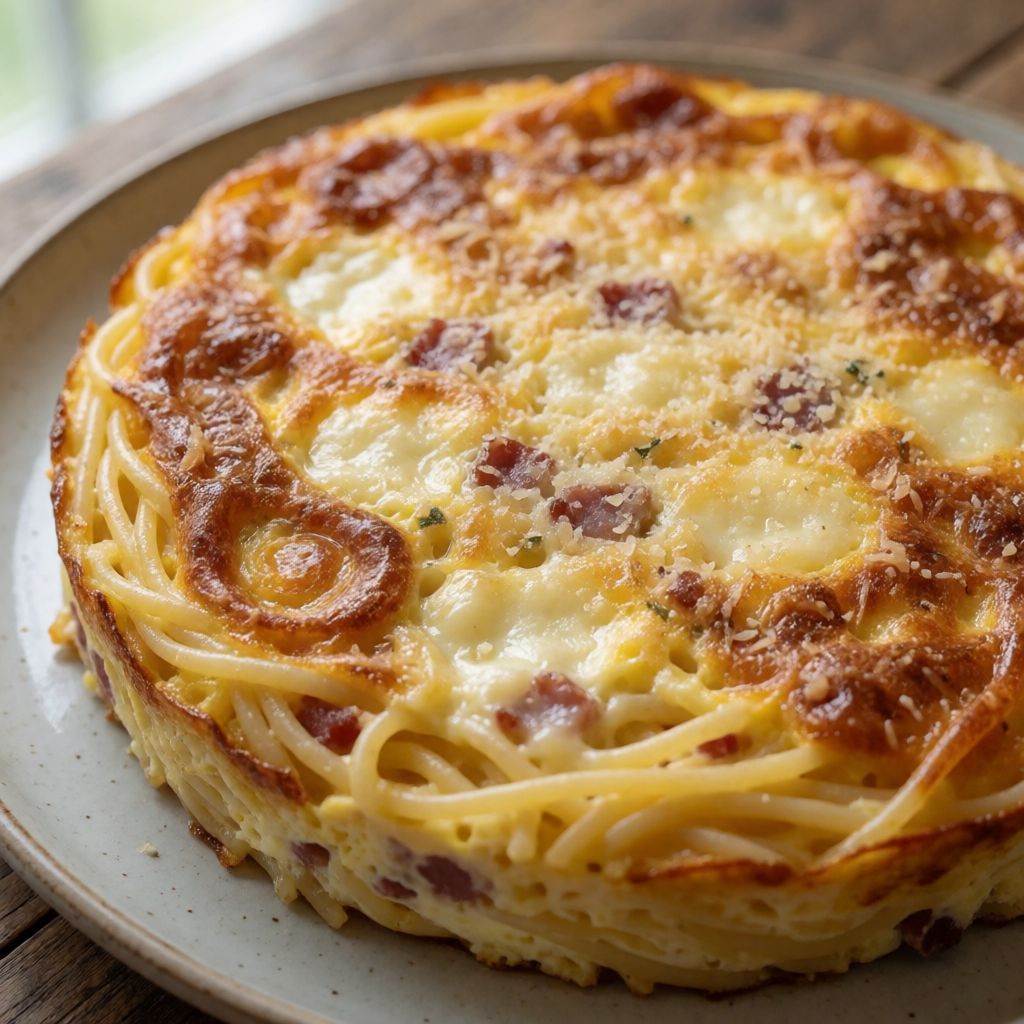
Campanian Spaghetti Frittata
A Campanian-style frittata made from leftover spaghetti, fried until crisp with smoked cheese and bacon.
Labels are worked out automatically from the ingredients and can be wrong. Check the packaging if it matters to you.
Ingredients
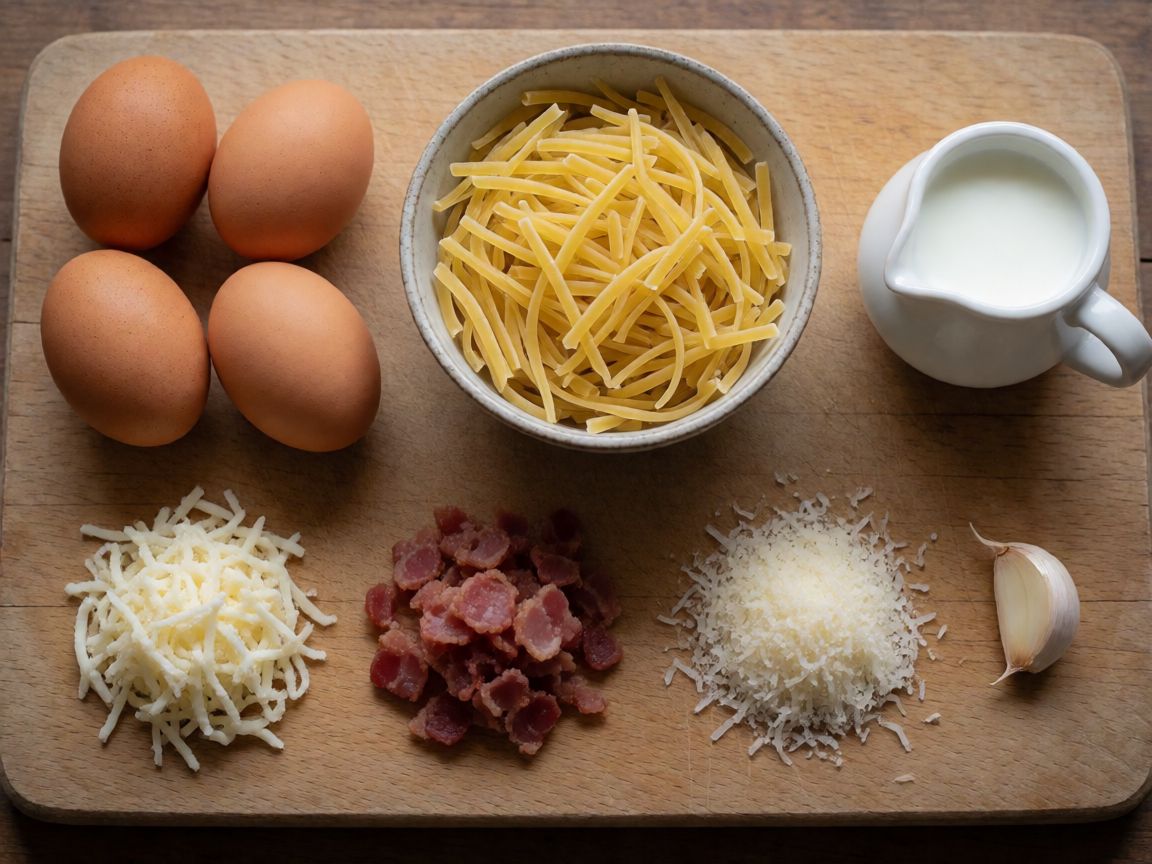
- 350 g Spaghetti
- 4 pcs Eggs
- 100 g Smoked Scamorza
- 80 g Bacon smoked
- 50 g Parmesan
- 1 clove Garlic
- 4 tbsp Olive oil
- 2 tbsp Milk
- Salt to taste
- Black pepper to taste









Steps
Cut the smoked scamorza and bacon into cubes.
In a large bowl, beat the eggs with two pinches of salt and black pepper, then add the Parmesan and milk.
Cook the spaghetti in salted water until al dente.
Once the spaghetti is cooked and well drained, drizzle with olive oil and add it to the egg mixture, mixing well.
Add the scamorza and bacon, and mix again.
In a 26 cm frying pan, heat the olive oil with the garlic clove; once the garlic turns golden, remove it and spread the spaghetti evenly with a spatula.
Cook on high heat until a crisp crust forms, then lower the heat, cover and cook for 10-15 minutes.
13 minMake sure the bacon has reached at least 70°C.
Shake the pan to check the frittata has come away from the base, slide it onto a plate or lid of the same size, and cook for a further 5 minutes uncovered.
5 minCut the frittata into slices or cubes and serve warm or cold.
This is leftover spaghetti's finest hour. Southern Italian households didn't invent the pasta frittata out of inspiration — they invented it out of not wanting to throw away last night's pasta. Eggs and cheese turn a plate of cold spaghetti into something you'd serve on purpose, which is the whole economic logic of the dish: nothing here is bought specially except the eggs and the bacon.
What decides whether it works is the crust, and the crust is decided by two separate heats, not one. First you need the pan hot enough that the underside sears and locks — that's what "high heat until a crisp crust forms" means: the egg proteins at the base seize fast enough to form a skin before they can seep into the pan and stick. Skip that and you don't get a frittata, you get scrambled spaghetti stuck to steel. Then you drop the heat right down and cover, because the top two-thirds of this thing is nearly 3cm deep with egg and spaghetti — it needs a slow, gentle cooking-through, not another blast that would burn the base black before the centre sets.
The flip is the part people are afraid of, and for good reason if you've never done it — but the fear is really about the pan, not the method. Shake it first: if it moves as one disc, the base has released. If it hasn't, no plate trick in the world saves you, you'll tear it. Patience here isn't a virtue, it's a diagnostic — the frittata tells you when it's ready to turn, you don't decide for it.
Spaghetti: cook it properly al dente, because it keeps cooking a little in the egg and in the pan afterwards — mushy pasta going in means a frittata with no structure, just wet strands. Drain it well; water left clinging to the strands dilutes the egg and stops the crust forming cleanly. The drizzle of oil before mixing isn't flavour, it's insurance — a thin coat stops the strands gluing to each other in one solid clump so the egg can actually get between them.
Scamorza: a semi-firm, smokeable cow's-milk cheese that melts into long elastic strings rather than pooling into liquid fat. What you're after is something that melts without weeping — a wet, high-moisture cheese will leak water into the frittata and soften the crust from inside. If you can't find scamorza, a mild smoked cheese that holds its shape when warm — a smoked mozzarella, even a smoked Cheddar in a pinch, though it'll taste more British pub than Naples — does the job. Unsmoked mozzarella works for texture but you lose the whole point of the smoke running through the dish alongside the bacon.
Bacon: here it stands in for pancetta or guanciale, and it's doing a cured-meat job, not a bacon-sandwich job — small cubes, rendering gently, seasoning the egg around them rather than dominating a slice. This is also why step 8 matters and isn't fussy pedantry: bacon cubes buried in the centre of a dense, slow-cooked mass are the one part of this dish that can stay underdone while the egg around them looks perfectly set, so checking they've actually reached a safe temperature is the real reason for that long covered cook, not an afterthought tacked on.
Parmesan and milk in the egg mix: Parmesan for savour and a bit of salt you don't have to add separately, milk to loosen the eggs slightly so they set tender rather than rubbery — egg alone, cooked low and slow for fifteen-plus minutes, tightens up fast. Any hard, well-aged grating cheese does the Parmesan job; any full-fat milk does the other.
Garlic in the oil: you're not eating the clove, you're flavouring the fat it cooks in, which is why it comes out the moment it turns golden — go past gold into brown and it turns bitter, and that bitterness sits in the oil for the rest of the cook, not just on the clove. Olive oil for this job wants to be fairly neutral rather than a fierce single-estate extra virgin you'd drizzle raw — you want oil that carries heat and garlic cleanly, any oil with no strong character of its own will do, including a plain vegetable oil if that's what's in the cupboard.
On the pan: a 26 cm frying pan in a British kitchen is just a frying pan, no kazan substitute needed here, but it matters that it's one you trust not to stick — this dish asks a lot of the base metal. A lid that's loose or doesn't seal well won't trap the gentle heat needed to cook the centre through, so if yours is a poor fit, a plate pressed over the top or foil does the covering job instead — and that same plate, or a flat lid of matching size, is exactly what you use for the flip in step 9, no special equipment required, just something flat and roughly the pan's own diameter.
Serve it warm, as the method suggests, but don't be shy of cold either — a cold wedge of this the next day, eaten standing at the counter, is arguably the more honest way the dish was meant to be met: it was born from yesterday's dinner in the first place.